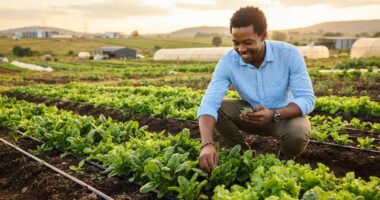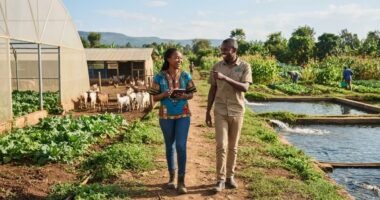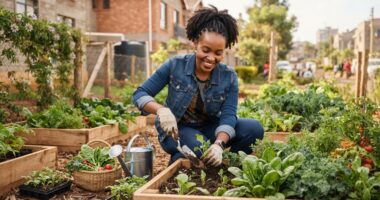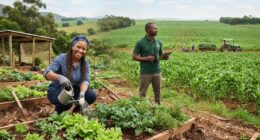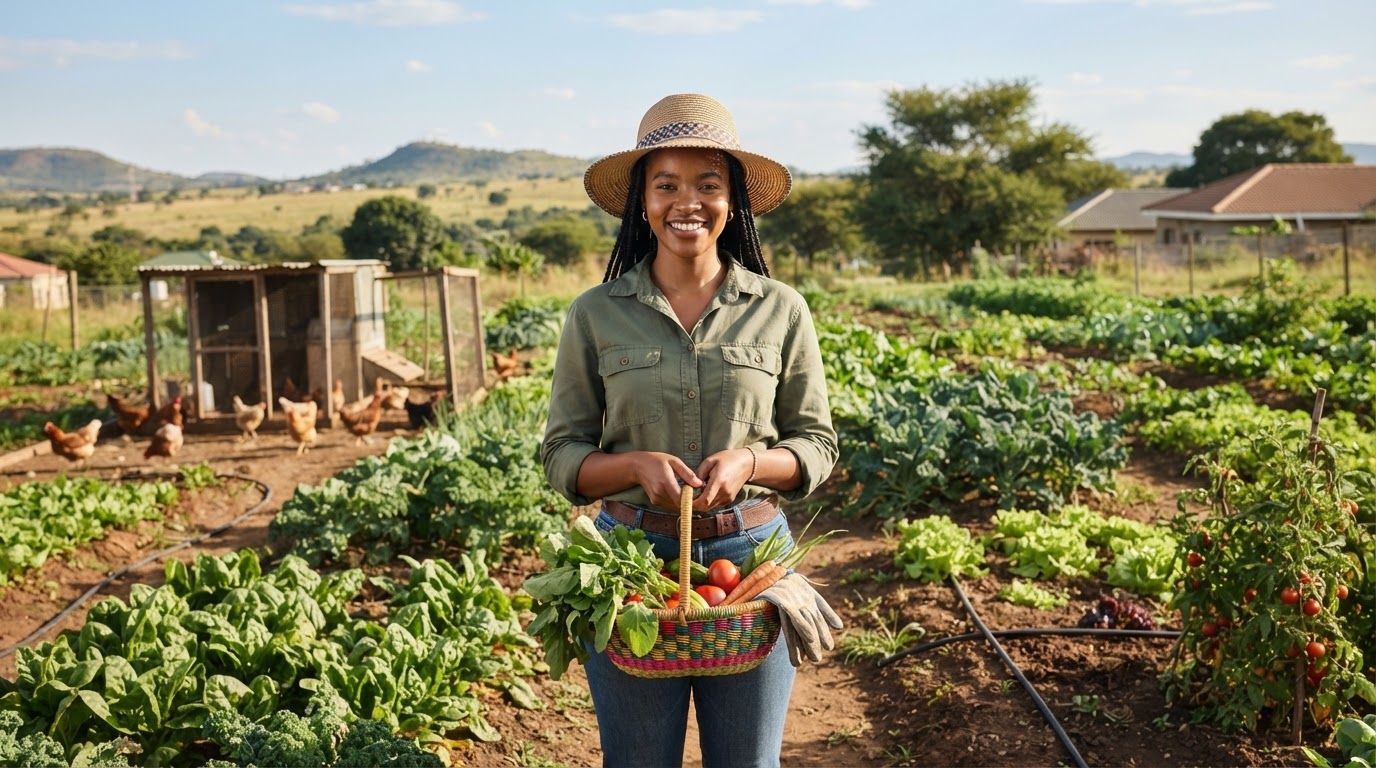
Farming offers aspiring entrepreneurs an opportunity to build a business around one of society’s most essential needs: food production. From raising broiler chickens and growing vegetables to producing eggs, breeding livestock and supplying agricultural markets, there are numerous ways to enter the agricultural industry.
You do not necessarily need a large farm, expensive machinery or extensive agricultural experience to get started. However, successful farming requires planning, technical knowledge, financial discipline and access to reliable markets.
Whether you want to pursue farming full-time or develop a farming side hustle, this guide explains how to start a small-scale farming business in Africa.
What Is a Farming Business?
A farming business involves producing agricultural products for commercial sale. Unlike subsistence farming, which primarily supports household consumption, commercial farming focuses on generating revenue through agricultural production.
Common farming business models include poultry farming, livestock production, horticulture, field crop production, aquaculture, beekeeping and agricultural value addition.
Market Demand and Business Opportunities
Potential agricultural customers include households, supermarkets, restaurants, hotels, food processors, butcheries, wholesalers and institutional buyers.
Before choosing a farming project, investigate:
- Products that customers purchase regularly.
- Seasonal shortages in your local market.
- Existing suppliers and competitors.
- Wholesale and farm-gate selling prices.
- Transportation and storage requirements.
- Customer quality and quantity expectations.
Producing what customers already need is generally less risky than producing something and searching for buyers afterwards.
Who Is Farming Best Suited For?
Small-scale farming may suit beginners, rural households, landowners, working professionals, retirees, young entrepreneurs and people interested in developing an additional income stream.
Farmers should be prepared to manage production risks, maintain records and continuously improve their agricultural knowledge.
Land and Space Requirements
| Farming project | Illustrative starting space |
|---|---|
| Oyster mushrooms | 10–20 m² |
| 100 broiler chickens | 15–25 m² of housing |
| Vegetable garden | 100–500 m² |
| 100 layer chickens | 20–40 m² of housing |
| Small piggery | 50–100 m² of facility space |
| Commercial horticulture | 0.25–1 hectare |
| Maize production | 1 hectare or more |
| Goat farming | Depends on grazing capacity |
These are preliminary planning estimates, not universal stocking standards. Additional space may be required for storage, sanitation, waste management, access roads and animal welfare.
African Climate and Growing Conditions
Africa contains diverse agricultural environments, ranging from humid tropical regions to semi-arid grasslands and Mediterranean climates.
| Region | Agricultural considerations |
|---|---|
| Southern Africa | Summer rainfall in many areas, dry winters, drought and frost risks |
| East Africa | Bimodal rainfall in many equatorial areas, highland agriculture |
| West Africa | Tropical and savanna climates, seasonal rainfall and heat |
| Central Africa | Humidity, heavy rainfall and fungal disease pressure |
| North Africa | Arid conditions, irrigation and water conservation |
In countries such as Zimbabwe and Zambia, many rain-fed summer crops are planted around the onset of reliable rains, commonly between October and December. Irrigated vegetable production may continue during the dry season where water and temperatures permit.
Choosing Suitable Crops and Livestock
Beginners should consider locally adapted crops and livestock breeds with established markets.
Potential starting projects include broilers, indigenous chickens, spinach, cabbage, tomatoes, onions, mushrooms, goats, groundnuts and sweet potatoes.
Choose varieties and breeds according to local climate, disease resistance, production requirements and buyer preferences.
Farming Startup Cost Breakdown
The following example assumes a small mixed farming project combining 100 broiler chickens with a 200 m² vegetable garden, using existing land and an available water source.
| Startup item | Estimated cost |
|---|---|
| 100 day-old chicks | $100 |
| Poultry feed | $280 |
| Poultry housing | $180 |
| Feeders and drinkers | $60 |
| Poultry health supplies | $30 |
| Bedding and heating | $40 |
| Vegetable seeds and seedlings | $40 |
| Fertilizer and compost | $65 |
| Basic irrigation equipment | $120 |
| Gardening tools | $70 |
| Transport and utilities | $65 |
| Contingency reserve | $100 |
| Total startup capital | $1,150 |
Land purchase, borehole installation and major infrastructure are excluded.
Essential Farming Equipment and Supplies
Basic farming equipment may include hoes, spades, watering equipment, protective clothing, weighing scales, storage containers, feeders, drinkers and farm record books.
Purchase equipment according to immediate production needs rather than investing heavily in machinery before establishing a reliable market.
How to Start Farming: Step-by-Step Guide
Step 1: Research Your Local Market
Visit agricultural markets, supermarkets, butcheries and restaurants. Identify products with consistent demand and determine the prices buyers actually pay farmers.
Step 2: Select a Farming Project
Choose a project that matches your budget, available land, water supply, experience and time commitment.
Step 3: Prepare a Farming Business Plan
Calculate startup capital, operating expenses, expected production, potential revenue and emergency funding requirements.
Step 4: Secure Land and Water
Ensure your production site has suitable soil, reliable water, drainage, security and access to transport.
Step 5: Obtain Agricultural Training
Consult agricultural extension officers, experienced farmers and reputable agricultural training institutions.
Step 6: Start with a Pilot Project
Begin with a manageable production unit, such as 100 broilers or a small vegetable plot, before expanding.
Step 7: Monitor Production and Expenses
Record feed consumption, fertilizer applications, animal health, crop yields, labour costs and sales.
Step 8: Sell, Evaluate and Improve
Compare actual results with your business plan and identify opportunities to reduce costs or improve production.
Feeding, Fertilizer and Water Management
Livestock requires age-appropriate, nutritionally balanced feed. Crops require nutrients based on soil fertility, crop type and growth stage.
Use soil testing to guide fertilizer applications and maintain reliable access to clean water. Drip irrigation, mulching and rainwater harvesting may improve water efficiency where appropriate.
Disease and Pest Management
Common agricultural threats include Newcastle disease, coccidiosis, African swine fever, fall armyworm, aphids, fungal diseases and bacterial wilt.
Reduce production risks through clean housing, crop rotation, certified planting materials, quarantine procedures, appropriate vaccination programmes and regular inspections.
Consult qualified veterinary professionals or agricultural extension officers before applying treatments.
Production Timeline
| Farming project | Approximate time to first sale |
|---|---|
| Microgreens | 1–3 weeks |
| Oyster mushrooms | 4–8 weeks |
| Broiler chickens | 5–8 weeks |
| Leafy vegetables | 4–10 weeks |
| Tomatoes | 3–5 months |
| Onions | 3–5 months |
| Pig fattening | 4–6 months, depending on starting weight |
| Goat breeding | 8–18 months or longer |
| Fruit orchards | Several years |
Agricultural Market Prices and Profit Analysis
Assume a subsequent broiler production cycle costs $500, including chicks, feed, labour, health supplies, heating, bedding and transport.
| Financial indicator | Conservative | Typical | Favourable |
|---|---|---|---|
| Chickens sold | 90 | 95 | 98 |
| Assumed price per bird | $5.50 | $6.50 | $7.00 |
| Revenue | $495 | $617.50 | $686 |
| Operating expenses | $500 | $500 | $500 |
| Operating surplus | -$5 | $117.50 | $186 |
These figures exclude infrastructure recovery, financing costs, depreciation and taxes.
Break-Even Analysis
At a production cost of $500 and 95 saleable chickens:
Break-even selling price = $500 ÷ 95 = $5.26 per chicken.
Selling below this price would result in an operating loss under these assumptions.
Where to Sell Agricultural Products
Potential markets include local fresh produce markets, roadside stalls, butcheries, restaurants, supermarkets, wholesalers, farmers’ markets and direct household customers.
Farmers can also use social media and WhatsApp Business to communicate with potential customers and arrange orders.
Risks and Challenges
The major risks include drought, disease outbreaks, rising feed and fertilizer prices, unreliable markets, theft, electricity shortages and post-harvest losses.
Maintain emergency funds and avoid relying entirely on one buyer.
How to Scale Your Farming Business
Expand only after establishing reliable production records, positive operating margins and sufficient working capital. Consider improving irrigation, increasing production capacity, securing supply agreements and introducing complementary agricultural products.
Frequently Asked Questions
Can I start farming without experience?
Yes. Begin with agricultural training, a small pilot project and guidance from experienced farmers.
How much capital do I need to start farming?
Some micro-scale projects may be possible with $100–$500 where land, water and basic infrastructure already exist. Larger commercial projects require substantially more capital.
Which farming business is best for beginners?
Leafy vegetables, mushrooms and small poultry projects are worth investigating because they can offer relatively short production cycles.
Can farming replace my salary?
Potentially, but this depends on sustained profitability, production scale, market access and financial management. Farming income is not guaranteed.
Can I farm while working full-time?
Yes, provided you have adequate supervision, reliable workers where necessary and systems for daily production management.