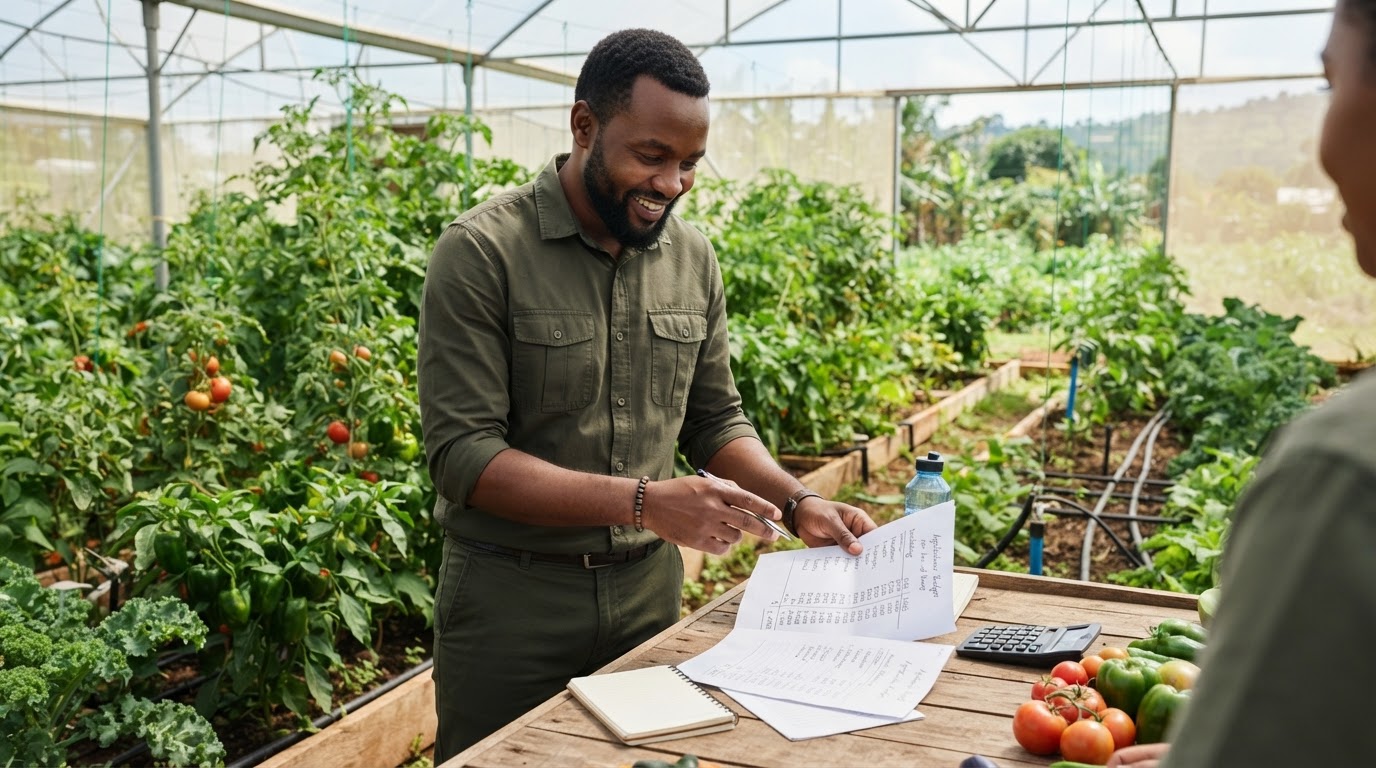
A $1,000 agricultural investment can provide aspiring farmers with an opportunity to establish a more structured small-scale farming business. Depending on existing infrastructure, land availability and market conditions, this budget may support poultry production, horticulture, beekeeping and other commercial agricultural activities.
The key is selecting a project that can complete its production cycle without requiring additional emergency financing.
Best Farming Businesses for a $1,000 Budget
| Farming business | Example production scale | Illustrative startup capital |
| Broiler farming | 100 birds | $600–$1,000 |
| Indigenous chickens | 50–100 birds | $500–$1,000 |
| Mushroom farming | 200–300 bags | $500–$1,000 |
| Leafy vegetables | 500–1,000 m² | $400–$1,000 |
| Cabbage farming | 0.25 hectare | $500–$1,000 |
| Onion farming | Small irrigated plot | $600–$1,000 |
| Watermelon farming | 0.25 hectare | $350–$1,000 |
| Beekeeping | 5–10 hives | $400–$1,000 |
| Groundnut farming | 1 hectare | $300–$900 |
| Maize farming | 1 hectare | $400–$1,000 |
| Rabbit farming | Small breeding unit | $400–$1,000 |
| Commercial seedling nursery | Small production unit | $400–$1,000 |
These projects assume access to suitable land, water and some existing infrastructure.
Market Demand and Commercial Opportunities
Vegetables, poultry and staple crops can serve established agricultural markets. However, market prices may fluctuate considerably during peak harvesting periods.
Farmers should investigate seasonal shortages, buyer requirements and transportation costs before investing.
Who Is This Budget Suitable For?
A $1,000 farming business may suit working professionals, beginner agricultural entrepreneurs, rural households and existing smallholders seeking to diversify production.
Land, Climate and Growing Conditions
For horticulture, a quarter-hectare plot can provide a manageable starting scale.
In Southern Africa, irrigated vegetable production may offer dry-season opportunities. East African farmers should account for local rainfall seasons and altitude, while farmers in humid tropical regions should prioritize drainage and disease prevention.
Choosing Suitable Crops and Varieties
Cabbage, onions, leafy vegetables and watermelons may be worth investigating where local markets exist.
Choose certified or reputable seed varieties suited to local growing conditions and customer preferences.
Detailed Startup Budget: Quarter-Hectare Cabbage Farming
| Startup expense | Estimated cost |
| Land preparation | $80 |
| Seeds and seedlings | $70 |
| Fertilizer and compost | $150 |
| Basic irrigation equipment | $200 |
| Crop protection | $70 |
| Labour | $150 |
| Water and electricity | $50 |
| Harvesting and packaging | $60 |
| Transportation | $70 |
| Emergency reserve | $100 |
| Total startup capital | $1,000 |
The model assumes existing access to land and a reliable water source.
Essential Equipment and Supplies
Basic requirements include irrigation equipment, hand tools, seedling trays, harvesting containers and appropriate protective clothing.
How to Start a $1,000 Cabbage Farming Business
Step 1: Research Cabbage Market Prices
Visit wholesale markets and obtain quotations from vegetable vendors and retailers.
Step 2: Prepare Your Land
Conduct soil testing where practical, improve drainage and prepare planting beds.
Step 3: Establish Healthy Seedlings
Purchase suitable seedlings or raise them using appropriate nursery management.
Step 4: Transplant and Manage Production
Follow variety-specific spacing and nutrient recommendations.
Step 5: Monitor Pests and Diseases
Inspect crops regularly and seek agricultural extension guidance when problems arise.
Step 6: Harvest and Market Your Produce
Harvest according to customer quality requirements and arrange transportation before produce deteriorates.
Fertilizer and Irrigation Management
Cabbage requires adequate nutrients and consistent soil moisture. Nutrient applications should reflect soil test results and local agricultural recommendations.
Drip irrigation and mulching may improve water efficiency where appropriate.
Cabbage Diseases and Pest Management
Common threats include diamondback moth, aphids, black rot, clubroot and damping-off.
Crop rotation, healthy seedlings, sanitation, appropriate spacing and integrated pest management can reduce production risks.
Production Timeline and Expected Yields
Cabbage production may require approximately three to five months from sowing to harvest, depending on variety and growing conditions.
For this model, assume a quarter-hectare production unit with approximately 6,000 planted seedlings.
Market Prices and Profit Analysis
Recurring operating expenses total $700, excluding irrigation equipment and the emergency reserve.
| Financial indicator | Conservative | Typical model | Favourable |
| Marketable cabbage heads | 3,500 | 4,800 | 5,400 |
| Selling price per head | $0.15 | $0.25 | $0.35 |
| Revenue | $525 | $1,200 | $1,890 |
| Operating expenses | $700 | $700 | $700 |
| Operating surplus | -$175 | $500 | $1,190 |
| First-cycle cash result* | -$375 | $300 | $990 |
*After the $200 irrigation investment, assuming the emergency reserve remains unspent.
Break-Even Analysis
At 4,800 marketable cabbage heads:
Operating break-even price = $700 ÷ 4,800 = approximately $0.146 per head.
Including first-cycle irrigation expenditure increases the break-even price to approximately $0.188 per head.
Where to Sell Cabbages
Potential customers include vegetable wholesalers, municipal markets, grocery stores, supermarkets, restaurants and direct household buyers.
Risks and Challenges
Major risks include market oversupply, pest outbreaks, water shortages, poor seedling establishment and transportation losses.
How to Scale Your Farming Business
Reinvest available surplus into improved irrigation, staggered planting, additional cultivated land and better market access.
Frequently Asked Questions
Is $1,000 enough to start commercial farming?
It may support a small commercially oriented poultry or horticulture project where basic infrastructure already exists.
What crops can I grow with $1,000?
Cabbage, leafy vegetables, onions, watermelons, maize and groundnuts are possible options, depending on production scale.
Can I start a piggery with $1,000?
A small fattening project may be possible with existing suitable housing, but feed and veterinary costs must be carefully budgeted.
Should I invest in several farming projects?
Beginners may benefit from mastering one production system before diversifying.