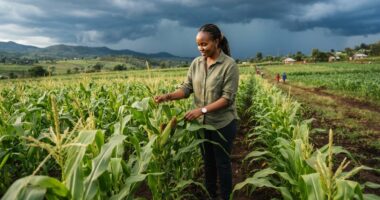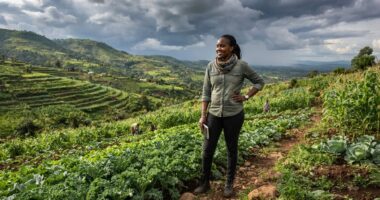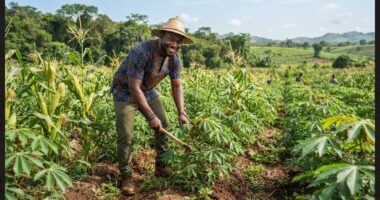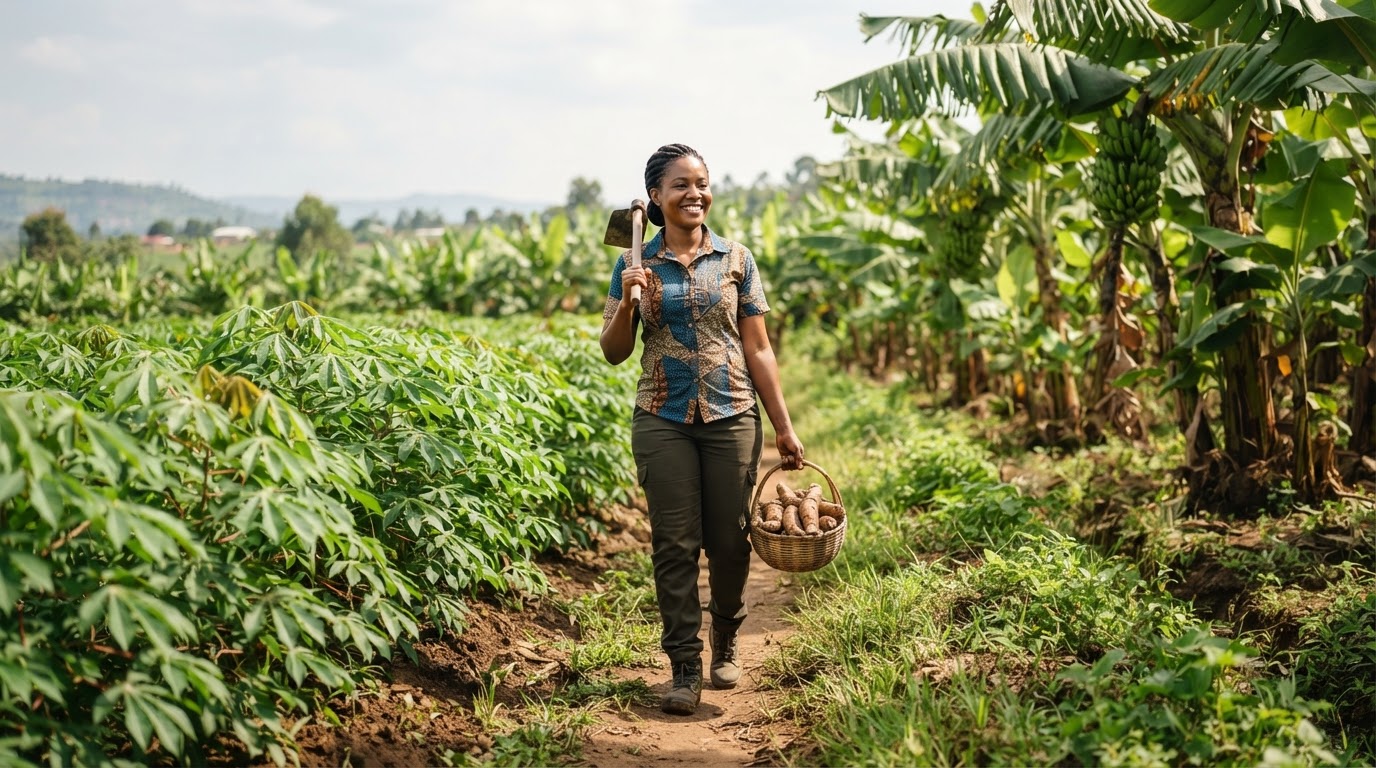
Central Africa’s tropical agricultural environments provide opportunities for root crop production, bananas, plantains, vegetables, cocoa and other agricultural enterprises.
However, abundant rainfall does not automatically guarantee successful farming. High humidity, soil nutrient losses, drainage problems and post-harvest challenges require careful management.
Understanding Central Africa’s Agricultural Climate
Central Africa includes equatorial rainforest environments, tropical savanna regions, highlands and seasonally dry agricultural zones.
Countries such as the Democratic Republic of the Congo, Cameroon, Gabon, the Republic of the Congo and the Central African Republic experience substantial local climate variation.
Central Africa Seasonal Farming Calendar
| Agricultural environment | General seasonal pattern |
| Northern tropical zones | Rainfall commonly concentrated around April–October |
| Equatorial zones | Rainfall throughout much of the year, often with two peaks |
| Southern DRC and northern Angola | Summer rainfall commonly around October–April |
| Coastal equatorial areas | Distinct wet and relatively dry periods |
| Highland areas | Rainfall and temperature influenced by altitude |
Market Demand and Agricultural Opportunities
Cassava, plantains, bananas, maize, beans and vegetables are important food products across many Central African markets.
Commercial opportunities may include supplying urban markets, processing root crops, producing planting materials and reducing post-harvest losses.
Who Is This Guide For?
This guide is suitable for smallholders, agricultural entrepreneurs, rural households and farmers developing tropical agricultural businesses.
Land and Growing Conditions
Tropical agriculture requires particular attention to drainage, soil organic matter, erosion control and nutrient management.
Farmers should use existing agricultural land where possible rather than clearing forests or environmentally sensitive habitats.
Best Crops for Central African Farming
| Crop | Production opportunity |
| Cassava | Fresh roots and processed products |
| Plantains | Fresh produce and food processing |
| Bananas | Household and commercial fruit markets |
| Sweet potatoes | Fresh roots and planting materials |
| Maize | Grain and livestock feed |
| Beans | Food markets and crop rotation |
| Cocoa | Long-term commercial production |
| Pineapples | Fresh fruit and processing |
| Leafy vegetables | Local urban markets |
| Oil palm | Long-term production on suitable existing agricultural land |
Startup Cost Breakdown: Half-Hectare Plantain Farming
| Expense | Estimated cost |
| Land preparation | $120 |
| Healthy planting materials | $250 |
| Planting labour | $100 |
| Compost and fertilizer | $180 |
| Mulching and weed management | $100 |
| Pest and disease management | $80 |
| Drainage and water management | $100 |
| Harvesting and transportation | $120 |
| Emergency reserve | $150 |
| Total startup capital | $1,200 |
Equipment and Supplies
Plantain farming may require digging tools, pruning equipment, clean planting materials, mulch, harvesting tools and suitable transportation.
Step-by-Step Plantain Production Guide
Step 1: Identify Potential Buyers
Research fresh plantain markets, restaurants, wholesalers and processors.
Step 2: Select Suitable Land
Choose well-drained soil with appropriate moisture availability.
Step 3: Obtain Healthy Planting Materials
Use reputable sources and locally recommended varieties.
Step 4: Prepare and Establish the Crop
Follow variety-specific spacing and planting recommendations.
Step 5: Maintain Soil Fertility
Use appropriate organic matter and nutrient applications.
Step 6: Monitor Crop Health
Remove diseased material according to local plant health guidance and inspect plants regularly.
Step 7: Harvest and Transport Carefully
Coordinate harvesting with market requirements to minimize damage and spoilage.
Fertilizer and Water Management
High rainfall can contribute to nutrient leaching and soil erosion.
Mulching, ground cover, organic matter management and appropriately timed fertilizer applications may improve nutrient efficiency.
Drainage is essential in areas vulnerable to waterlogging.
Disease and Pest Management
Plantain and banana production may be affected by black Sigatoka, banana weevils, nematodes, bacterial wilt and Fusarium wilt, depending on location.
Use healthy planting materials, clean tools and locally recommended disease management practices. Suspected serious regulated diseases should be reported to agricultural authorities.
Production Timeline and Expected Yields
Plantains may produce their first harvest approximately 9–18 months after planting, depending on variety and environment.
Subsequent ratoon production may be possible under appropriate management.
Market Prices and Profit Analysis
Assume a half-hectare project with approximately 500 established plants.
| Financial indicator | Conservative | Typical model | Favourable |
| Marketable bunches | 300 | 400 | 450 |
| Average bunch weight | 10 kg | 15 kg | 20 kg |
| Marketable production | 3,000 kg | 6,000 kg | 9,000 kg |
| Selling price/kg | $0.15 | $0.25 | $0.35 |
| Revenue | $450 | $1,500 | $3,150 |
| Production expenses | $1,050 | $1,150 | $1,350 |
| First-harvest surplus | -$600 | $350 | $1,800 |
This model includes initial establishment expenses but excludes unspent reserves and other unlisted costs.
Break-Even Analysis
At production expenses of $1,150 and a selling price of $0.25 per kilogram, approximately 4,600 kg must be sold.
Where to Sell
Potential customers include fresh produce traders, municipal markets, restaurants, food processors and household consumers.
Risks and Challenges
High humidity, crop diseases, soil erosion, poor drainage, limited transport infrastructure and post-harvest losses can affect profitability.
How to Scale Tropical Farming
Improve planting material quality, establish crop rotation or suitable intercropping systems, invest in transport and develop dependable market relationships.
Frequently Asked Questions
Can farmers grow crops throughout the year in Central Africa?
Some tropical areas support extended growing seasons, although rainfall, drainage, disease and market conditions still influence production.
What crops are suitable for high-rainfall regions?
Cassava, plantains, bananas and other locally adapted tropical crops may be appropriate.
How long does plantain farming take?
The first harvest commonly requires approximately 9–18 months.
How can tropical farmers reduce fungal diseases?
Use healthy planting materials, suitable spacing, drainage, sanitation and integrated disease management.