One of the most important decisions when starting a farming business in Africa is whether to rely on natural rainfall or invest in an irrigation system.
Rain-fed farming generally requires less initial infrastructure, while irrigated farming can provide greater control over production schedules and soil moisture. Both approaches have advantages, limitations and financial risks.
What Is Rain-Fed Farming?
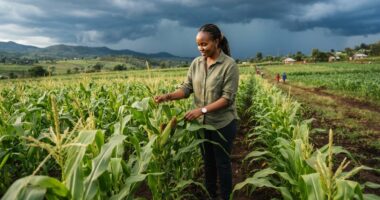
Rain-fed farming is an agricultural production system that depends primarily on natural rainfall to meet crop water requirements.
It is widely used for maize, sorghum, millet, groundnuts, beans and other field crops.
What Is Irrigated Farming?
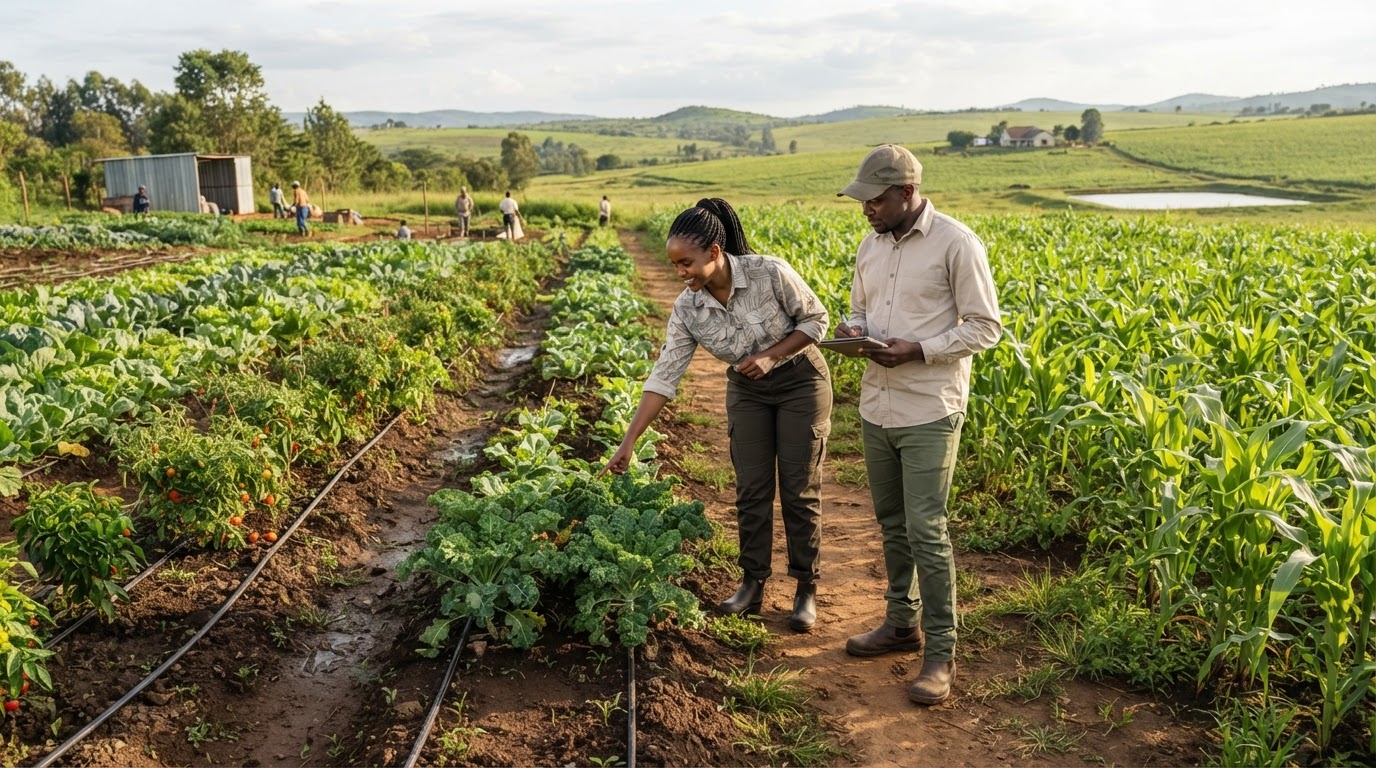
Irrigated farming involves supplying crops with water through managed systems such as drip irrigation, sprinklers, furrows or other suitable methods.
Irrigation may supplement natural rainfall or support production during dry periods.
Rain-Fed Farming vs Irrigated Farming
| Feature | Rain-fed farming | Irrigated farming |
| Startup capital | Generally lower | Generally higher |
| Water source | Natural rainfall | Managed water supply |
| Planting flexibility | Seasonal | Potentially greater |
| Energy expenses | Usually lower | May be substantial |
| Drought exposure | Higher | Reduced if water remains available |
| Equipment requirements | Relatively basic | Irrigation infrastructure |
| Production consistency | Weather-dependent | Potentially more consistent |
| Off-season opportunities | Limited | Possible |
| Maintenance expenses | Generally lower | Higher |
| Environmental risks | Erosion and runoff | Salinity, water depletion and runoff |
Market Demand and Commercial Opportunities
Rain-fed farming can be suitable for staple crop markets, while irrigated production may allow farmers to target high-value horticulture and seasonal market shortages.
However, irrigation does not guarantee profitability. Farmers must compare additional revenue with water, electricity, maintenance and infrastructure expenses.
Who Is Each Farming System Suitable For?
Rain-fed farming may suit farmers with limited capital and access to suitable seasonal rainfall.
Irrigated farming may suit commercially oriented farmers with reliable water supplies, sufficient capital and established markets.
Land, Climate and Water Requirements
Rain-fed agriculture requires suitable rainfall distribution throughout critical crop growth stages.
Irrigated agriculture requires a sustainable water source, appropriate water quality, suitable soil drainage and legally compliant water access.
Best Crops for Each Production System
| Rain-fed farming | Irrigated farming |
| Maize | Tomatoes |
| Sorghum | Onions |
| Millet | Green peppers |
| Groundnuts | Cucumbers |
| Cowpeas | Lettuce |
| Soybeans | Cabbage |
| Sunflower | Strawberries |
| Sesame | Commercial seedling production |
Some crops can be grown successfully under either production system.
Startup Cost Comparison: One-Hectare Maize Farming
| Expense | Rain-fed | Irrigated |
| Land preparation | $100 | $100 |
| Seeds | $60 | $80 |
| Fertilizer | $180 | $300 |
| Planting labour | $60 | $60 |
| Weed management | $60 | $70 |
| Crop protection | $40 | $70 |
| Irrigation equipment | $0 | $900 |
| Water and energy | $0 | $200 |
| Harvesting | $80 | $120 |
| Transportation | $50 | $80 |
| Emergency reserve | $70 | $120 |
| Total startup capital | $700 | $2,100 |
The irrigated model assumes an existing water source and excludes major infrastructure such as boreholes and reservoirs.
Essential Equipment and Supplies
Rain-fed farmers may require planting equipment, hand tools, weed management tools and harvesting equipment.
Irrigated farmers may additionally require pumps, pipes, filters, drip lines, sprinklers, pressure regulators and water storage facilities.
How to Choose the Right Farming System
Step 1: Assess Local Rainfall
Review historical rainfall, dry spells and current seasonal forecasts.
Step 2: Evaluate Water Availability
Determine whether irrigation water is legally available, affordable and sustainable.
Step 3: Select Suitable Crops
Compare crop water requirements, market prices and production costs.
Step 4: Calculate Infrastructure Expenses
Include installation, maintenance, pumping and equipment replacement costs.
Step 5: Compare Expected Financial Returns
Calculate conservative, typical and favourable production scenarios.
Step 6: Consider Supplementary Irrigation
A smaller supplementary irrigation system may be an alternative to complete dependence on either rainfall or full irrigation.
Fertilizer and Water Management
Rain-fed farmers should coordinate fertilizer applications with suitable soil moisture and expected rainfall.
Irrigated farmers should schedule water applications according to crop requirements, soil characteristics and weather conditions.
Over-irrigation can cause nutrient leaching, root disease and unnecessary energy expenses.
Disease and Pest Management
Rain-fed crops may experience drought stress, while excessive rainfall can encourage fungal diseases.
Irrigated crops may face root rot, leaf diseases and salinity problems if water is poorly managed.
Use appropriate crop rotation, drainage and integrated pest management.
Production Yields and Profit Comparison
Assume a selling price of $0.30 per kilogram for maize.
| Financial indicator | Rain-fed | Irrigated |
| Marketable yield | 2,500 kg | 6,000 kg |
| Revenue | $750 | $1,800 |
| Operating expenses | $630 | $1,080 |
| Operating surplus | $120 | $720 |
| Initial irrigation investment | $0 | $900 |
| First-cycle cash result | $120 | -$180 |
Although the irrigated model generates a higher operating surplus, the initial irrigation investment produces a first-cycle cash deficit.
Rain-fed farming
Marketable yield (kg)
Operating costs ($)
Irrigated farming
Marketable yield (kg)
Operating costs ($)
Initial irrigation investment ($)
Rain-fed operating surplus
$120.00
Irrigated operating surplus
$720.00
Additional surplus from irrigation
$600.00
Irrigated first-cycle cash result
-$180.00
Simple incremental irrigation payback period
1.5 cycles
Assumes consistent production results and excludes unentered costs, financing and equipment replacement.
Break-Even Analysis
At a selling price of $0.30 per kilogram:
Rain-fed operating break-even yield: 2,100 kg.
Irrigated operating break-even yield: 3,600 kg.
Irrigated first-cycle cash break-even yield: 6,600 kg.
Where to Sell
Potential buyers include grain traders, livestock feed manufacturers, agricultural cooperatives, fresh produce markets and food processors.
Risks and Challenges
Rain-fed farming is vulnerable to rainfall failure, while irrigation introduces financial, maintenance, water availability and environmental risks.
How to Scale the Business
Consider supplementary irrigation, improved soil moisture conservation, efficient water delivery systems and crop diversification before investing in larger infrastructure.
Frequently Asked Questions
Is irrigated farming more profitable than rain-fed farming?
Not necessarily. Higher yields must generate enough additional revenue to cover irrigation-related expenses.
Can rain-fed farmers grow commercial crops?
Yes. Many commercial grain and oilseed producers depend primarily on rainfall.
What is the most water-efficient irrigation system?
Well-designed drip irrigation can achieve high application efficiency, although suitability depends on crop, soil, water quality and management.
Can irrigation eliminate drought risk?
No. Water sources may also become depleted during drought conditions.