How to Find Buyers for Free-Range and Indigenous Chickens
Raising healthy chickens is only half of a successful poultry business. Farmers must also sell their birds at prices that cover production costs and provide sufficient returns.
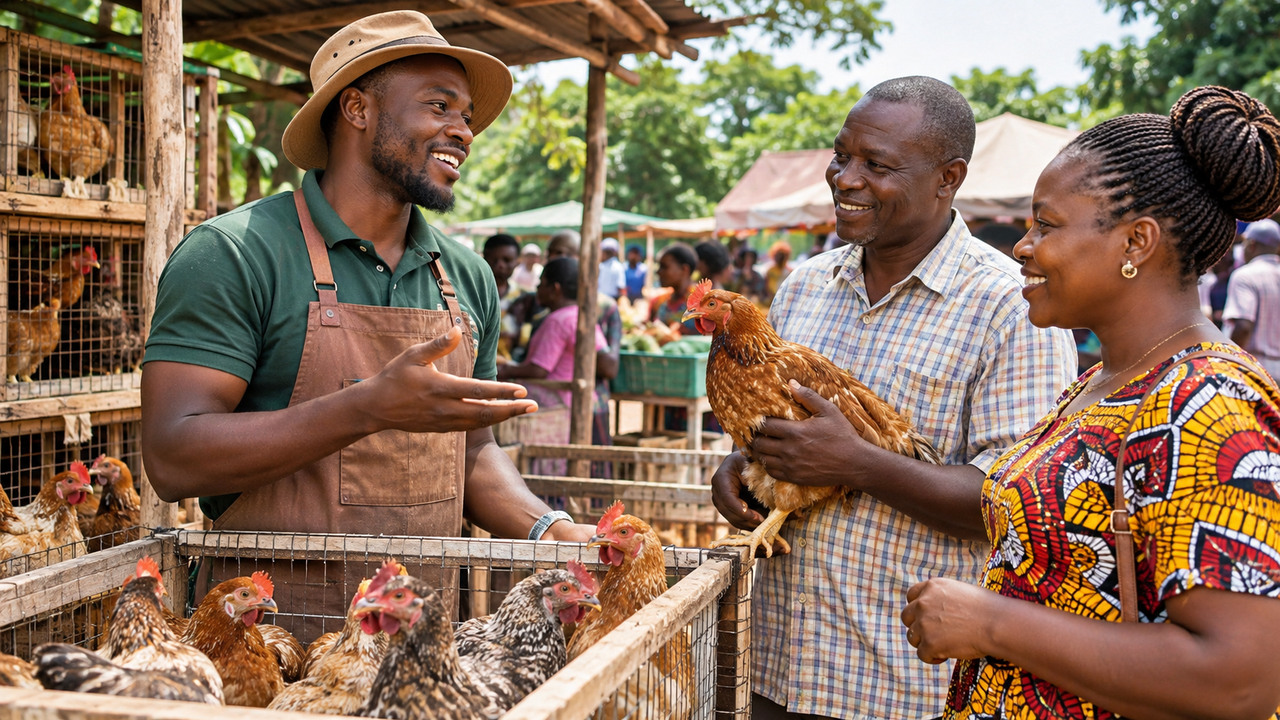
Potential buyers may include households, traditional food restaurants, independent butchers, traders, poultry retailers, caterers and other farmers.
A premium market can offer a higher selling price, but it may require specific breeds, consistent weights, reliable deliveries or additional processing.
1. Sell Directly to Households
Direct household sales can reduce dependence on traders.
Farmers can advertise available chickens through local community groups, WhatsApp Business and referrals.
For example, a Zimbabwean farmer selling traditional road runners may develop a repeat customer base in nearby towns rather than relying entirely on farm-gate traders.
Always communicate bird type, approximate weight, price and whether the sale is for a live or appropriately processed chicken.
2. Supply Restaurants and Caterers
Restaurants serving traditional African dishes may seek particular kinds of chicken. Potential markets include:
| Country | Buyer terminology to investigate |
|---|---|
| Zimbabwe | Road runner chicken |
| Kenya | Kienyeji chicken |
| Uganda | Local or indigenous chicken |
| Tanzania | Kuku wa kienyeji |
| Nigeria | Local or native chicken |
| Ghana | Local chicken |
| South Africa | Indigenous or free-range chicken |
Terminology alone does not establish that every bird qualifies for a premium. Confirm the buyer’s exact requirements.
3. Work With Poultry Traders
Traders can purchase multiple birds and arrange onward distribution.
This may provide faster sales, although farm-gate prices can be lower than direct retail prices.
Compare the net return after transport, handling, payment delays and unsold stock rather than only comparing quoted selling prices.
4. Sell Breeding Stock and Chicks
Farmers with healthy, productive breeding flocks may earn additional revenue by selling breeding cockerels, pullets or chicks.
These buyers often value reliable breed identification, vaccination records, parent-stock information and consistency more than the cheapest purchase price.
5. Develop a Simple Poultry Brand A small poultry business can establish a recognisable identity by using consistent product descriptions, clear contact details, farm photographs and reliable customer communication.
Avoid unsupported descriptions such as "organic", "antibiotic-free" or "certified free-range" unless the product genuinely meets the applicable requirements.
Example: Wholesale vs Direct Selling
Using the 100-bird model with 90 saleable chickens and $722 in cycle operating costs:
| Sales channel | Price per chicken | Revenue | Operating surplus |
|---|---|---|---|
| Farm-gate trader | $9 | $810 | $88 |
| Direct household sales | $10 | $900 | $178 |
| Selected premium buyers | $12 | $1,080 | $358 |
For comparability, this table holds costs constant. Real direct and premium sales may involve higher packaging, processing, delivery, marketing and compliance costs.
How to Secure Repeat Buyers
Start conversations before the chickens are ready for sale.
Ask buyers how many chickens they require, what weights they prefer, whether they want live or processed birds and what payment arrangements they offer.
Keep a simple customer register with names, order history, quantities and preferred delivery periods.
For processed chicken, comply with applicable animal-welfare, slaughter, food- safety, inspection and transport requirements.
FAQs
Where can I sell free-range chickens in Zimbabwe? Potential channels include households, traditional restaurants, local poultry traders and farmers purchasing breeding birds. Verify buyer demand and local selling requirements.
How do I get better prices for indigenous chickens?
Improve product consistency, reduce avoidable mortality, build repeat customer relationships and negotiate with several buyers rather than accepting the first offer.
Is it better to sell chickens live or processed?
It depends on buyer preferences, processing costs and applicable regulations. Processed sales may attract different customers but require suitable facilities and safe handling.