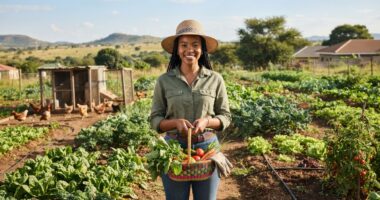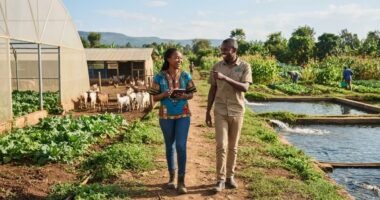
A farming business plan provides a structured roadmap for establishing, operating and expanding an agricultural enterprise.
It helps farmers determine their capital requirements, identify customers, estimate production, manage risks and evaluate whether a proposed agricultural project is financially viable.
A well-prepared farm business plan may also support applications for agricultural financing, partnerships and investment.
What Is a Farming Business Plan?
A farming business plan is a document outlining the objectives, production activities, market strategy, management structure and financial projections of an agricultural business.
It explains what the farm intends to produce, how production will be managed, who will purchase the products and how the business expects to generate revenue.
Why Farmers Need a Business Plan
A business plan can help identify financial weaknesses before investing, determine equipment requirements, improve cash flow management and establish measurable production objectives.
It should be treated as a working management document rather than something prepared only for financing applications.
Who Needs a Farming Business Plan?
Every commercially oriented farmer can benefit from a business plan, including poultry farmers, vegetable producers, livestock breeders, greenhouse operators and agricultural startups.
The 12 Essential Sections of a Farming Business Plan
| Section | Information to include |
|---|---|
| Executive summary | Business concept and objectives |
| Business description | Ownership and production activities |
| Market analysis | Buyers, competitors and prices |
| Products | Crops, livestock or processed products |
| Location | Land, climate and infrastructure |
| Production plan | Production methods and schedules |
| Equipment | Machinery and essential supplies |
| Management | Staff and responsibilities |
| Marketing | Sales and distribution strategy |
| Financial plan | Capital, expenses and revenue |
| Risk management | Disease, climate and financial risks |
| Expansion plan | Future production objectives |
Example Farming Business Plan: FarmUP Poultry Enterprise
Executive Summary
The proposed business will raise 500 broiler chickens per production cycle and supply local households, butcheries and food businesses.
The initial objective is to establish reliable production, identify recurring customers and evaluate commercial performance before expanding.
Market Analysis
The business will obtain buyer quotations, investigate competing poultry suppliers and determine preferred market weights.
Location and Climate
The production facility will require reliable water, suitable ventilation, secure housing and access to transportation.
Housing must protect birds from extreme temperatures, rainfall and predators.
Breed and Production Selection
Commercial broiler chicks will be purchased from reputable hatcheries. Feed programmes and health management will follow locally appropriate professional guidance.
Startup Cost Breakdown: 500-Broiler Business
| Startup expense | Estimated cost |
|---|---|
| 500 day-old chicks | $500 |
| Poultry feed | $1,400 |
| Housing | $800 |
| Feeders and drinkers | $250 |
| Health supplies | $125 |
| Heating and bedding | $180 |
| Labour | $200 |
| Utilities and transport | $150 |
| Contingency reserve | $300 |
| Total startup capital | $3,905 |
Equipment and Supplies
The business requires suitable housing, feeding equipment, drinking systems, thermometers, secure feed storage, protective clothing and cleaning equipment.
How to Write Your Farming Business Plan
Step 1: Define Your Business Objectives
Establish realistic production, revenue and market objectives.
Step 2: Research Your Target Market
Identify customer requirements, competitors and dated local selling prices.
Step 3: Develop a Production Plan
Specify production scale, timelines, inputs and management responsibilities.
Step 4: Prepare a Financial Budget
Calculate infrastructure expenses, working capital and emergency funding.
Step 5: Develop a Marketing Strategy
Identify how products will be sold, delivered and paid for.
Step 6: Prepare Risk Management Procedures
Document disease prevention, water backup, market diversification and emergency response plans.
Step 7: Establish Performance Indicators
Monitor production yields, mortality, selling prices, operating expenses and cash flow.
Feeding, Water and Disease Management
The poultry business plan should include age-appropriate feeding programmes, continuous access to clean water, housing sanitation and veterinary-guided vaccination and biosecurity procedures.
Production Timeline
| Production stage | Indicative period |
|---|---|
| Housing preparation | Before chick arrival |
| Brooding | Early production weeks |
| Growing and finishing | Following production weeks |
| Marketing and sale | Approximately weeks 5–8 |
| Cleaning and downtime | Between production batches |
Expected Production and Financial Projections
Assume recurring production expenses of $2,650 per cycle.
| Financial indicator | Conservative | Typical | Favourable |
|---|---|---|---|
| Saleable birds | 450 | 475 | 490 |
| Selling price | $5.50 | $6.50 | $7.00 |
| Revenue | $2,475 | $3,087.50 | $3,430 |
| Operating expenses | $2,650 | $2,650 | $2,650 |
| Operating surplus | -$175 | $437.50 | $780 |
Break-Even Analysis
At 475 saleable birds, the operating break-even price is approximately $5.58 per bird.
A complete business plan should also calculate infrastructure recovery, depreciation, financing costs, taxes and owner compensation.
Where to Sell
The proposed poultry business can investigate butcheries, households, restaurants and wholesalers, subject to local processing and food safety requirements.
Risk Management Plan
The business should prepare for feed price increases, poultry diseases, unreliable electricity, water shortages, mortality and market price reductions.
How to Scale the Business
Increase production only after demonstrating reliable sales, manageable mortality, adequate working capital and positive financial performance.
Frequently Asked Questions
Do I need a business plan for a small farm?
Yes. Even a simple one-page business plan can help organize costs, production and sales.
Can I use a farming business plan to apply for a loan?
A business plan may support a financing application, but lenders may also require collateral, registration documents, financial records and other information.
How long should a farm business plan be?
The appropriate length depends on the complexity of the project and its intended audience.
How often should I update my farming business plan?
Review it after each production cycle and whenever significant market, cost or production changes occur.