Introduction
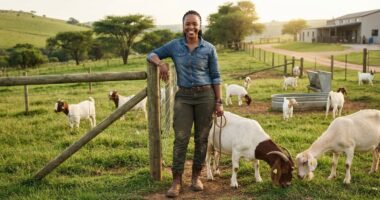
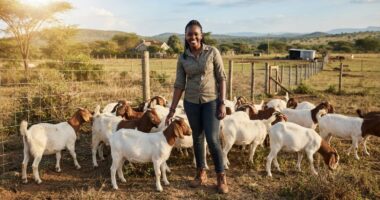
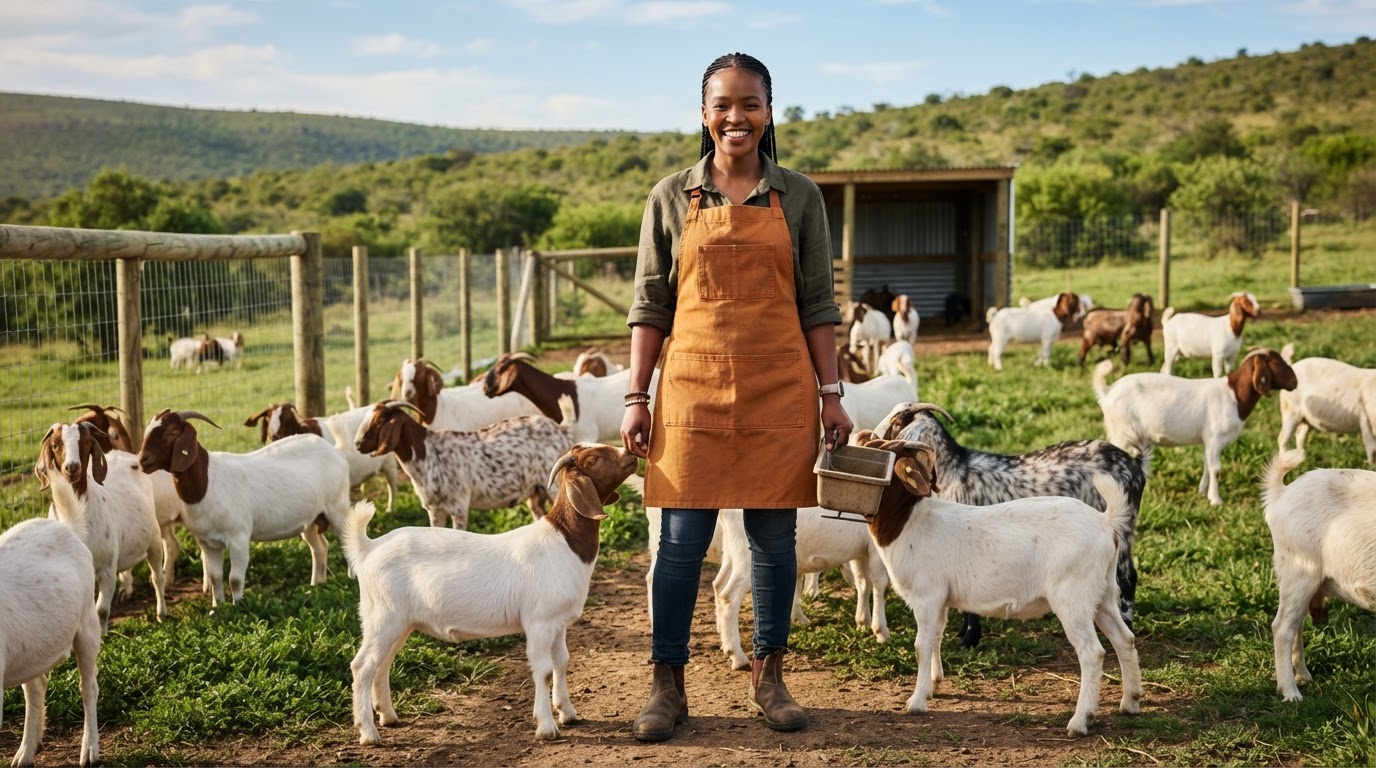
Starting a goat farming business in Africa does not necessarily require a large commercial farm. A beginner can establish a small breeding herd, gain practical livestock-management experience, and gradually expand through retained female offspring.
Goats are useful in many African farming systems because they browse shrubs, utilize a range of forage resources, provide manure, and can be sold as live animals for meat or breeding. Nevertheless, drought, parasite outbreaks, poor fencing, theft, and weak market access can quickly turn a promising venture into a loss-making operation.
Why Consider Goat Farming?
A goat enterprise can offer several opportunities:
- Meat production: Raising goats for live-animal or slaughter markets.
- Breeding stock: Selling selected healthy bucks and does to other farmers.
- Dairy production: Producing milk where suitable dairy breeds, veterinary support, and reliable customers are available.
- Mixed farming: Using manure for vegetable or crop production.
- Supplementary income: Selling a limited number of animals while maintaining the breeding herd.
Indigenous goats are often a practical choice for beginners because they are adapted to local feeding systems and conditions. They are not immune to diseases or feed shortages, however.
Step 1: Choose Your Goat Farming Model
| Farming model | Main purpose | Beginner suitability |
|---|---|---|
| Meat breeding | Produce kids for sale | High |
| Goat fattening | Buy, feed and resell growing goats | Moderate |
| Dairy goats | Produce and market milk | Requires specialized management |
| Breeding stock | Sell quality genetics | Requires experience and records |
| Mixed goats and crops | Livestock income and manure | High where land is available |
For a first-time farmer, a small meat-breeding operation using healthy local animals is often easier to manage than a specialized dairy or pedigree breeding enterprise.
Step 2: Select Suitable Land
Choose an area that has:
- Access to safe drinking water.
- Sufficient grazing or browsing, plus a dry-season feed plan.
- A secure night enclosure.
- Shade and well-drained ground.
- Access to veterinary assistance and livestock markets.
In Zimbabwe, particularly in lower-rainfall areas such as parts of Matabeleland and Masvingo, dry-season forage and dependable water are critical.
In wetter locations, such as parts of Kenya and Uganda, attention must also be paid to parasites, wet bedding, and hoof health.
Step 3: Build a Basic Goat Shelter
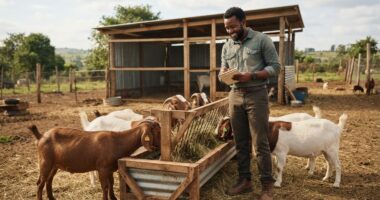
Goats need a dry resting area, protection against predators and theft, and good airflow.
Allow roughly 1–1.5 m² of covered resting space per adult, with additional outdoor exercise space and separate arrangements for young kids, kidding does, and bucks. This is an initial design allowance rather than a universal stocking standard; requirements vary with animal size and housing system.
Keep the enclosure easy to clean and prevent rainwater from accumulating around sleeping areas.
Step 4: Buy Healthy Breeding Animals
A simple starting herd might include five does and access to a suitable breeding buck.
Before buying:
- Inspect the animals while they walk.
- Check body condition and alertness.
- Look for nasal discharge, coughing, diarrhoea, lameness, and skin problems.
- Ask about kidding history and veterinary care.
- Avoid animals that are unusually thin or show signs of disease.
- Quarantine new arrivals under veterinary guidance.
A beginner does not always need to purchase a buck immediately. A carefully managed outside breeding service may be cheaper, provided disease and animal movement risks are properly managed.
Step 5: Prepare a Startup Budget
Illustrative US-dollar budget for five does with external buck service:
| Expense | Estimated cost |
|---|---|
| Five breeding does | $250–$500 |
| Basic housing and fencing | $200–$450 |
| Feed and dry-season forage reserve | $100–$250 |
| Water and feeding equipment | $40–$90 |
| Veterinary care and biosecurity | $50–$100 |
| Breeding services and transport | $30–$90 |
| Contingency | $80–$150 |
| Total startup budget | $750–$1,630 |
These estimates assume land is already available. Land purchase, permanent labour, and major water infrastructure are not included.
Step 6: Establish a Herd Management Routine
Daily: Provide water, inspect goats, check fences, and ensure adequate feed.
Weekly: Check body condition, clean equipment, review grazing availability, and inspect hooves.
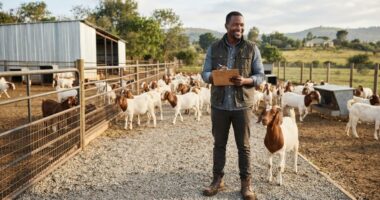
Monthly: Record animal weights or estimated growth, expenses, breeding events, health treatments, and livestock sales.
Step 7: Find Buyers Before Expanding
Potential customers include households, livestock traders, butcheries, meat processors, and breeding-stock buyers.
Ask prospective buyers what weights, ages, breeds, health records, and delivery arrangements they require.
Common Beginner Mistakes
Buying too many animals before securing feed, relying entirely on communal grazing, overlooking veterinary expenses, and selling breeding females prematurely are common ways to weaken a new operation.
Frequently Asked Questions
Can I start goat farming with five goats? Yes. A small breeding herd is manageable for beginners, although income will initially be limited and may be irregular.
How long before a goat farming business earns income? A breeding operation may need many months before marketable offspring become available. Fattening goats may generate sales sooner, but require careful buying and feeding decisions.
Which goats are best for beginners? Healthy, locally adapted indigenous goats are usually worth considering first.