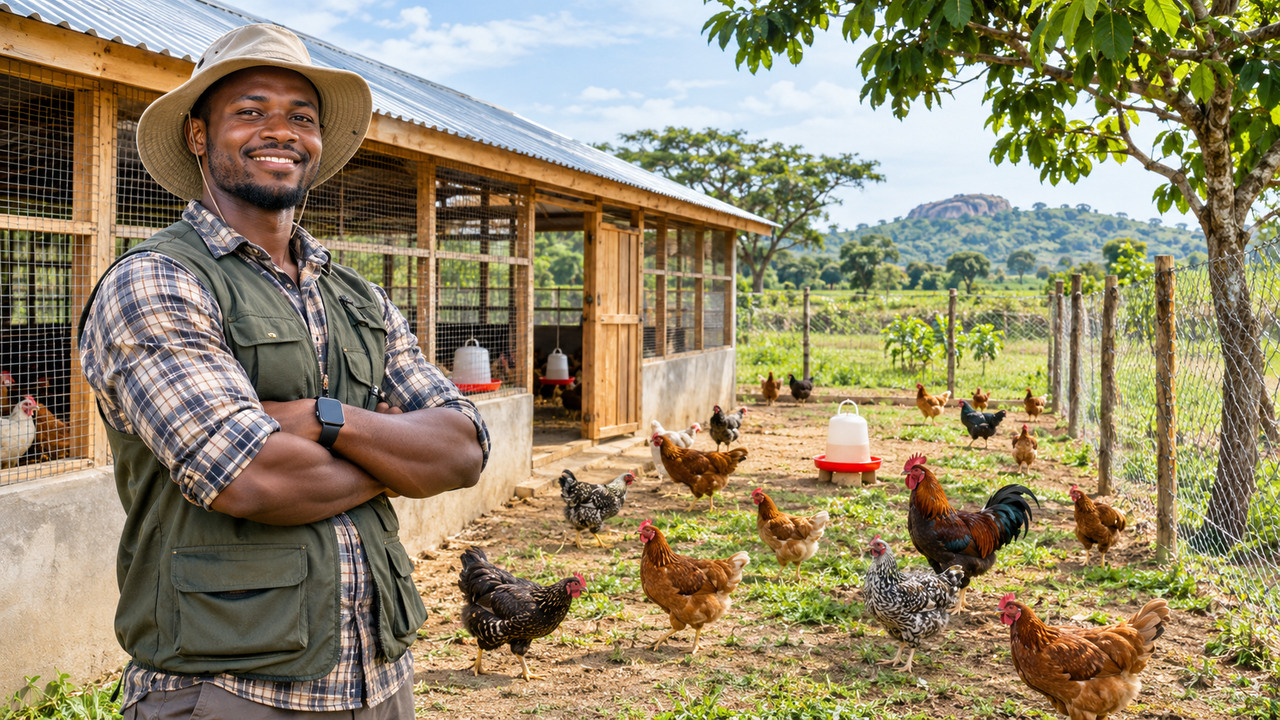
What Is Free-Range Chicken Farming?
Free-range chicken farming involves raising chickens with access to an outdoor area where they can walk, forage, scratch and express natural behaviours.
For a commercial farmer, the most practical approach is often semi-intensive production: chickens have secure housing, controlled feeding and designated outdoor runs rather than roaming unrestricted.
This model can reduce some forage-related expenses, but it also helps farmers control breeding, theft, predators, disease exposure and bird losses.
Why Start a Free-Range Chicken Business?
Possible income streams include:
- Selling mature indigenous or improved chickens for meat.
- Selling table eggs.
- Producing fertilised hatching eggs.
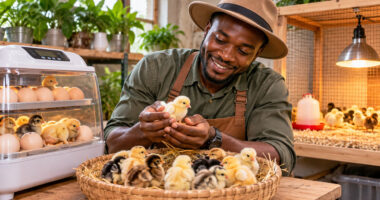
- Selling day-old chicks and growers.
- Selling selected breeding cockerels and pullets.
A farmer should choose a primary product before buying stock. Meat production, egg production and breeding have different costs, schedules and cash-flow requirements.
Step 1: Research Your Local Market
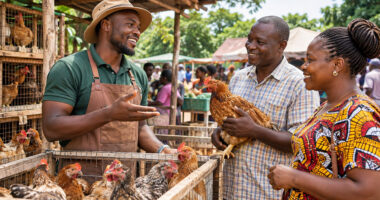
Before purchasing birds, investigate the retail and wholesale prices of local chickens. In Kenya, buyers may request kienyeji chickens. In Zimbabwe, buyers may refer to road runners. In West Africa, indigenous poultry may be sold as local or native chickens.
The product buyers expect can vary by location, so don’t assume an improved dual-purpose chicken automatically qualifies for the same premium as a traditional indigenous bird.
Interview at least five potential buyers and record their preferred size, type of bird, purchase frequency and prices.
Step 2: Choose the Right Chickens
Traditional indigenous chickens are useful for farmers prioritising locally adapted breeding stock and village-market preferences.
Improved dual-purpose strains, such as Kuroiler and Sasso, may suit farmers looking for faster growth or more regular egg production, although actual performance varies by strain and conditions. ILRI has evaluated these strains in several African production environments.
ilri.org
Only purchase birds from a traceable and reliable breeder.
Step 3: Build Secure Poultry Housing
Choose a dry, well-drained site with access to clean water.
Provide:
- A roof that does not leak.
- Good airflow without cold draughts.
- Clean, dry bedding.
- Secure doors and predator protection.
- Nesting boxes and perches where appropriate.
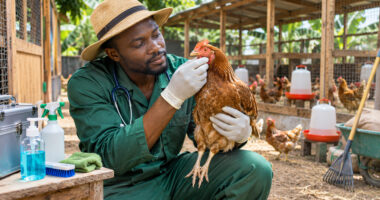
- Separate space for sick or newly purchased birds. A fenced outdoor run makes it easier to control bird movement, feeding and disease exposure.
Step 4: Establish a Feeding and Health Programme
Free-range birds obtain some nutrients through foraging, but scavenging alone is unreliable for commercial production.
Supply age-appropriate supplementary feed and clean water every day. Seek veterinary guidance on vaccination, especially against Newcastle disease, and follow local animal-health regulations.
Step 5: Plan Your Production Cycle
For an illustrative 100-chick project, allow approximately 16 weeks before selling improved meat birds, subject to actual growth and buyer specifications.
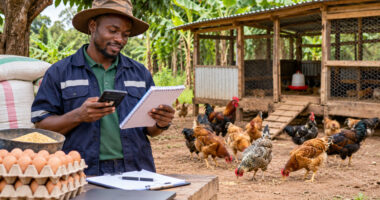
Keep records of feed used, mortality, weights, treatments, buyers and sales.
FAQs
Can I start free-range chicken farming with 20 chickens?
Yes. A 20-bird pilot can help a beginner learn feeding, poultry health and marketing before expanding.
Is free-range chicken farming profitable?
It can be profitable when the sale price covers feed, chicks, health costs, losses and the farmer’s time. Profit is not guaranteed.
How much land is required?
The required area depends on the housing system, soil conditions, bird numbers and how well outdoor runs are rotated. Avoid overcrowding or relying on land area alone as a health-control measure.