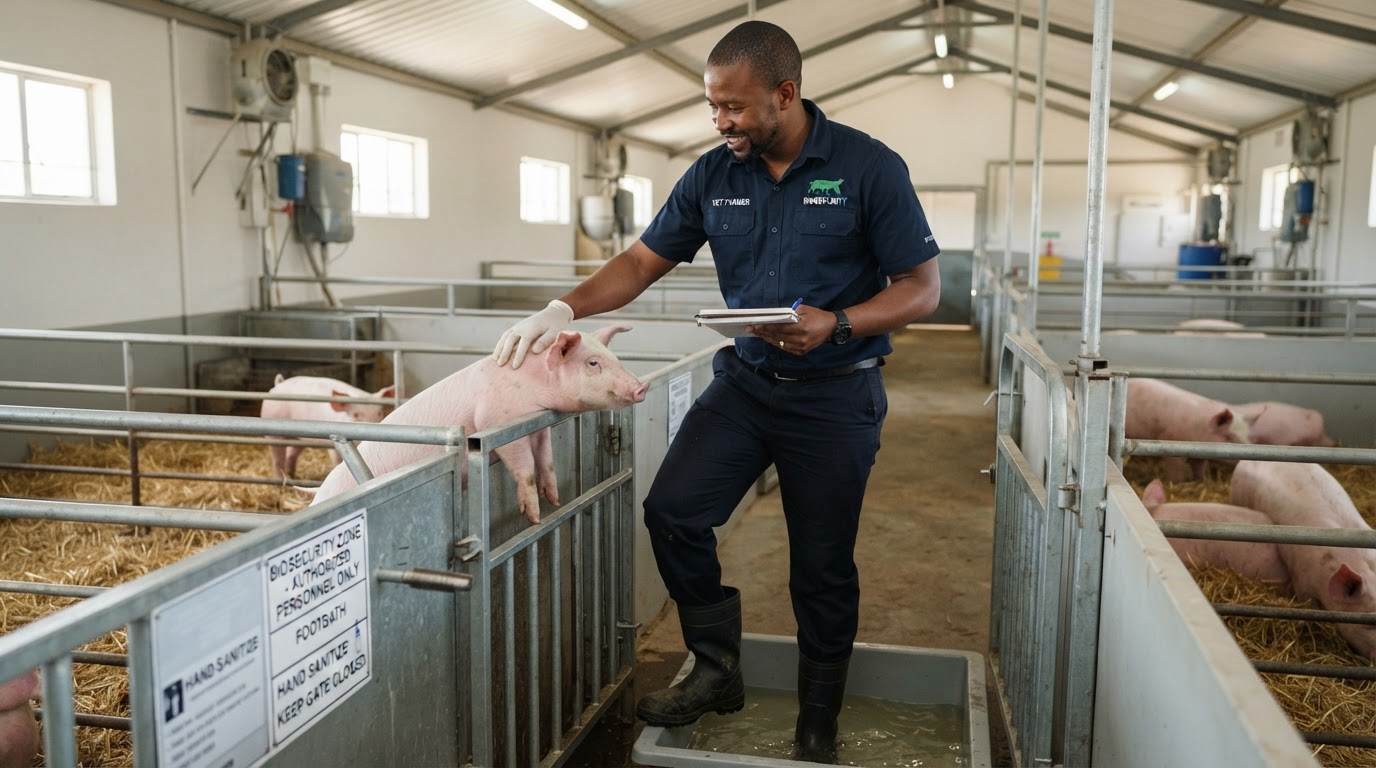
Why Pig Disease Prevention Matters
Disease prevention is essential to protecting a pig farming investment.
Some diseases reduce growth and increase veterinary expenses. Others can cause high mortality, interrupt livestock movement and threaten an entire farming business.
African swine fever is particularly important for African pig farmers because of its potentially devastating impact on domestic pigs.
The World Organisation for Animal Health identifies ASF as a serious viral disease associated with severe economic losses. World Organisation for Animal Health
Common Pig Diseases and Health Problems
Disease or                                      Important management
                 Possible signs
condition                                       response
African swine    Fever, weakness, loss of       Stop movements and contact
fever            appetite, sudden deaths        veterinary authorities immediately
Veterinary diagnosis, reporting
Classical swine Fever, weakness and other
                                                and locally approved disease
fever            signs that may resemble ASF
                                                controls
Fever, lameness, skin          Veterinary diagnosis and
Erysipelas
                 changes                        prevention programme
Piglet                                          Prompt veterinary care, hygiene
                 Diarrhoea, dehydration,
diarrhoeal                                      and appropriate piglet
                 poor growth
diseases                                        management
Respiratory      Coughing, difficult breathing, Improve conditions and seek
disease          reduced growth                 veterinary assessment
Internal         Poor body condition, uneven Monitoring and veterinarian-
parasites        growth, digestive problems     directed parasite control
External         Scratching, skin irritation,   Inspection, hygiene and
parasites        poor condition                 appropriate treatment
Panting, weakness, reduced Cooling, shade, ventilation and
Heat stress
                 feed intake                    clean water
Important: Symptoms overlap. Farmers cannot reliably identify serious contagious diseases from visible signs alone.
What Is African Swine Fever?
African swine fever is a contagious viral disease affecting domestic and wild pigs. It can spread through contact with infected pigs, contaminated materials and infected pork products. Movement of people, vehicles and equipment can also create opportunities for disease introduction.
ASF does not infect humans, but it can cause catastrophic livestock and financial losses.
World Organisation for Animal Health+1
Is There a Cure or Vaccine for African Swine Fever?
There is no effective treatment for ASF. Vaccine availability and authorization can vary by country and may change as products are developed or evaluated.
Farmers should not assume an ASF vaccine is available or approved locally. Follow the latest instructions from the national veterinary authority rather than purchasing unverified products.
Prevention, movement controls, surveillance and biosecurity remain central to ASF management.
fao.org+2
Step 1: Purchase Pigs From Reliable Sources
Avoid buying pigs from farms with unexplained illness or deaths.
Check animal-health documentation and any local movement requirements.
Whenever practical, maintain a controlled sourcing policy rather than regularly introducing animals from different markets.
Consult a veterinarian about receiving and isolating newly purchased pigs.
Step 2: Control Farm Access
Restrict unnecessary visitors.
Keep footwear, tools and equipment used in pig areas separate from those used elsewhere.
Clean and disinfect vehicles and equipment according to appropriate veterinary guidance. Prevent contact with unfamiliar pigs, feral pigs and wildlife reservoirs where relevant.
The FAO and WOAH emphasize the importance of effective biosecurity for ASF prevention and control.
fao.org+1
Step 3: Use Safe Feed and Water
Do not feed pigs raw or untreated pork-containing food waste.
Food scraps may be a disease risk, and their use can be prohibited or restricted under local laws.
Use approved feed sources and protect feed storage against rodents, moisture and contamination.
Maintain a safe drinking-water supply.
Step 4: Keep Pens Clean
Remove manure and wet bedding as necessary.
Clean feeders and water systems.
Prevent standing wastewater and avoid overcrowding.
Follow an effective cleaning and disinfection procedure between production batches.
Clean housing does not eliminate every disease risk, but it supports healthier production and makes biosecurity easier.
Step 5: Develop a Local Veterinary Programme
A qualified veterinarian should advise on the farm’s disease risks and appropriate vaccination, parasite-control and monitoring programmes.
Different diseases require different measures.
Do not use antibiotics as a substitute for diagnosis or appropriate prevention. Antibiotics do not cure viral diseases such as ASF.
Step 6: Respond Correctly to Suspected ASF
If pigs show unusual sudden deaths, high fever or other symptoms suggestive of a serious contagious disease:
1. Stop moving pigs into or out of the farm.
2. Do not sell, slaughter for sale or transport suspected infected animals.
3. Restrict visitors, equipment and vehicle movements.
4. Contact a veterinarian or government veterinary service immediately.
5. Follow official testing, disposal and disease-control instructions.
Avoid opening or moving carcasses without veterinary direction.
A farmer should not attempt to conceal a suspected outbreak to recover the cost of the animals.
Country-Specific Considerations
In Zimbabwe, farmers should follow guidance from the Department of Veterinary Services and applicable livestock-movement requirements.
In Kenya, Uganda, Tanzania, Zambia, Ghana, Nigeria and South Africa, contact the appropriate veterinary authority for local ASF reporting, movement controls and disease-management rules.
Disease prevalence and restrictions can change. Verify the current situation before buying or transporting pigs.
FAQs
Can African swine fever infect people?
No. ASF does not infect humans, although it is a serious threat to pigs and livelihoods.
Can infected pigs recover?
Disease outcomes differ, but ASF can cause very high mortality. There is no effective treatment, and suspected cases require immediate official veterinary attention. Do locally adapted pigs resist ASF?
Local adaptation does not make pigs immune to ASF.
Is biosecurity necessary for a five-pig farm?
Yes. Even a small piggery can suffer major losses from contagious disease.