Introduction
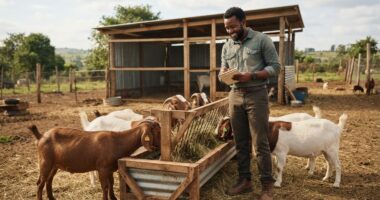
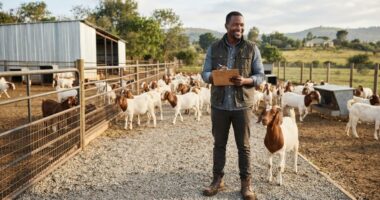
The best goat breed is not necessarily the biggest, fastest-growing, or most expensive. A breed must suit the local climate, available feed, disease pressures, farmer experience, and intended market.
Commercial meat breeds such as Boer, Kalahari Red and Savanna goats are well established in Southern Africa. Indigenous breeds also play a major role because of their adaptation to local farming systems.
Popular Goat Breeds in Africa
1. Boer Goat — Meat Production
Known for its substantial body size and meat-production characteristics. Suitable where farmers can afford quality breeding stock and meet its nutritional requirements. Popular for commercial meat herds and crossbreeding.
2. Kalahari Red Goat — Meat Production
A red-coated Southern African meat breed associated with commercial and semi-intensive farming. Evaluate local performance rather than assuming it will thrive under every drought or feeding condition.
3. Savanna Goat — Meat Production
Developed in Southern Africa and valued in meat-producing systems. Source healthy animals with documented parentage where possible.
4. Indigenous Goats — Locally Adapted Meat Production
Examples include Mashona and Matebele goats in Zimbabwe, Small East African goats in East Africa, and West African Dwarf goats in parts of West Africa. They are frequently practical for low-input farming systems.
5. Saanen Goat — Dairy Production
A specialized milk breed. Requires suitable feeding, clean milking practices, adequate water, disease management, and an established milk market.
6. Toggenburg Goat — Dairy Production
Another dairy option, particularly where farmers have access to veterinary advice, quality feed, and customers who will buy goat milk.
Breed Comparison
| Breed or type | Main use | Important consideration |
|---|---|---|
| Boer | Meat | Feed and breeding-stock costs |
| Kalahari Red | Meat | Local adaptation and availability |
| Savanna | Meat | Quality breeding animals |
| Indigenous goats | Meat and household use | Productivity varies by population |
| Saanen | Milk | Nutrition and milking management |
| Toggenburg | Milk | Climate suitability and milk market |
Which Breed Should Beginners Choose?
For farmers operating in hot, dry regions with seasonal forage shortages, healthy indigenous animals may provide a sensible starting point.
Improved meat-goat genetics can be introduced gradually once reliable feed, housing, veterinary services, and recordkeeping are established.
For dairy goats, confirm that customers will buy the milk, the required food-safety rules can be met, and there is enough feed to support lactation.
Frequently Asked Questions
Are Boer goats always more profitable than indigenous goats? No. Higher purchasing and feeding costs can offset higher sale values.
Can I cross Boer goats with local goats? Crossbreeding may improve some traits, but results vary. Use a planned breeding strategy to avoid losing valuable local adaptation.
Are dairy goats suitable for beginners? They can be, but daily milking, hygiene, nutrition and marketing make them more demanding.