Introduction
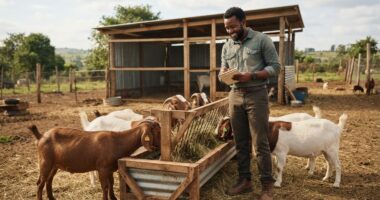
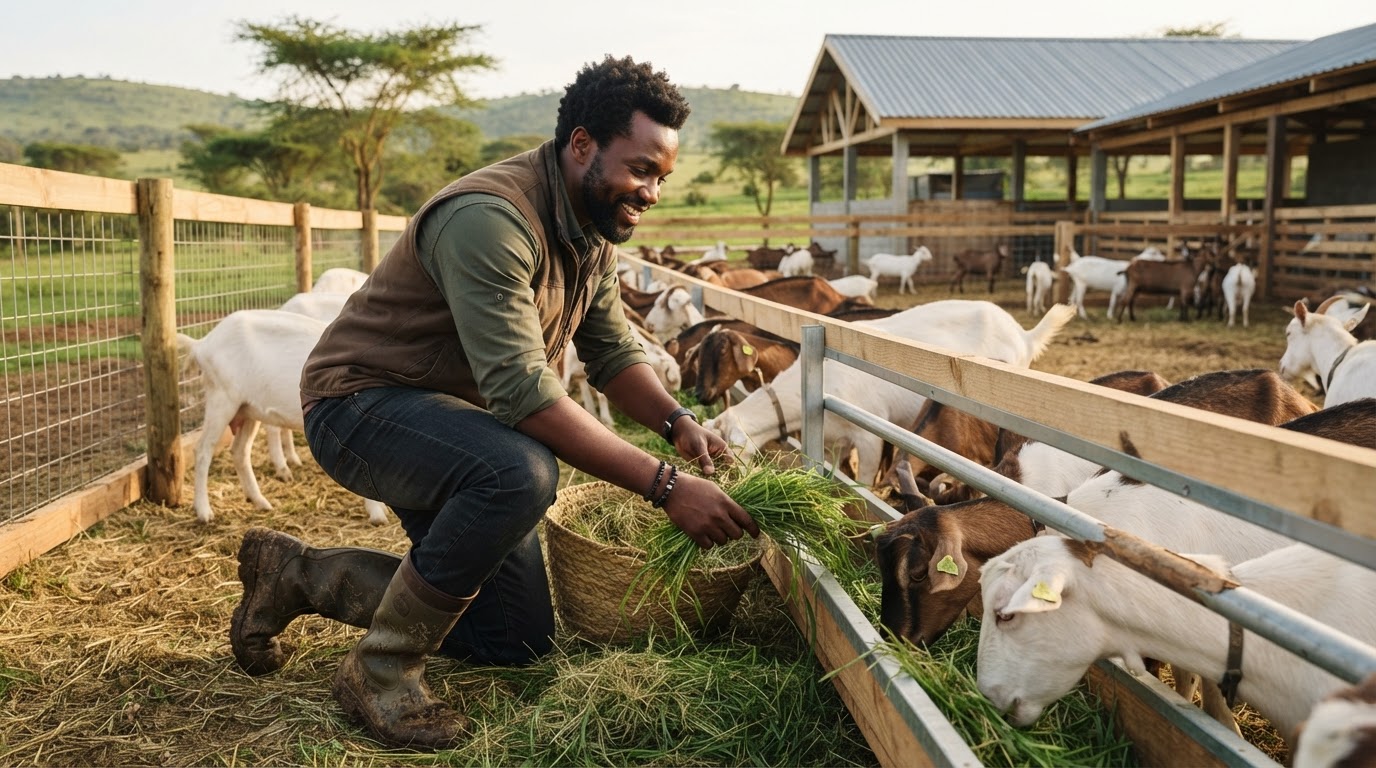
Good feeding management is essential for healthy goats, successful breeding, steady growth and profitable meat production.
Although goats can browse many shrubs and forage plants, they cannot remain productive without sufficient nutrients, clean water and appropriate mineral supplementation.
Understanding Goat Nutrition
Goats need:
- Energy: From pasture, forage and suitable supplementary feeds.
- Protein: To support growth, pregnancy, milk production and tissue maintenance.
- Fibre: For normal rumen function.
- Minerals and vitamins: To support metabolism and reproduction.
- Water: Available consistently in sufficient quantities.
Nutritional requirements change with body weight, age, pregnancy, lactation, activity and environmental conditions.
Common Feed Sources
| Feed source | Typical role | Key caution |
|---|---|---|
| Pasture grasses | Basal forage | Quality falls as grasses mature |
| Browse leaves | Nutrients and dietary variety | Some plants are poisonous |
| Legume forage | Protein source | Introduce carefully |
| Hay | Dry-season roughage | Prevent mould and spoilage |
| Crop residues | Supplementary roughage | Often low in nutrients |
| Commercial concentrates | Additional energy/protein | Balance the full ration |
| Goat mineral mix | Mineral supplementation | Use appropriate livestock formulation |
Do not assume every crop residue, tree leaf or household food waste is safe for goats. Avoid spoiled or mouldy feed.
Feeding Different Groups
Kids
Newborn kids should receive adequate colostrum as soon as possible after birth. Encourage normal nursing and provide appropriate young-animal feed as they develop.
Growing Goats
Growing animals need enough energy and protein to gain weight without excessive reliance on expensive concentrates.
Pregnant Does
Nutrition becomes especially important during late pregnancy, when fetal growth increases nutritional demand. Underfeeding can weaken the doe and kids.
Lactating Does
Milk production increases nutrient and water requirements. Monitor body condition and adjust feed accordingly.
Breeding Bucks
Keep breeding bucks in suitable body condition. Excessive weight loss or obesity may affect breeding performance.
Planning for the African Dry Season
Seasonal rainfall creates a major challenge in countries such as Zimbabwe, Zambia, Tanzania and Kenya.
Farmers can reduce dry-season risk by:
- Conserving suitable forage as hay.
- Planting appropriate fodder crops where water and land permit.
- Storing safe crop residues.
- Managing grazing pressure.
- Reserving emergency feed funds.
- Monitoring body condition before shortages become severe.
Example: Daily Feed Dry Matter
A goat weighing 35 kg and consuming dry matter equal to 3% of its body weight would require 35 × 0.03 = 1.05 kg dry matter.
The amount of actual fresh forage depends on its moisture content. A farmer should not use this example as a complete ration formula.
Preventing Feeding Problems
Introduce ration changes gradually, maintain clean drinking containers, avoid overfeeding grain, and provide adequate effective fibre.
Seek qualified veterinary or livestock nutrition advice for persistent bloat, refusal to eat, poor growth, or suspected poisoning.
Frequently Asked Questions
Can goats survive on grass alone? Their nutritional adequacy depends on forage quality and the animal’s production stage. Browse, mineral supplementation or other feeds may be necessary.
What is the cheapest goat feed? Available safe forage can reduce purchased feed costs, but low cost is not useful if the animals become malnourished.
How do I feed goats during drought? Use a planned forage reserve, monitor body condition, secure water, and adjust herd numbers if feed supplies cannot sustain the animals.