Introduction
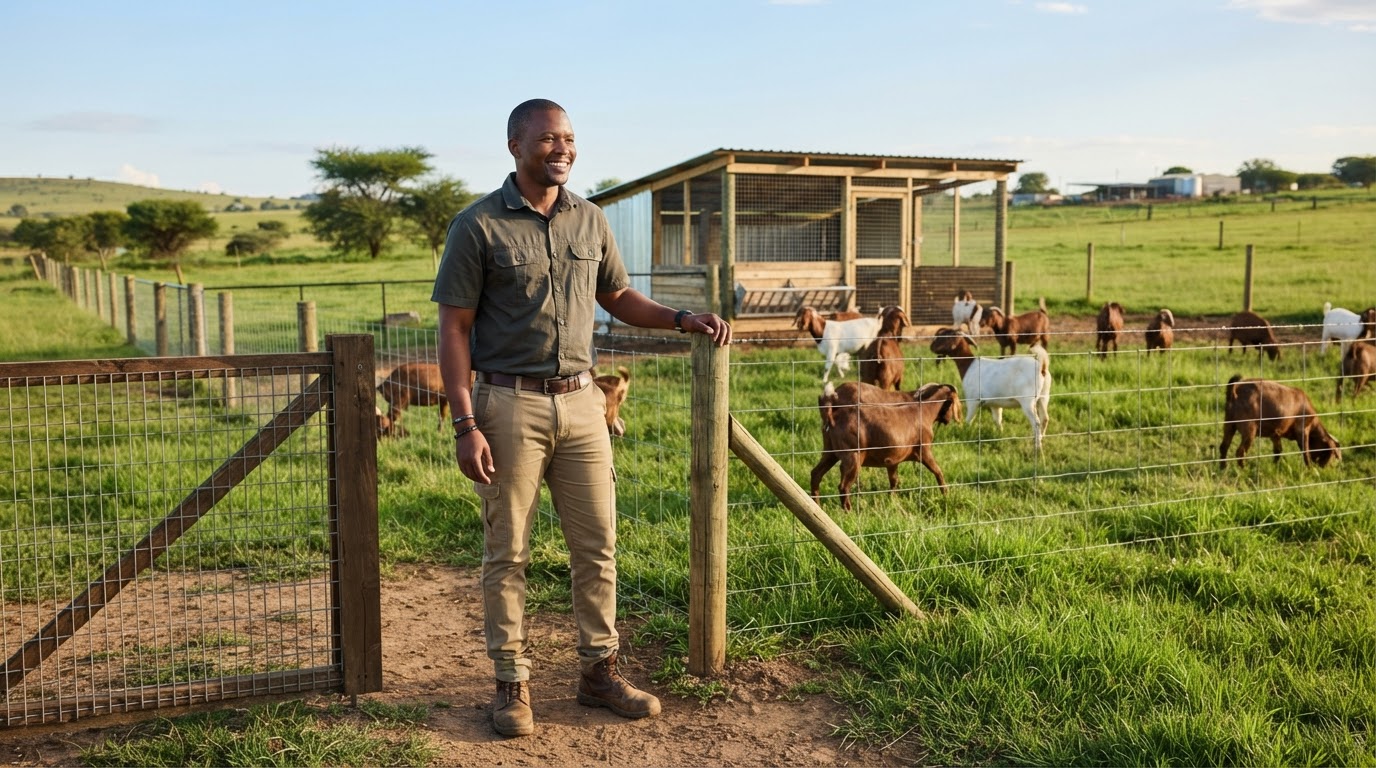
Goat housing does not need to be expensive to be effective. A well-designed enclosure should protect animals against rain, excessive heat, predators and theft, while helping farmers maintain hygiene and manage breeding groups.
Poorly drained housing is especially troublesome during rainy periods, while inadequate shade and water access can affect animals in hot, dry regions.
Essential Goat Housing Features
An effective goat shelter should have:
- A weatherproof roof.
- Adequate ventilation.
- Dry, well-drained floors.
- Sufficient resting space.
- Safe feeding and drinking areas.
- Secure gates.
- Separate pens where needed.
- Materials that can be cleaned and maintained.
An initial allowance of about 1–1.5 m² of covered space per adult can help with preliminary budgeting, but final dimensions must match animal size, climate, stocking density and applicable welfare recommendations.
Choosing Building Materials
| Material | Potential advantage | Important limitation |
|---|---|---|
| Timber | Simple construction | Susceptible to rot and termites |
| Treated poles | Often locally available | Need secure installation |
| Concrete blocks | Durable | Higher startup cost |
| Corrugated roofing | Practical weather protection | Can become hot without ventilation |
| Wire mesh | Visibility and ventilation | Must be securely anchored |
| Earthen flooring | Low initial cost | Requires drainage and cleaning |
In high-rainfall areas, floor drainage and dry bedding are especially important.
Affordable Housing Budget for Twenty Goats
| Item | Illustrative cost |
|---|---|
| Posts and supporting timber | $220 |
| Roofing materials | $280 |
| Wire mesh and fencing | $300 |
| Gates and hinges | $80 |
| Feed troughs | $70 |
| Water containers | $50 |
| Drainage and floor preparation | $100 |
| Total | $1,100 |
Labour, material prices and local construction requirements can substantially change this estimate.
Designing Grazing Paddocks
Rotational grazing or browsing can help control forage use, allow vegetation to recover, and improve herd management.
Divide suitable grazing land into paddocks based on local carrying capacity rather than using a fixed goats-per-hectare figure across all African climates.
A semi-arid rangeland may support far fewer goats per hectare than productive cultivated forage land.
Protecting Goats from Theft and Predators
Use secure night enclosures, reliable locks, strong fencing, and routine headcounts. Repair damaged fencing promptly.
Avoid dangerous wire ends, exposed nails and gaps through which kids can escape.
Waste Management
Regularly remove accumulated manure and spoiled bedding. Compost manure appropriately and prevent runoff from contaminating water sources.
Goat manure can support crop production, but fresh manure should be managed with care around food crops.
Frequently Asked Questions
Can goats sleep outside? They need appropriate protection from weather, predators and other hazards. The level of shelter required depends on the local conditions.
Is raised flooring necessary? Not universally. It may be beneficial in certain wet settings, but well-drained ground-level housing can also work.
How much grazing land do twenty goats require? There is no reliable universal figure. Base the calculation on forage production, season, supplementary feed and grazing management.