Introduction
Breeding is the foundation of a sustainable goat farming enterprise. Farmers who manage mating carefully, maintain healthy breeding animals, and protect newborn kids have a better chance of building productive herds.
A successful breeding program should focus on healthy offspring and efficient use of resources, not simply producing the highest possible number of births.
Selecting Breeding Does and Bucks
Select animals with:
- Good overall health and body condition.
- Sound legs, feet and movement.
- Suitable reproductive development.
- Proven maternal ability where records are available.
- Characteristics suited to the farm’s production goals.
- No known serious inherited defects.
Avoid repeatedly mating close relatives. Maintain breeding records and replace or rotate bucks where appropriate to manage inbreeding.
Understanding the Breeding Cycle
A typical goat pregnancy lasts approximately 150 days, although the exact duration varies.
Does usually have an estrous cycle of around 21 days, with variation between animals and breeds.
Young females should be bred based on adequate physical development and body weight, not age alone. Consult a local livestock specialist about appropriate breeding readiness.
Breeding Calendar Example
| Stage | Example timing |
|---|---|
| Health and body-condition assessment | Before mating |
| Controlled mating | Month 1 |
| Pregnancy management | Months 2–5 |
| Kidding preparation | Near the expected due date |
| Birth and colostrum monitoring | Kidding |
| Kid growth monitoring | Following weeks |
| Weaning | Based on age, feed intake and development |
In seasonal systems, plan kidding periods so that does have sufficient feed during late pregnancy and lactation.
Preparing for Kidding
Provide a clean, dry and sheltered kidding environment.
As delivery approaches, inspect pregnant does more frequently without causing unnecessary disturbance.
Know how to contact a veterinarian promptly if prolonged labour, abnormal presentation, severe weakness or other complications occur.
Caring for Newborn Kids
After birth:
- Confirm that the kid is breathing normally.
- Ensure the kid is warm and dry.
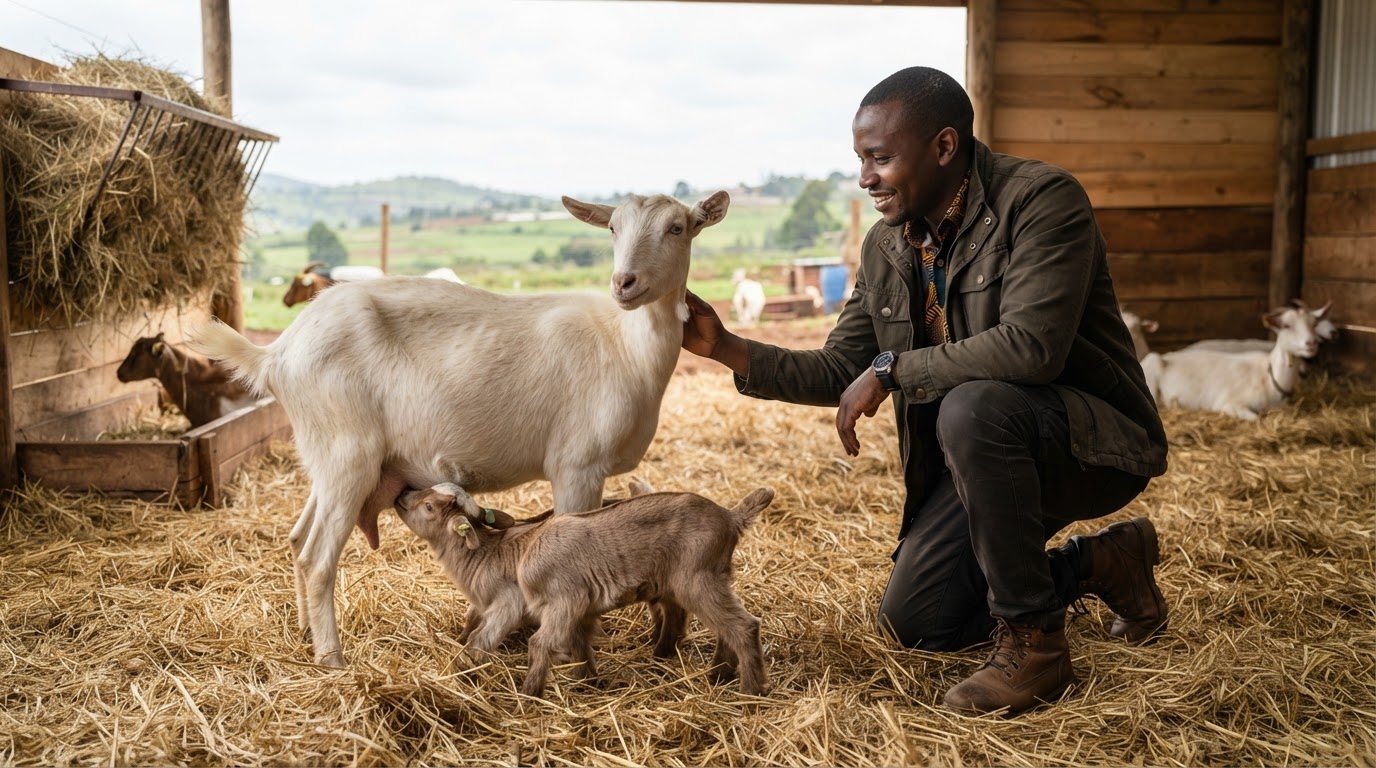
- Check that the mother accepts and nurses the kid.
- Make sure the kid receives colostrum promptly.
- Inspect the umbilical area and follow local veterinary hygiene advice.
- Record the birth date, dam, sex and any complications.
Do not delay veterinary assistance when a kid is weak, unable to nurse or showing signs of illness.
Reducing Kid Mortality
Kid survival improves when farmers pay attention to maternal nutrition, colostrum intake, warmth, hygiene, parasite control and early detection of illness.
Separate vulnerable young animals from unnecessary exposure to dirty pens and overcrowding.
Weaning and Replacement Selection
Wean kids according to their health, growth and ability to consume sufficient solid feed.
Choose replacement females based on growth, structural soundness, maternal family performance and suitability for the local environment.
Frequently Asked Questions
How long are goats pregnant? Usually about five months, or approximately 150 days.
How many kids can one goat produce? Single births, twins and sometimes larger litters are possible, depending on breed and management.
When should female goats first be bred? When they have reached an appropriate level of maturity and body development, with guidance suited to the breed.