Introduction
Selling goats profitably requires more than producing healthy animals. Farmers must understand where buyers operate, what those buyers value, and how transport, commissions and marketing expenses affect final earnings.
Goat markets differ substantially between African countries and even between districts in the same country.
Main Goat Sales Channels
Livestock Markets and Auctions
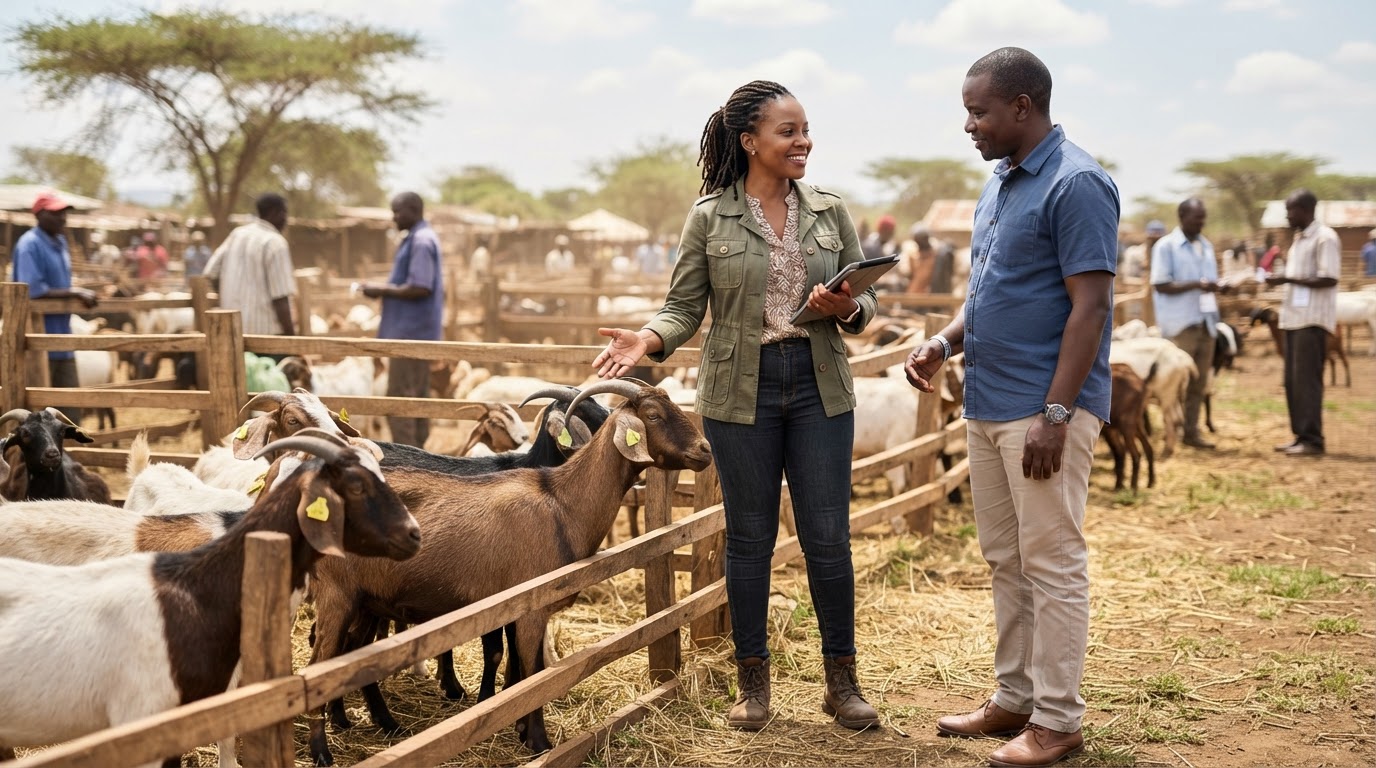
Livestock markets can connect farmers with multiple traders and buyers. Check market days, seller fees, veterinary inspection requirements, and transport conditions before taking animals.
Local Livestock Traders
Traders may purchase animals directly from farms, potentially reducing the farmer’s transport burden.
However, compare several offers and understand whether the quoted price is per animal or by live weight.
Butcheries and Meat Buyers
Some butcheries and meat businesses purchase live goats or source animals through approved slaughter facilities.
Confirm the required weight, condition, health documentation and lawful slaughter arrangements.
Breeding-Stock Buyers
Farmers with well-managed breeding programs may sell selected bucks and does to other producers.
Buyers may expect records of age, parentage, health status, weight and reproductive performance.
Direct Household Buyers
Direct sales may be possible for household consumption and cultural occasions, subject to local animal movement and trading requirements.
Building repeat customer relationships can reduce dependence on intermediaries.
Comparing Market Channels
| Sales channel | Possible advantage | Main challenge |
|---|---|---|
| Livestock auction | Access to multiple buyers | Fees and price uncertainty |
| Trader | Convenient collection | Negotiating power |
| Butchery | Potential repeat demand | Quality and delivery requirements |
| Breeding buyer | Potential premium for quality | Records and reputation required |
| Direct household sale | Direct negotiation | Finding buyers and arranging collection |
How Much Profit Can One Goat Generate?
Consider a goat-fattening example:
| Item | Illustrative amount |
|---|---|
| Purchase price | $55 |
| Feed and supplements | $22 |
| Veterinary and health expenses | $6 |
| Transport and selling costs | $9 |
| Total direct cost | $92 |
| Selling price | $115 |
| Contribution before overheads | $23 |
In this example: $115 − $92 = $23.
The $23 is not full net profit. Housing costs, depreciation, financing, mortality risk, and labour may reduce it further.
If the selling price fell to $85 while costs remained unchanged, the direct loss would be $7 per animal.
What Affects Goat Selling Prices?
Price is influenced by:
- Breed and genetic quality.
- Age, live weight and body condition.
- Sex and breeding suitability.
- Local supply and demand.
- Transport distance.
- Seasonal and cultural buying patterns.
- Veterinary requirements and market access.
Some premium breeding animals may sell for substantially more than ordinary slaughter goats, but breeding-stock prices should not be applied to all animals in a business forecast.
Selling Goats in Zimbabwe
Zimbabwe has village-level sales, local traders and more formal livestock marketing channels. Prices vary by district and livestock type.
The 2025 ZimLAC rural livelihoods assessment includes district-level goat price information, providing an example of why national averages cannot substitute for checking the buyer’s local market.
For other markets, including Kenya, Uganda, Zambia and Tanzania, farmers should similarly compare local auction prices, trader quotations and direct-buyer demand before finalizing a sales budget.
Marketing Strategies for Farmers
- Weigh goats or obtain reliable weight estimates before negotiating.
- Keep clear photos and animal descriptions.
- Establish relationships with more than one buyer.
- Record sales prices and transaction costs.
- Plan sales around realistic demand, not speculative price peaks.
- Maintain animal identification and health records.
- Check applicable transport, welfare and trading rules.
- Avoid accepting payment arrangements that cannot be verified.
Frequently Asked Questions
Where is the best place to sell goats? The best channel is the one that produces the strongest reliable net return after all costs and risks are considered.
Are breeding goats more valuable than meat goats? Selected quality breeding animals can attract premiums, but demand and verified breeding value matter.
How do I calculate profit per goat? Subtract the purchase or allocated production costs, feeding expenses, veterinary costs, transport, selling fees and applicable overheads from the selling price.