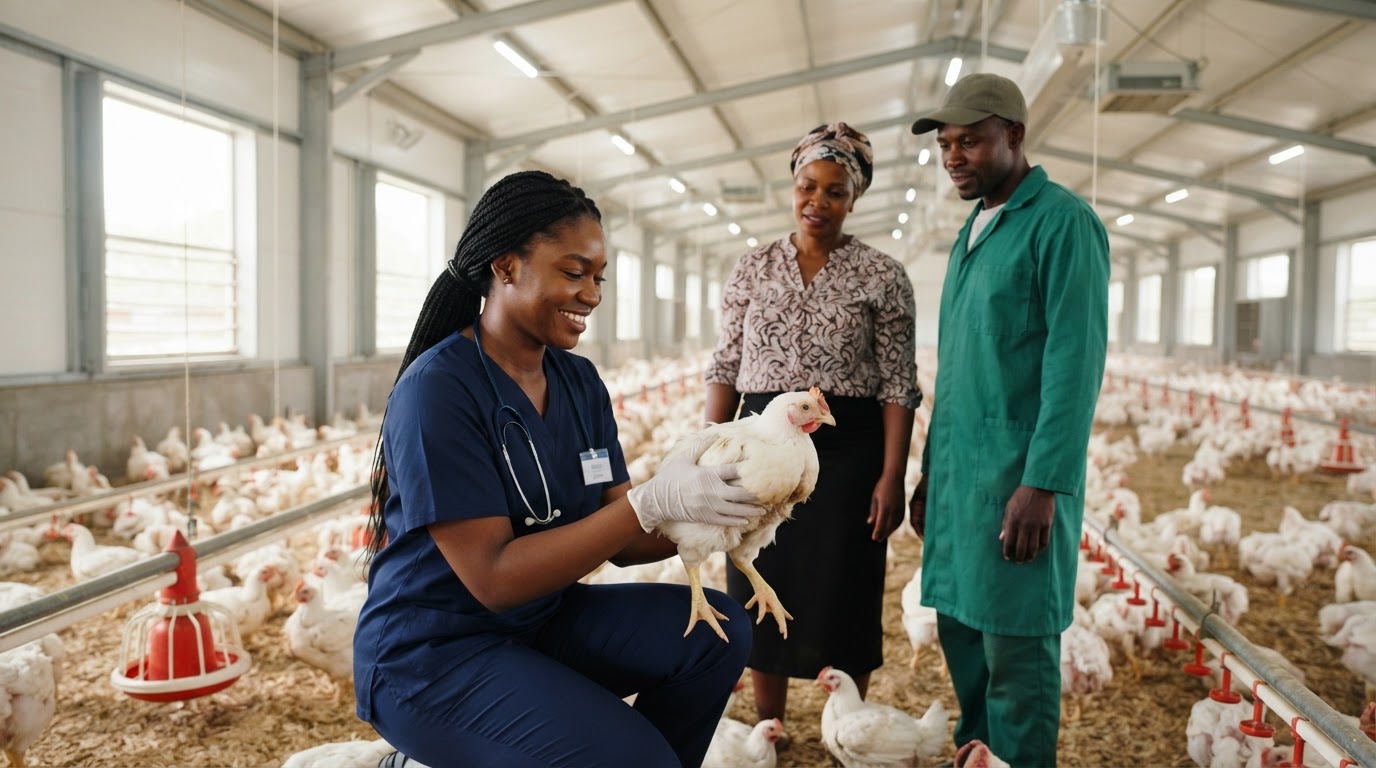
Disease can threaten both the welfare of broiler chickens and the financial survival of a poultry enterprise. Farmers should learn to recognize warning signs, establish preventive routines and obtain professional veterinary assistance rather than relying on guesswork.
Why Disease Prevention Matters
Poultry diseases can spread through infected birds, contaminated equipment, people, feed, water, wild birds and pests.
Effective flock management combines biosecurity, nutrition, clean housing and appropriate veterinary oversight.
FAOHome+1
Common Diseases and Health Problems
Disease or
                        Possible warning signs           Appropriate response
condition
Respiratory, digestive or
                                                         Isolate, restrict movement
Newcastle disease       neurological signs; sudden
                                                         and contact a veterinarian
                        deaths
Infectious bursal Depression, ruffled feathers, Veterinary examination disease (Gumboro) diarrhoea, mortality and prevention review
Diarrhoea, reduced appetite,     Veterinary diagnosis;
Coccidiosis             poor growth; sometimes blood in improve litter
                        droppings                        management
Coughing, sneezing and           Veterinary assessment
Infectious bronchitis
                        respiratory distress             and biosecurity
Respiratory problems, weakness Professional diagnosis and
Colibacillosis
                        and systemic illness             treatment decisions
Improve cooling and
                        Panting, spread wings, reduced
Heat stress                                              airflow; obtain urgent
                        activity and possible deaths
                                                         support
Avian influenza         Variable signs including         Immediately contact the
                        respiratory illness and sudden   relevant veterinary
                      mortality                          authority
Signs overlap, so visual observation alone cannot reliably identify the disease.
Newcastle Disease
Newcastle disease is an important viral poultry disease in many farming systems.
Prevention involves sourcing healthy chicks, maintaining biosecurity and following vaccination programmes appropriate to the local disease risk and veterinary authority guidance.
There is no justification for assuming that every respiratory problem is Newcastle disease.
Gumboro Disease
Gumboro, also known as infectious bursal disease, can affect the immune system of young chickens.
Vaccination planning must consider maternal antibodies, local exposure risk, vaccine type and manufacturer instructions.
Coccidiosis
Coccidiosis is caused by protozoan parasites that affect the digestive tract.
Wet litter and contaminated environments can increase exposure. Prevention includes managing litter, stocking density, water leakage and the appropriate coccidiosis-control strategy for the chosen feed programme.
Avian Influenza
Highly pathogenic avian influenza is a serious animal-health concern and may be subject to compulsory reporting and movement controls.
If a suspicious outbreak occurs, avoid moving or selling birds and contact the responsible veterinary authority promptly. WOAH specifically emphasizes reporting suspected avian influenza and effective biosecurity.
World Organisation for Animal Health+1
Daily Disease-Prevention Routine Check the flock at least daily for activity, feed and water consumption, droppings, breathing, temperature and deaths.
Record unusual findings, remove dead birds safely according to veterinary and local requirements, and maintain equipment hygiene.
Restrict visitors and avoid sharing uncleaned poultry equipment between farms.
What to Do When Chickens Become Sick
Stop unnecessary movement of birds and equipment, isolate affected birds when feasible and safe, and contact a qualified veterinarian.
Do not sell sick birds or administer antibiotics indiscriminately. Treatment should be based on professional diagnosis, lawful medicine use and applicable withdrawal periods.
Financial Impact of Disease
In the 100-broiler model, the difference between selling 95 birds and selling only 85 at the same weight and price is:
10×2.1×$2.90 = $60.90
That excludes wasted feed, additional veterinary costs and any loss of growth among surviving birds.
FAQs
What is the most dangerous broiler disease?
The relative threat depends on the country and outbreak conditions. Newcastle disease, highly pathogenic avian influenza and other serious diseases warrant particular attention.
Can antibiotics prevent viral diseases?
Antibiotics do not treat viral infections and should not be used routinely without professional justification.
What causes blood in chicken droppings? Coccidiosis is one possibility, but other conditions can cause abnormal droppings. Veterinary diagnosis is important.
Should I vaccinate sick chickens?
Do not make that decision without veterinary advice; vaccination during illness may be inappropriate depending on the situation.
Resources
WOAH Avian Influenza
FAO Poultry Health and Management