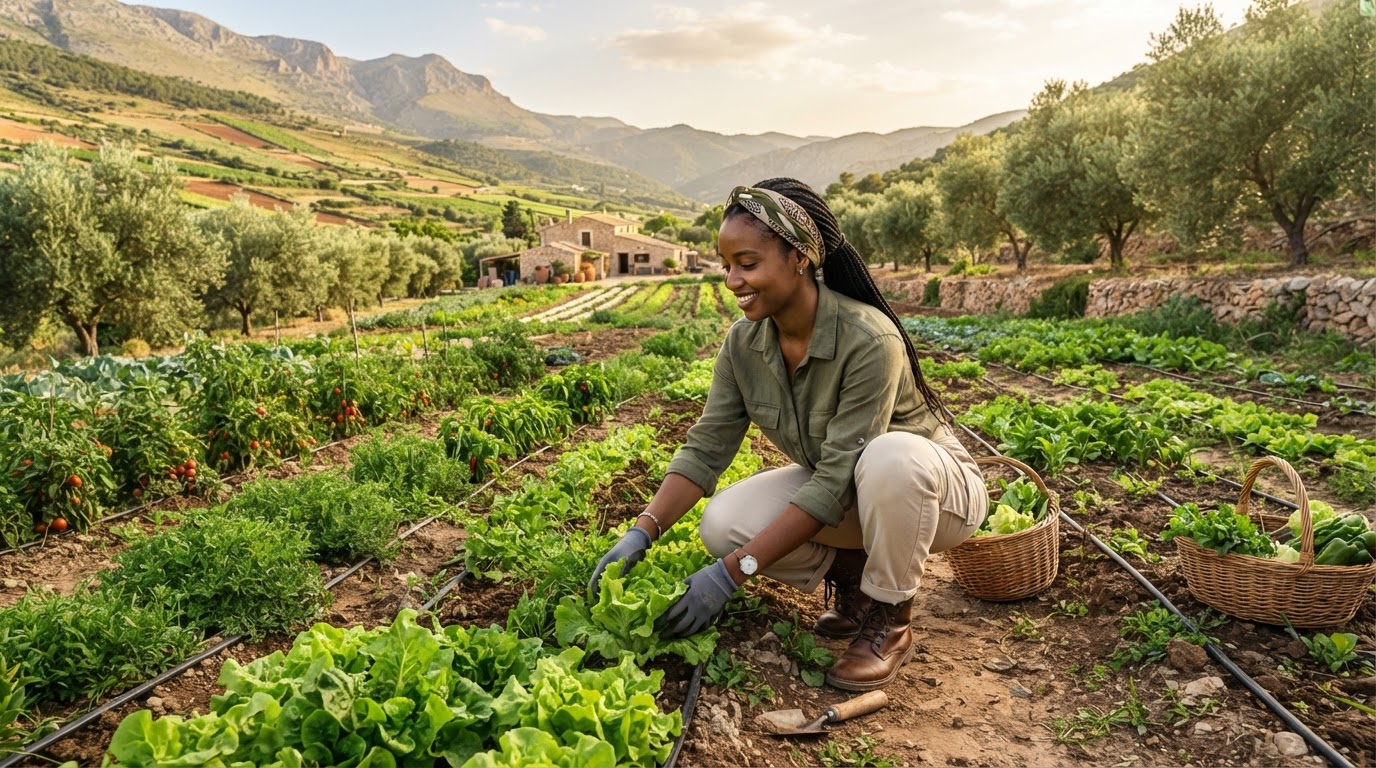
North Africa’s agricultural opportunities are shaped by limited rainfall, high temperatures, Mediterranean growing conditions and dependence on irrigation.
Countries including Egypt, Morocco, Algeria, Tunisia, Libya and Sudan contain diverse agricultural environments, ranging from fertile river valleys to dryland and desert farming systems.
Understanding North Africa’s Agricultural Climate
Mediterranean coastal areas generally receive most rainfall between autumn and spring, while desert regions receive limited and unreliable rainfall.
Egyptian agricultural production depends heavily on managed irrigation. Sudan also includes summer-rainfall agricultural zones that differ significantly from Mediterranean environments.
North Africa Farming Calendar
Market Demand and Agricultural Opportunities
North Africa supports markets for cereals, olives, dates, citrus fruits, vegetables, potatoes and agricultural exports.
Water-efficient horticulture and protected cultivation may provide commercial opportunities where water allocations, infrastructure and market demand are suitable.
Who Is This Guide For?
This guide is suitable for agricultural entrepreneurs, dryland farmers, horticultural producers and farmers interested in irrigation-based production.
Country-Specific Agricultural Conditions
| Country | Agricultural considerations |
| Egypt | Nile irrigation, intensive crop production and water allocation |
| Morocco | Mediterranean agriculture, drought risk and irrigated horticulture |
| Algeria | Coastal cereals, olives and dryland production |
| Tunisia | Olive production, cereals and water scarcity |
| Libya | Limited rainfall and irrigation dependence |
| Sudan | Irrigated agriculture and seasonal rain-fed production |
Best Crops for North African Farming
Wheat, barley, chickpeas, lentils, olives, dates, citrus fruits, onions, tomatoes, peppers and potatoes are important options in suitable production environments.
Long-term orchard projects require separate establishment budgets and realistic estimates of the time required to reach commercial production.
Startup Cost Breakdown: Quarter-Hectare Irrigated Onion Farming
| Expense | Estimated cost |
| Land preparation | $100 |
| Seeds and seedlings | $100 |
| Fertilizer and soil amendments | $180 |
| Drip irrigation equipment | $300 |
| Crop protection | $90 |
| Labour | $180 |
| Water and energy | $150 |
| Harvesting and packaging | $100 |
| Transportation | $70 |
| Emergency reserve | $130 |
| Total startup capital | $1,400 |
This example assumes an existing legal and reliable water supply.
Equipment and Supplies
Requirements may include drip irrigation lines, filters, pressure regulators, suitable pumps, planting tools, water-testing equipment and harvesting containers.
Step-by-Step Production Guide
Step 1: Confirm Water Availability
Determine whether the farm has sufficient legally accessible water throughout the growing season.
Step 2: Test Soil and Irrigation Water
Assess soil fertility, drainage and salinity.
Step 3: Select Appropriate Onion Varieties
Choose varieties suited to local day length, temperatures and market requirements.
Step 4: Establish Irrigation
Install and test an efficient irrigation system.
Step 5: Manage Crop Nutrition and Health
Monitor soil moisture, crop development, weeds and pests.
Step 6: Harvest, Cure and Market
Cure suitable onion varieties properly and store them under appropriate conditions before sale.
Fertilizer and Irrigation Management
Water-efficient irrigation is particularly important in arid agricultural environments.
Salinity management, soil testing and appropriate nutrient applications can help reduce production risks. Water conservation should not come at the expense of crop requirements or long-term soil health.
Disease and Pest Management
Onion production may be affected by thrips, downy mildew, purple blotch, basal rot and other diseases.
Use crop rotation, healthy seedlings, appropriate irrigation and integrated pest management.
Production Timeline and Expected Yields
Onion production may require approximately three to six months, depending on variety, planting method and climate.
Market Prices and Profit Analysis
| Financial indicator | Conservative | Typical model | Favourable |
| Marketable yield | 3,000 kg | 5,000 kg | 7,000 kg |
| Selling price/kg | $0.20 | $0.35 | $0.45 |
| Revenue | $600 | $1,750 | $3,150 |
| Operating expenses | $970 | $970 | $1,120 |
| Operating surplus | -$370 | $780 | $2,030 |
| First-cycle cash result | -$670 | $480 | $1,730 |
First-cycle results include the $300 irrigation investment but exclude unspent reserves.
Break-Even Analysis
At 5,000 kg of marketable onions, the operating break-even selling price is approximately $0.194 per kilogram.
Where to Sell
Potential buyers include wholesalers, supermarkets, fresh produce markets, food processors and agricultural exporters.
Risks and Challenges
Water scarcity, salinity, extreme heat, rising energy costs, disease outbreaks and market competition are important commercial risks.
How to Scale the Business
Prioritize water efficiency, soil health, suitable storage, buyer agreements and production systems that remain within sustainable water allocations.
Frequently Asked Questions
When is the main farming season in North Africa?
Mediterranean cereal production commonly follows autumn and winter rainfall, while irrigated farming may support additional growing seasons.
Can farming succeed in desert regions?
Some irrigated systems are feasible, but water availability, salinity, environmental sustainability and infrastructure costs are critical.
Which crops are suitable for dry climates?
Barley, olives, dates and selected drought-tolerant crops may be appropriate in suitable environments.
Is drip irrigation suitable for North African agriculture?
It can improve water application efficiency when properly designed, operated and maintained.