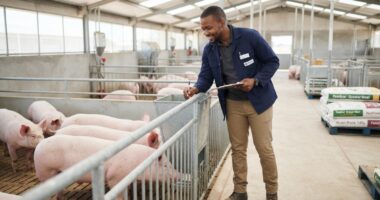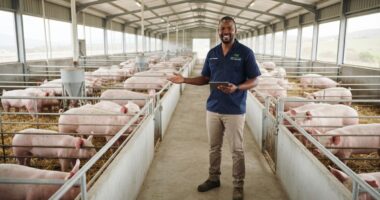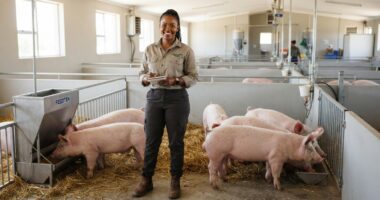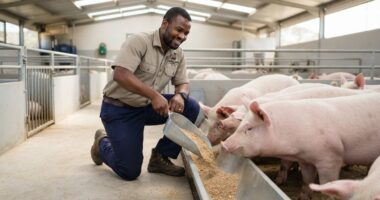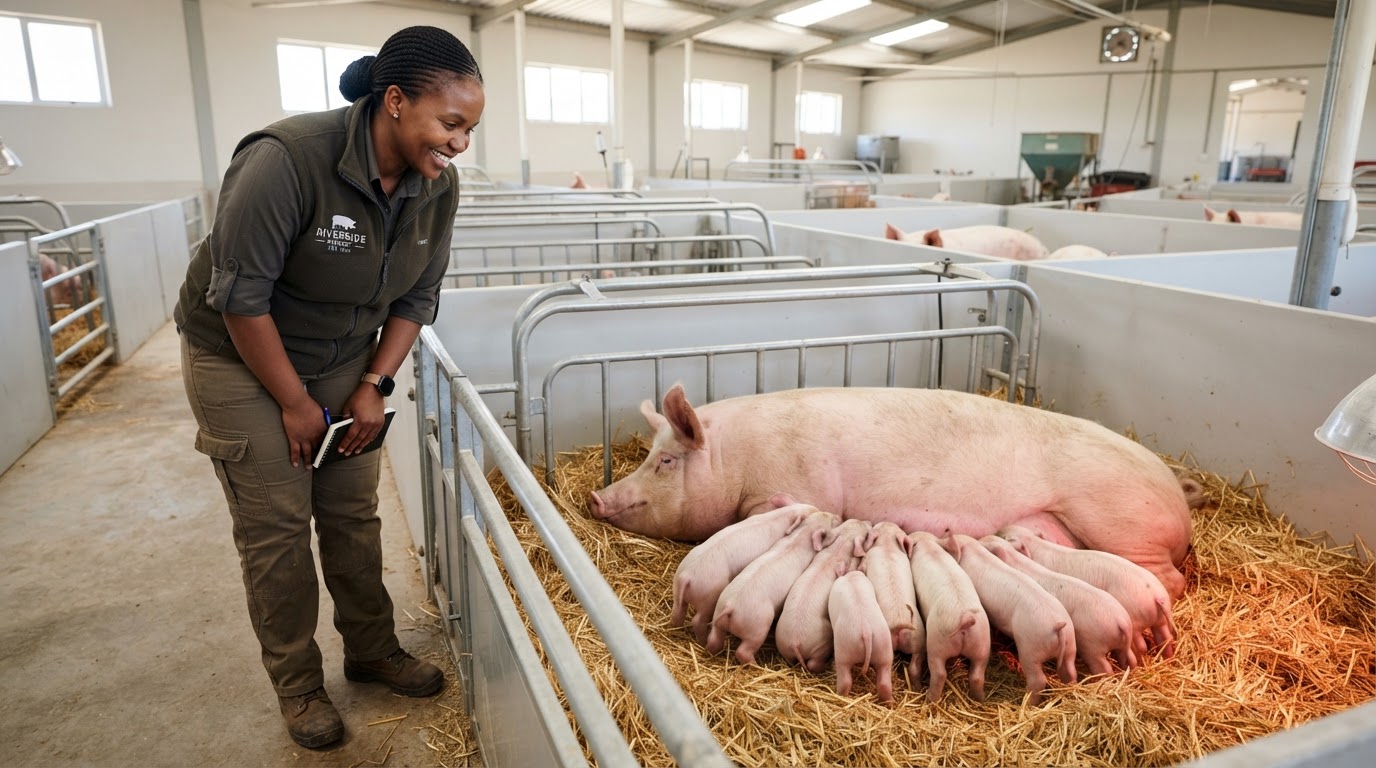
What Is a Pig Breeding Business? A pig breeding enterprise produces piglets for sale or for growing into market- ready pigs.
Instead of purchasing weaners for every fattening batch, the farmer maintains breeding females, called sows, and arranges mating through a suitable boar or artificial insemination service.
Pig breeding can create repeat production opportunities, but it requires greater technical knowledge than simply fattening purchased pigs.
Fertility problems, piglet mortality, feeding costs and reproductive delays can seriously affect returns.
Step 1: Decide What Your Breeding Farm Will Sell
A breeding operation may supply:
Weaned piglets to other farmers.
Selected gilts or boars for breeding.
Grower pigs.
Finished slaughter pigs.
Piglets retained for the farmer's own fattening business.
These income streams require different housing, feeding and marketing strategies.
Selling weaned piglets may reduce the time spent feeding animals to finishing weight, but revenue depends on consistent litter production and local demand.
Step 2: Select Suitable Breeding Stock
Choose breeding females with sound legs, healthy body condition and reliable genetic backgrounds.
For commercial production, farmers may investigate crosses involving established maternal breeds such as Large White and Landrace.
Potential breeding boars should be selected for health, performance, sound structure and suitability for the breeding objective. Avoid unplanned mating and uncontrolled inbreeding.
A qualified animal breeding specialist or veterinarian can help evaluate replacement stock.
Step 3: Understand the Pig Reproductive Cycle
A sow’s pregnancy is approximately 114 days, often remembered as three months, three weeks and three days.
After farrowing, piglets nurse and gradually transition to suitable feed.
The appropriate weaning age depends on the production system, piglet health, nutrition and veterinary guidance.
After weaning, the sow needs to return to an appropriate reproductive condition before breeding again.
A breeder should maintain individual records of mating dates, pregnancy checks, farrowing dates, litter sizes, weaned piglets and subsequent performance.
Step 4: Plan Housing for Sows and Piglets
A breeding piggery requires areas for pregnant sows, farrowing and piglet care.
Farrowing accommodation should minimise crushing risk, allow safe observation and provide a suitable warm environment for newborn piglets.
Piglets have different temperature needs from adult sows, so housing must accommodate both.
Cleanliness is especially important around birth and early life.
Step 5: Prepare an Illustrative Breeding Startup Budget
Consider a small pilot with three breeding females and access to an appropriate mating service.
Illustrative
Initial investment
                                         cost
Three breeding-age females at $180       $540
Housing, farrowing and basic pen
                                             $1,800
provisions
Feeders, drinkers and water equipment $300
Basic biosecurity and handling
                                             $200
equipment
Initial investment $2,840
This is a hypothetical startup illustration only.
It excludes ongoing feed, artificial insemination or boar costs, veterinary care, pregnancy and farrowing management, utilities, labour and piglet- rearing expenses.
A farmer should not treat $2,840 as a complete breeding-business budget.
Step 6: Estimate Piglet Sales
Suppose three sows produce one litter each during an illustrative accounting period.
Assume eight piglets are successfully weaned per litter.
3 × 8 = 24 weaned piglets
If 24 piglets sell at an illustrative $45 each:
24 × $45 = $1,080
This is gross piglet revenue, not profit.
The farm still needs to pay for breeding stock feed, reproduction, piglet feed, animal health, housing depreciation and labour.
The model also does not establish how many litters will be produced in a year.
Step 7: Improve Piglet Survival
Piglet survival depends on healthy breeding females, good farrowing management, timely access to colostrum, suitable warmth, sanitation and professional animal-health care. Watch for weak piglets, poor nursing, crushing risks and signs of illness.
Contact a veterinarian promptly when piglets or sows show health problems.
Maintain careful records of piglets born alive, stillbirths, pre-weaning deaths and piglets weaned.
Step 8: Build a Breeding Performance Dashboard
Monitor these figures for each sow:
Indicator What it measures
Litters per sow per year Reproductive productivity
Piglets born alive Birth performance
Piglet survival and
Piglets weaned per litter
                             management
Weaning weight Early growth
Days between farrowings Reproductive efficiency
Feed and health cost per
                             Production expenditure
litter
These measures can reveal whether the farm is producing more saleable piglets at an economically sustainable cost.
FAQs
How long is a pig pregnant?
Approximately 114 days, although individual pregnancies can vary.
How many piglets can a sow produce?
Litter size varies significantly by genetics, parity, nutrition, health and management. Avoid building a business plan around an assumed maximum litter size.
Is pig breeding more profitable than pig fattening? Neither system is universally more profitable. Breeding requires different investments and carries additional reproductive and piglet-survival risks.