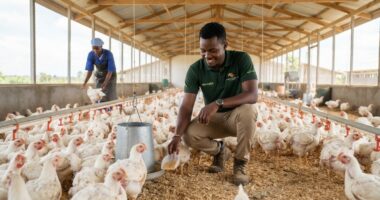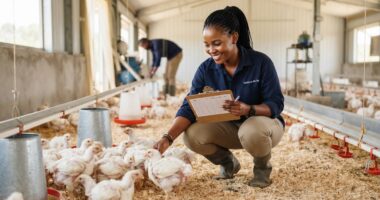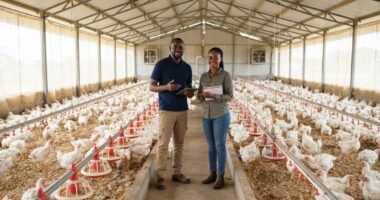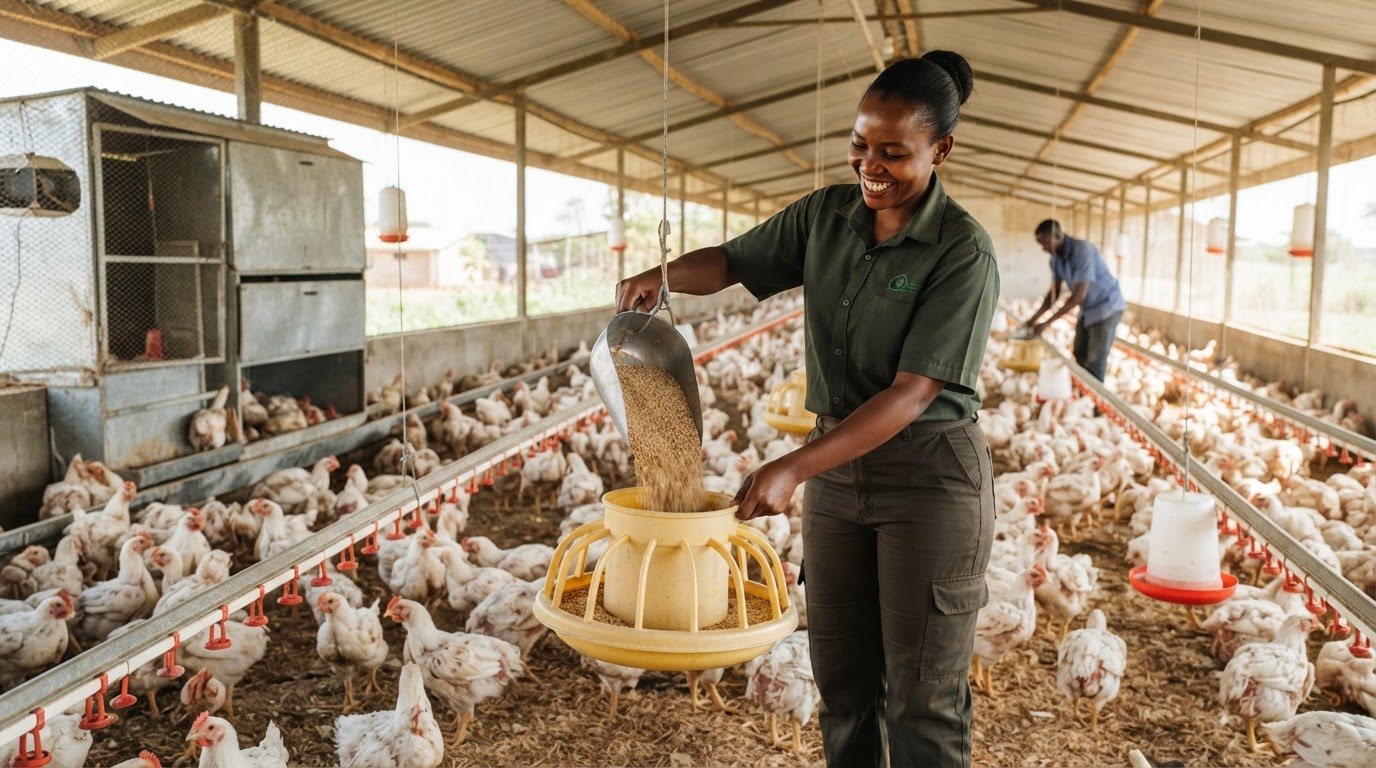
Feed management is one of the most important aspects of broiler production. A well-managed flock needs balanced nutrition, sufficient water and regular monitoring to support healthy growth.
Using a cheaper ration that lacks essential nutrients can slow growth, worsen feed conversion and reduce sales revenue.
Understanding Broiler Feed Phases
Commercial broiler feeding programmes typically use different rations as chickens mature.
Illustrative age
Phase                        Main purpose
          range
Starter Days 0–10 Support early development
Growe
          Days 11–24         Support rapid body growth
r
Finishe                      Support finishing and market
          Day 25 to sale
r                            weight
These are example phase boundaries, not universal instructions. Commercial feed suppliers and breeding companies may specify different programmes and nutritional requirements, particularly for slower-growing birds or heavier market weights.
aa-intl.aviagen.com+1
Starter Feed
The first days after chick placement are especially important because early feed and water access influence subsequent growth.
Provide suitable starter feed in accessible trays or feeders and maintain clean, conveniently located drinkers.
Observe whether chicks are actively eating and drinking. Unevenly distributed, lethargic or persistently noisy chicks may indicate problems with temperature, water access or health. Grower Feed
During the grower phase, birds increase their feed consumption as body weight rises.
Maintain sufficient feeder and drinker access, regularly inspect litter and adjust ventilation to remove moisture and excess heat.
Change rations according to the feed manufacturer’s programme rather than assuming every flock must switch on exactly the same date.
Finisher Feed
Finisher diets help support the final phase of production.
Match the selected feed to the market’s target weight and any relevant medication-withdrawal requirements. If a medicated product is used under veterinary guidance, comply with its approved withdrawal period before slaughter.
Feed Consumption Planning
For the financial examples in this cluster, each chick placed is allocated 4.2 kg of feed across the entire cycle.
Chicks Planned 50 kg placed feed bags
100 420 kg 8.4
500 2,100 kg 42
1,000 4,200 kg 84
A farmer’s actual purchase quantities should incorporate packaging increments, a feed-wastage allowance, mortality and observed growth performance.
Understanding Feed Conversion Ratio
Feed conversion ratio, or FCR, compares feed consumed with liveweight gained.
FCR = Feed consumed ÷ Liveweight gained For example, a bird consuming 3.6 kg of feed to gain 2.0 kg of weight has an FCR of 1.8.
For a whole flock, use total recorded feed consumption and the corresponding weight-gain data. Be consistent about whether mortality is included, because adjusted and unadjusted FCR calculations are not identical.
The 4.2 kg planning allowance in this cluster is not itself an FCR.
Water Management
Chickens need unrestricted access to safe drinking water.
Check drinkers repeatedly, clean them as required, repair leaks and monitor consumption. Water shortages can rapidly affect feeding and welfare, especially during hot weather.
Avoiding Feed Wastage
Use correctly adjusted feeders, protect feed from rain and rodents, and store bags off the ground in a dry, ventilated room.
Record each delivery and the amount issued to the flock. Comparing feed purchases with actual consumption helps identify waste, theft or recording errors.
Feeding During Hot Weather
Heat stress may reduce feed intake and impair growth. Improve ventilation, maintain cool and sufficient drinking water, prevent overcrowding and follow veterinary or extension advice on heat-stress management.
Do not restrict water as a way of controlling litter moisture.
Common Feeding Mistakes
Problems include switching feed phases incorrectly, using spoiled feed, overcrowding feeders, poor water access, ignoring weight variation and changing diets abruptly without guidance.
FAQs
Can broilers eat maize alone? Maize can supply energy but does not provide a complete balanced broiler diet by itself.
Is homemade feed cheaper?
It may reduce some costs, but a nutritionally incomplete or poorly mixed ration can become more expensive through slower growth and health problems. Formulation should be reviewed by a qualified poultry nutritionist.
How much feed do 100 chickens need?
This planning model allocates 420 kg. Actual requirements depend on the breed, target sale weight, production duration and performance.
What should I do if feed consumption drops suddenly?
Check water supply, temperature and feed quality, and obtain veterinary advice if the problem persists or birds appear unwell.
Resources
Aviagen Poultry Nutrition and Management
FAO Poultry Management