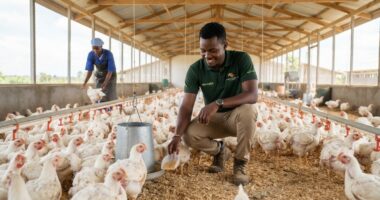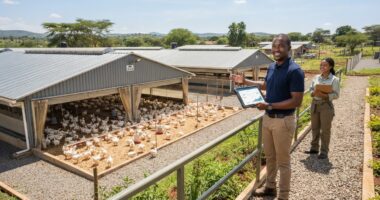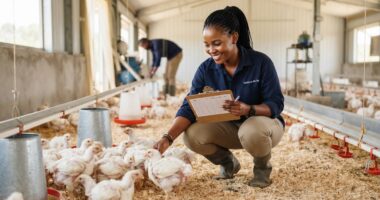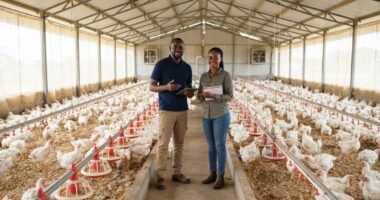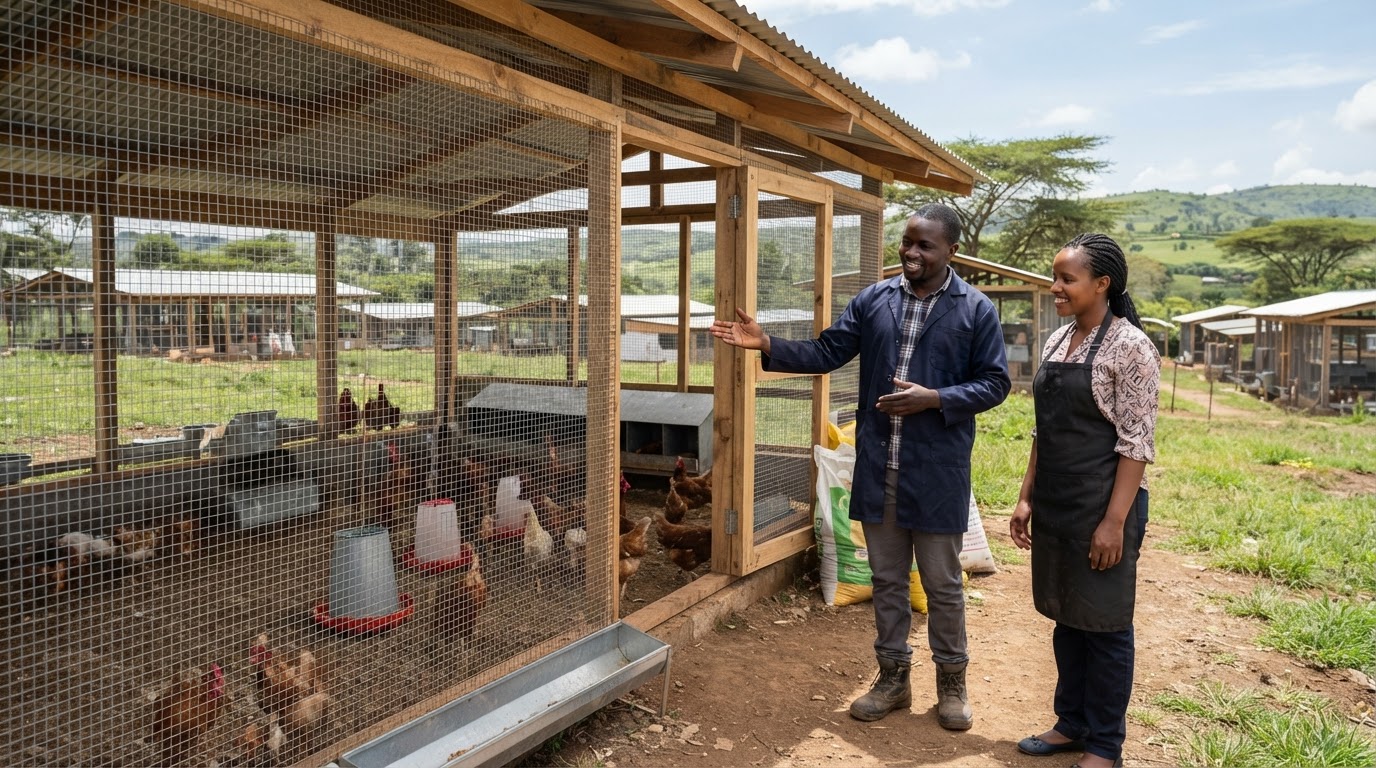
Suitable poultry housing is essential for protecting birds from weather, predators, overcrowding and disease.
A low-cost chicken house does not need expensive materials, but it must provide a healthy environment that can be cleaned and maintained between production cycles.
Choosing a Suitable Site
Select well-drained ground away from flood-prone areas, stagnant water and unnecessary traffic.
Consider access to clean water, feed deliveries, labour, waste disposal and the intended market.
Check local council regulations, agricultural zoning and minimum distances from neighbouring properties or other poultry farms.
Understanding Poultry Housing Systems
Small-scale producers often use open-sided, naturally ventilated buildings with mesh walls, curtains and suitable roofing.
More advanced operations may use mechanically ventilated houses with fans, cooling systems and automated feeding.
FAO notes that small-scale commercial poultry producers often use simple housing constructed from locally available materials, while still needing to meet the environmental and health requirements of their birds.
FAO
How Much Space Do Broilers Need?
Space should be planned around maximum liveweight, not simply the number of
day-old chicks.
Flock      Usable area at 10
size       birds/m²
100 10 m²
500 50 m²
1,000 100 m²
At the model’s typical 2.1 kg sale weight, that represents about 21 kg of live birds per square metre before any allowance for unusable areas.
A lower density may be needed in hot, humid or poorly ventilated housing. Follow applicable local welfare requirements and breeder recommendations.
Essential Housing Features
Roofing and Drainage
The roof should prevent rain from entering and provide sufficient overhang to protect the interior.
Grade surrounding land so stormwater flows away rather than collecting against the building.
Ventilation
Use openings and mesh to permit airflow while excluding wild birds.
Install appropriate curtains or other weather protection so air movement can be managed during rain, wind or cold nights.
Floors and Litter
Floors should be level, dry and easy to clean. A suitable absorbent litter material can help manage droppings and moisture.
Remove excessively wet or caked litter promptly and repair leaking drinkers.
Predator Protection
Fit secure doors and mesh, repair gaps and control rodents.
Brooding Area Provide a safe heat source, reliable temperature monitoring and an appropriately prepared area for young chicks.
Chick behaviour should always be assessed alongside temperature measurements.
Example Low-Cost Materials
Depending on local availability and building standards, farmers may use timber or suitable steel supports, roofing sheets, mesh, curtains and washable feeding equipment.
Avoid unsafe heating arrangements, sharp edges, exposed wiring or materials that cannot be effectively cleaned.
Illustrative Construction Budgets
Flock          Poultry       Equipme
                                         Total
capacity       house         nt
100 $300 $80 $380
500 $1,600 $350 $1,950
1,000 $3,300 $650 $3,950
These are simplified placeholders for low-cost infrastructure, not quotations. Building costs vary dramatically by country, floor type, materials, utilities and level of automation.
Common Housing Mistakes
Avoid poor drainage, insufficient airflow, excessive stocking density, uncontrolled heat, inaccessible drinkers, inadequate cleaning arrangements and a lack of emergency water storage.
FAQs
Can I use an existing building for broilers?
Possibly, after checking its structural safety, ventilation, cleaning requirements, drainage and suitability for poultry. Is an open-sided poultry house suitable in Africa?
It can be, but performance depends on local climate, ventilation management, disease exposure and stocking density.
Do broilers need artificial heating?
Young chicks generally require a suitable brooding environment. The heating system should match ambient conditions and be operated safely.
Is concrete flooring necessary?
Concrete is often easier to clean and disinfect, but building options depend on the local system and technical advice. Any floor must support hygiene, drainage and bird welfare.