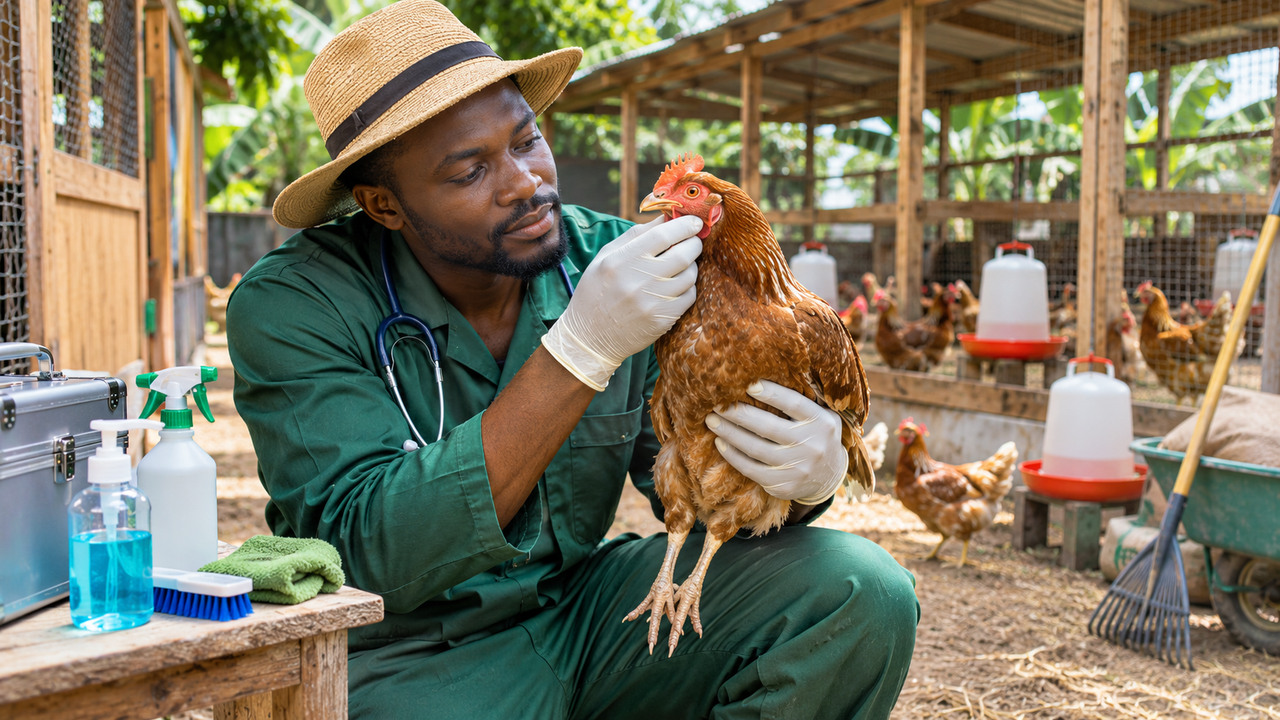
Why Poultry Disease Prevention Matters
Free-range chickens may encounter parasites, contaminated soil, wild birds, rodents and other animals.
Local adaptation does not make a chicken immune to disease.
A smallholder who loses mature birds shortly before sale can lose months of feeding expenses as well as the expected sales revenue.
The best defence combines vaccination where appropriate, biosecurity, nutrition, clean housing and early veterinary attention.
Common Chicken Diseases
| Disease or condition | Possible signs | Key preventive measures |
|---|---|---|
| Newcastle disease | Respiratory problems, nervous signs, sudden deaths | Locally appropriate vaccination and biosecurity |
| Fowl pox | Skin lesions, sometimes lesions in the mouth | Insect management and veterinarian-directed vaccination |
| Coccidiosis | Diarrhoea, weakness, poor growth | Dry bedding, hygiene and veterinary advice |
| Fowl cholera | Sudden deaths, weakness and illness | Biosecurity, sanitation and professional disease control |
| Internal parasites | Poor condition, reduced growth, sometimes diarrhoea | Monitoring and appropriate parasite treatment |
| External parasites | Irritation, feather damage, poor condition | Regular inspection and housing hygiene |
| Avian influenza | Variable symptoms, potentially sudden severe illness | Biosecurity, surveillance and immediate official reporting where required |
Symptoms overlap. Farmers should not attempt to identify serious diseases from appearance alone.
The World Organisation for Animal Health describes Newcastle disease as a highly contagious poultry infection and notes that it can resemble avian influenza, making accurate diagnosis important.
World Organisation for Animal Health
Step 1: Establish Farm Biosecurity
Keep new birds separate from existing flocks for an appropriate observation period.
Restrict unnecessary visitors and avoid sharing unclean equipment between farms.
Control rodents, prevent wild birds from entering feed storage and housing, and separate birds of different ages where practical. Step 2: Develop a Vaccination Programme
Consult a local veterinarian or authorised poultry extension officer about vaccination for Newcastle disease, fowl pox and other locally relevant diseases.
Vaccination schedules differ according to disease risk, vaccine type, bird age, previous vaccination, local law and veterinary recommendations.
Do not rely on a generic internet schedule as a substitute for a locally approved programme.
Step 3: Maintain Clean Housing
Replace wet or contaminated bedding, clean drinkers and prevent stagnant water.
Remove dead birds promptly and dispose of them according to local veterinary and environmental requirements.
Do not sell visibly sick birds or use medication without guidance regarding withdrawal periods.
Step 4: Respond Quickly to Suspected Outbreaks
If birds show severe respiratory symptoms, unusual neurological signs or unexpected deaths:
1. Stop moving birds into or out of the flock.
2. Restrict people and equipment movement.
3. Contact a veterinarian or relevant government veterinary service.
4. Follow official testing and reporting instructions.
5. Avoid opening carcasses or handling suspected high-risk birds without professional direction.
Seasonal Disease Risks
During rainy periods, wet bedding and muddy enclosures increase management challenges. During dry, dusty periods, poor ventilation and environmental stress may contribute to respiratory problems.
Good ventilation, safe water and reasonable stocking density are necessary throughout the year.
FAQs
Do indigenous chickens need vaccination?
Yes, locally adapted chickens can still be affected by serious diseases. A veterinarian should recommend the appropriate vaccination programme.
What is the most dangerous disease for village chickens?
Newcastle disease is a major concern in many village poultry systems, although local disease risks differ.
Can antibiotics prevent Newcastle disease?
No. Newcastle disease is viral. Antibiotics do not prevent or cure the Newcastle disease virus.