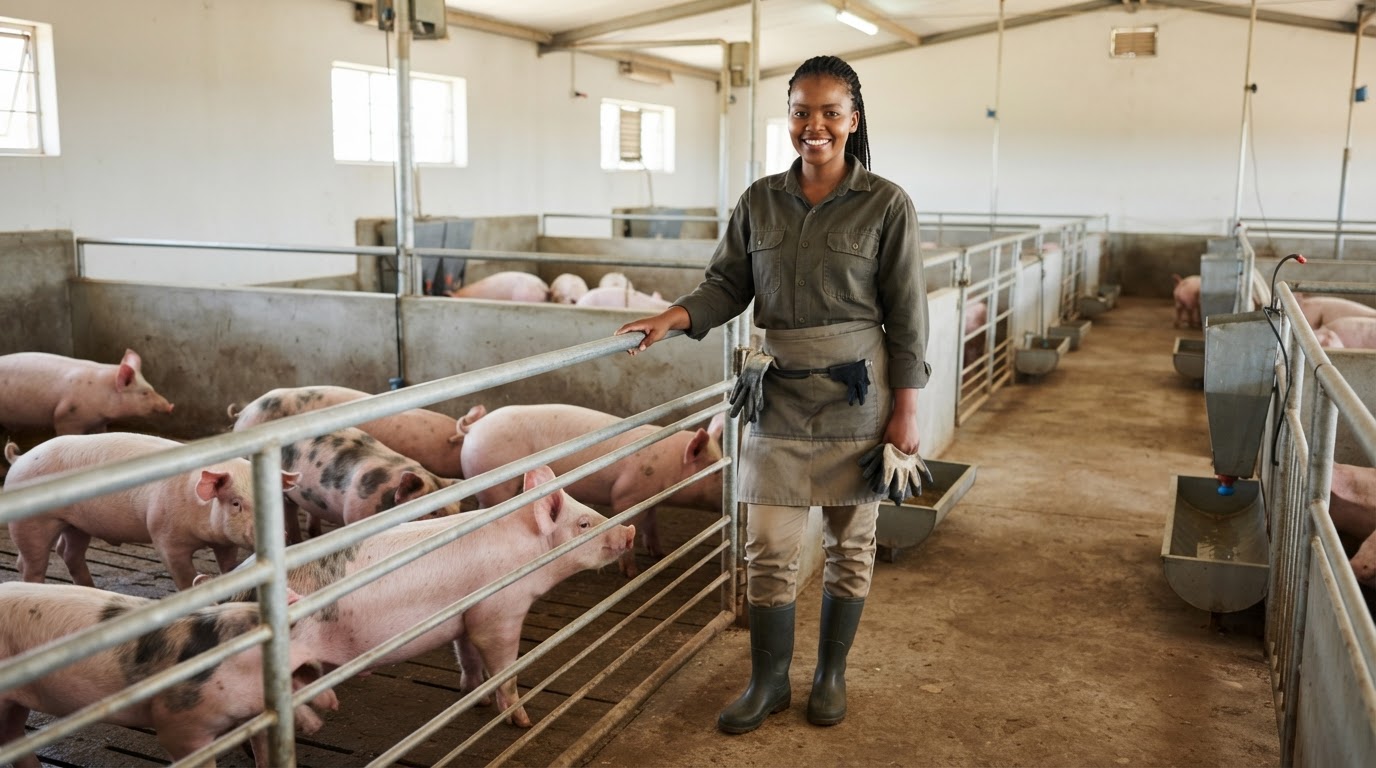
What Is Pig Farming?
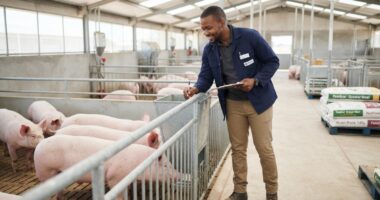
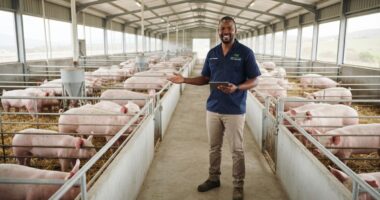
Pig farming, also called piggery farming or swine production, involves raising domestic pigs for commercial purposes.
A farmer may raise young pigs to market weight, breed sows to produce piglets or operate a larger business supplying pigs to butcheries, abattoirs and meat processors.
For beginners, pig fattening is often simpler than pig breeding, because it does not require managing mating, pregnancy, farrowing and newborn piglets. However, both types of farming require daily care, reliable feed supplies and strong biosecurity.
Step 1: Choose Your Pig Farming Business Model
The first decision is what your farm will sell.
Farming
                Main product                      Important consideration
model
Pig fattening Market-ready live pigs Feed cost and growth performance
Fertility, litter survival and sow
Pig breeding Weaned piglets
                                                  care
Farrow-to-      Finished pigs from your own Higher capital and management
finish          breeders                          complexity
Breeding
                Gilts and boars                   Genetics, records and buyer trust
stock
Pork
                Processed meat                    Slaughter, food safety and licensing
production
A beginner with limited capital could test the market by raising five or ten purchased weaners before investing in a larger breeding operation.
Step 2: Research Your Local Pork Market
Before building a piggery, identify potential buyers and their purchasing requirements.
In Zimbabwe, investigate local abattoirs, pork processors, butcheries and livestock buyers. In Kenya and Uganda, compare farm-gate buyers, producer groups and slaughter facilities.
In South Africa, formal processors and abattoirs may require additional documentation, consistency and compliance.
Ask buyers:
- What liveweight range do you purchase?
- Do you pay per kilogram or per animal?
- What price basis do you use?
- Do you arrange collection?
- Are veterinary documents or movement permits required?
- How quickly do you pay?
A farm should produce pigs that match a real market specification rather than raising animals first and searching for buyers afterward.
Step 3: Choose Suitable Pigs
Pig breed selection affects growth rate, reproduction, carcass characteristics and adaptation to the production environment.
Common commercial genetics used in different African markets include Large White, Landrace, Duroc and their crosses.
For meat production, a healthy commercial crossbred weaner from a reputable source may be more practical than choosing pigs by appearance alone.
When purchasing pigs, look for active animals with sound legs, normal breathing, appropriate body condition and a documented health history.
Avoid buying from a source with unexplained deaths or suspected contagious disease.
Step 4: Build Appropriate Pig Housing
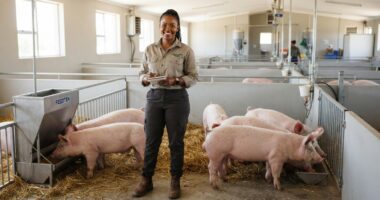
Pigs need secure shelter with ventilation, shade, clean water and an area that can be cleaned effectively.
A simple piggery should provide dry resting areas, suitable drainage, strong partitions, non-slip flooring and accessible feeders.
In hot areas of Zimbabwe, Zambia and northern South Africa, heat management is particularly important.
In humid regions of Uganda, Tanzania, Ghana and Nigeria, ventilation, drainage and waste removal are essential during rainy periods. FAO’s livestock housing guidance discusses housing arrangements for small-scale pig units.
fao.org
Step 5: Arrange Feed and Water
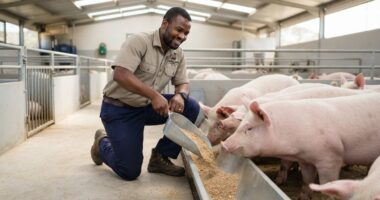
Pigs require balanced diets appropriate to their growth stage.
A typical fattening enterprise purchases weaners, feeds them grower and finisher rations and sells them when they reach the buyer’s preferred weight.
Never assume that maize alone is a complete pig diet. Protein, energy, minerals, vitamins and clean water all affect performance.
In the FarmUP financial model, each pig consumes an illustrative 224 kg of feed while growing from 20 kg to 90 kg liveweight. Actual requirements must be monitored.
Step 6: Establish Biosecurity Before Buying Pigs
African swine fever (ASF) is one of the most serious threats to pig production in Africa.
The disease can cause severe losses and is spread through routes that include infected animals, contaminated materials and infected pork products.
A farm should restrict visitors, control movements, maintain clean equipment, manage feed safely and obtain veterinary guidance about disease prevention.
World Organisation for Animal Health+1
Do not move or sell pigs when a serious contagious disease is suspected.
Step 7: Start Small and Keep Records
A beginner’s first batch should teach the farmer how to measure production performance.
Record the purchase date, starting weight, feed purchases, weekly weight estimates, veterinary expenses, mortality, sale weight and selling price. For example, a farmer purchasing ten 20 kg weaners can calculate total weight gain, feed conversion and operating surplus before deciding whether to expand.
FAQs
Can I start pig farming with five pigs?
Yes. Five pigs can serve as a manageable fattening pilot, provided suitable housing, daily care, feed and a buyer are available.
Is pig farming suitable as a side hustle?
It can be, but pigs must be checked, fed, watered and managed every day. Reliable on-site management is essential.
How long does it take to fatten pigs?
The period depends on the starting weight, target weight, genetics, feed quality and health. This cluster uses a hypothetical four-to-five-month fattening period.
What is the biggest risk in pig farming?
Major risks include serious diseases such as ASF, feed-price increases, poor growth, mortality and low selling prices.