Category: Alternative Livestock & Aquaculture | Commercial Fish Production
Introduction
Catfish farming is an aquaculture business opportunity in parts of Africa, particularly where there is established demand for fresh or processed catfish. African catfish (Clarias gariepinus) is an important aquaculture species in several countries. It can be grown in ponds or tank-based systems when appropriate environmental and management requirements are met. Although catfish can tolerate some challenging conditions, intensive farming still requires careful water-quality management, appropriate feeding and disease prevention.
1. Identify Your Catfish Market
Explore buyers including restaurants, fish traders, processors and retailers. Determine whether customers prefer live fish, fresh whole fish, gutted fish or smoked fish. Processing may add value but also requires appropriate hygiene, equipment, packaging and regulatory compliance.
2. Choose a Catfish Farming System
Earthen ponds
Ponds may be suitable where soil and water conditions allow, but harvesting and stock observation can be challenging.
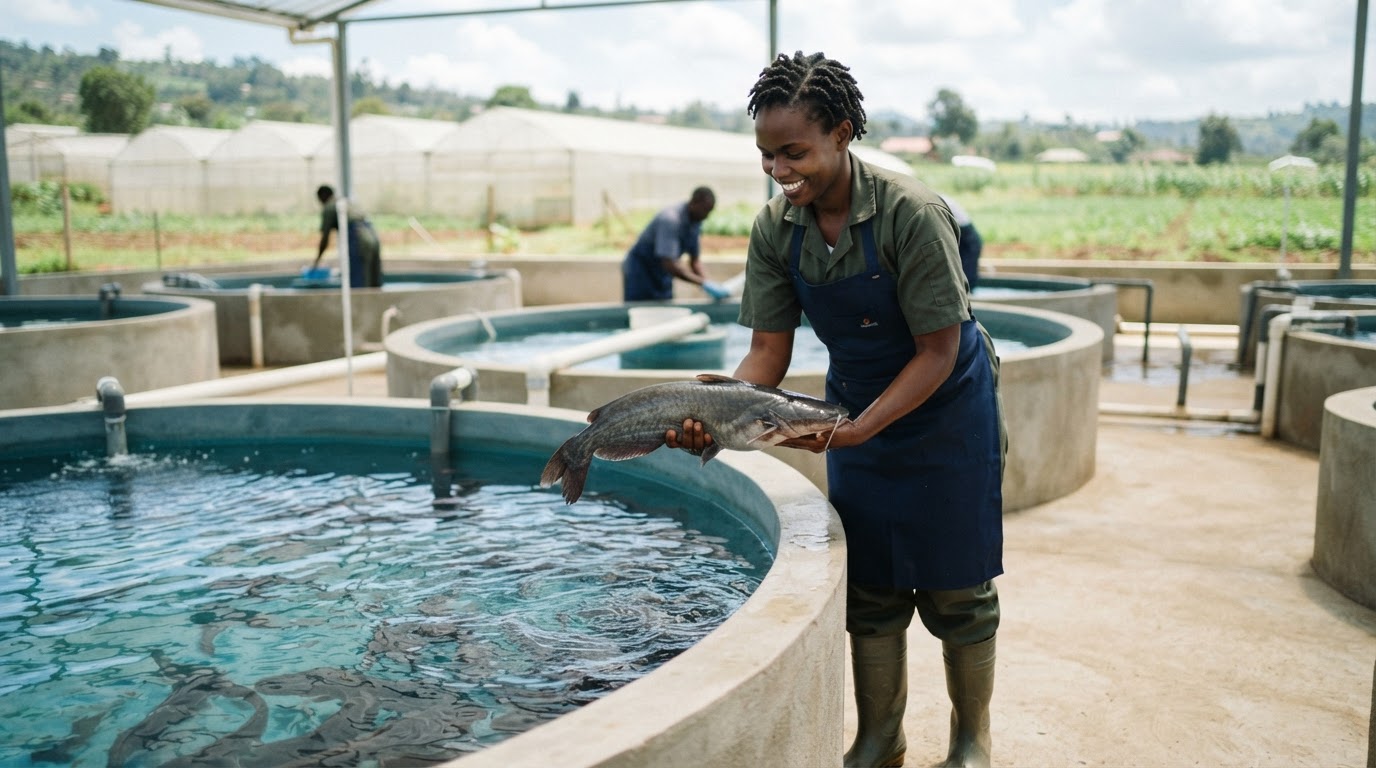
Lined or concrete tanks
Tanks make it easier to monitor fish, control feeding and harvest stock. However, pumping, aeration and water-exchange costs may be significant.
Intensive production
Higher stocking densities require stronger technical management and reliable backup systems. Beginners should not assume that more fish per tank automatically means greater profit.
3. Select Healthy Juvenile Fish
Purchase from reputable hatcheries and confirm the species, approximate size and health status. Similar initial sizes may help reduce extreme differences in growth. Catfish can display cannibalistic behaviour, particularly when size differences and feeding problems occur. Appropriate grading and feeding management can reduce losses.
4. Example Catfish Production Budget
Illustrative 500-juvenile growing project using existing tanks.
| Expense | Estimated cost |
|---|---|
| 500 juveniles | $125 |
| Feed | $700 |
| Water and electricity | $180 |
| Testing and equipment | $110 |
| Grading and handling tools | $75 |
| Veterinary and biosecurity allowance | $75 |
| Marketing and transport | $100 |
| Contingency | $135 |
| Total | $1,500 |
This does not include buying new tanks or building permanent facilities.
5. Calculate Potential Harvest and Revenue
Suppose 450 of the 500 fish survive and each reaches 1 kg. 450 × 1 = 450 kg. At a hypothetical price of $3.80 per kg, 450 × $3.80 = $1,710. With $1,500 in costs, $1,710 − $1,500 = $210. The illustrative direct cycle surplus is $210 before omitted overhead, financing and taxes. A lower survival rate or a reduction in the selling price could remove the entire surplus.
6. Feed Management and Profitability
Use a feed appropriate to the species and growth stage. Track total feed issued, fish weight and mortality. Feed conversion ratio is a useful measure: FCR = feed supplied ÷ fish weight gained. An FCR of 1.5 would mean 1.5 kg of feed supplied for each kilogram of live-weight gain, under the calculation’s assumptions. The actual ratio depends on feed quality, stock performance and how accurately waste and weight are measured.
7. Water Quality and Fish Health
Monitor dissolved oxygen, temperature, pH and nitrogen-related waste parameters as appropriate to the production system. Poor water quality can reduce feeding and growth even when fish appear relatively tolerant. Use appropriately designed filtration, aeration and water-exchange arrangements. Avoid releasing farmed catfish or untreated effluent into natural waterways.
8. Regional Considerations
Catfish are commercially important in some West African markets, but demand may differ in Southern and Eastern Africa. In Zimbabwe, Kenya or Zambia, assess buyer demand and permitted fish species before investing in catfish production.
Frequently Asked Questions
Is catfish farming profitable?
It can be when production and sales costs are controlled. Profit depends on actual performance and market demand.
Can I raise catfish in tanks?
Yes, with an appropriate tank design, water-management system and stocking strategy.
Is catfish easier to farm than tilapia?
Not necessarily. The two species have different feeding, behavioural and market considerations.