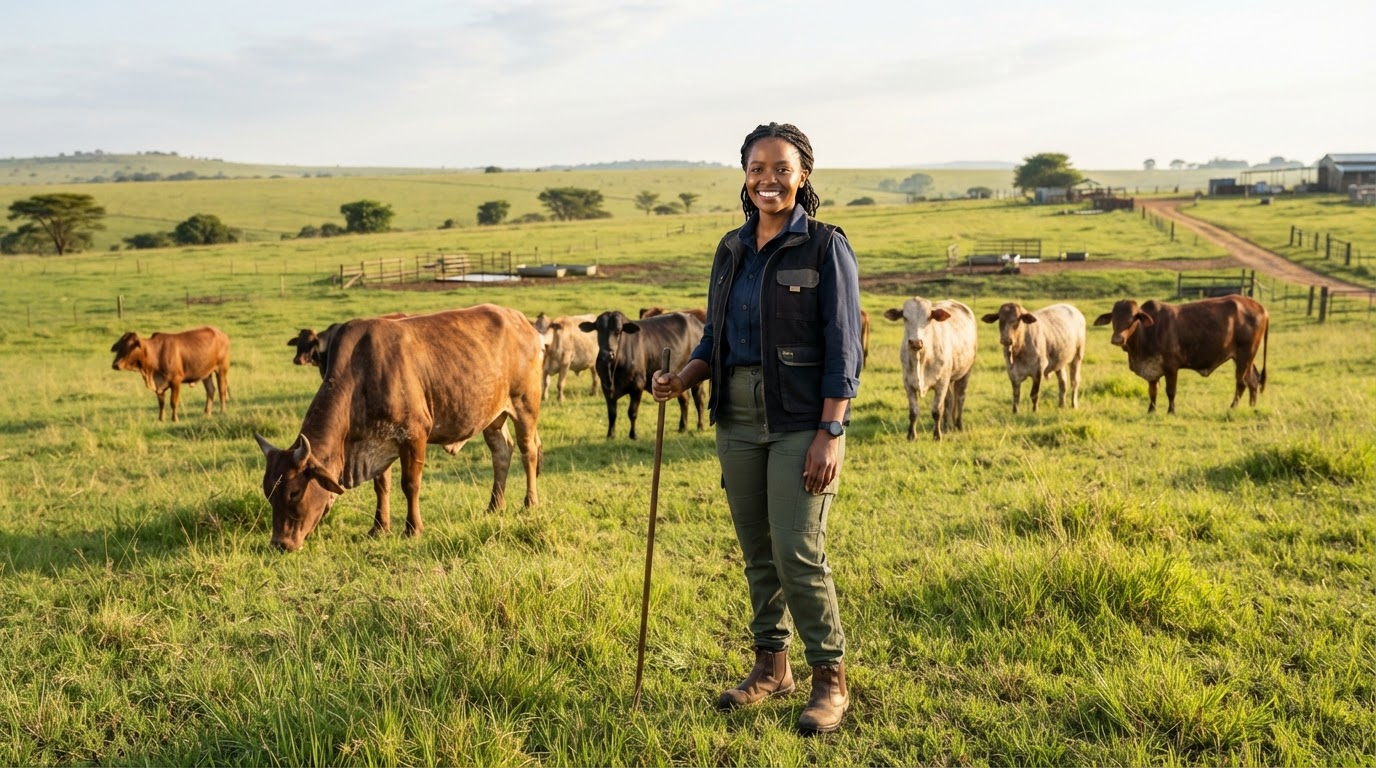
Category: Cattle & Dairy Farming | Beginner Guide
Introduction
Starting a small-scale cattle farming business in Africa can provide a pathway into commercial agriculture, particularly for farmers with access to grazing land, water and livestock markets.
Cattle farming can produce income through beef sales, dairy production, breeding-stock sales and animal manure. The right enterprise depends on available capital, farming experience and environmental conditions.
Unlike some smaller livestock projects, cattle farming generally requires a larger investment and a longer period before income is generated.
1. Choose Your Cattle Farming Business Model
There are four common production models.
Business
                Income source                  Key requirement
model

Sale of calves and mature
Beef breeding                                  Breeding females and grazing
                cattle
Cattle fattening Buy, feed and resell animals Feed supply and market access
Milking facilities and reliable
Dairy farming Daily milk sales
                                               buyers

Breeding stock Sale of selected animals        Genetics, records and expertise
For beginners, a small beef breeding herd or a carefully budgeted fattening project can be easier to manage than a specialized dairy operation.
2. Research Your Local Market
Before purchasing cattle, determine which animals buyers prefer.
Research local demand from livestock auctions, butcheries, abattoirs, beef processors, dairy cooperatives, restaurants and local traders.
Ask prospective buyers about expected live weights, animal condition, delivery requirements, pricing methods and veterinary documentation.
In Zimbabwe, livestock marketing opportunities and requirements can vary between communal farming areas, commercial ranching districts and urban markets.
In Kenya, dairy farming may have stronger market opportunities in established milk-producing areas, while beef production may be better suited to certain extensive grazing regions.
3. Select Suitable Land and Water Resources
Cattle need enough feed throughout the year.
A farm with good rainy-season grazing may still face severe shortages during the dry season. Therefore, land suitability must be evaluated across all seasons.
Consider:
- Rainfall patterns and drought risk.
- Availability of grazing and supplementary forage.
- Dependable drinking water.
- Secure fencing.
- Access to livestock handling facilities.
- Distance from veterinary services.
- Transport costs to livestock markets.
Avoid relying on a universal stocking rate such as one cow per hectare. Carrying capacity differs enormously between productive grassland and semi-arid rangeland.
4. Choose Appropriate Cattle Breeds
Examples of cattle types used across African farming systems include indigenous Sanga cattle, Boran, Brahman, Nguni, Tuli, Mashona, and various European- derived beef and dairy breeds.
Breed selection should reflect the actual production environment.
A larger animal with greater feed requirements is not automatically more profitable than a smaller, locally adapted animal.
The FAO documents the extensive diversity of African cattle populations and their environmental adaptation.
5. Build Essential Infrastructure
A basic beef cattle operation may require:
- Secure perimeter fencing.
- A reliable watering point.
- Shaded resting areas.
- A crush or safe handling arrangement.
- Loading access for livestock transport.
- Separate space for sick or newly introduced animals.
- Feed storage.
The exact investment depends on whether a farmer is upgrading existing facilities or starting from undeveloped land.
6. Sample Startup Budget: Five Breeding Cows
Illustrative USD scenario, assuming existing land and water access.
Estimated
Expense
                               cost

Five breeding cows             $3,000

Breeding service allowance     $200
Fencing and repairs             $500

Water equipment                 $250

Feed reserve                    $500

Veterinary care                 $180

Handling and feeding
                                $200
equipment

Transport and contingency       $370

Total startup budget            $5,200
This example uses a breeding service instead of purchasing a bull. A breeding bull, permanent staff, major infrastructure or borehole installation could increase startup costs substantially.
7. Establish a Herd Management Plan
Daily responsibilities
Ensure access to water and adequate feed. Check cattle for injuries, abnormal behaviour, lameness and signs of illness.
Weekly responsibilities
Inspect fencing, monitor body condition, review feed supplies and maintain clean water facilities.
Monthly responsibilities
Update breeding records, livestock identification, expenses, veterinary treatments and animal growth measurements.
8. Understand Your Revenue Timeline
A breeding business does not usually produce immediate sales income.
Cattle pregnancy lasts approximately nine months. After calving, the farmer must raise the calf to an appropriate sale stage. For small herds, annual income can be uneven because the number of marketable animals may be limited.
9. Common Beginner Mistakes
Purchasing livestock before securing dry-season feed, selecting unsuitable breeds, underestimating veterinary expenses, and investing in expensive infrastructure before confirming demand can all weaken a cattle business.
Frequently Asked Questions
Can I start cattle farming with five cows?
Yes. Five cows can form a starter breeding herd, but they should not be expected to provide substantial immediate income.
Is cattle farming profitable in Africa?
It can be profitable where feed costs, animal performance and market prices are favourable. Losses are also possible.
Do I need a breeding bull?
Not necessarily. Some farmers use artificial insemination or approved breeding services, depending on local availability.