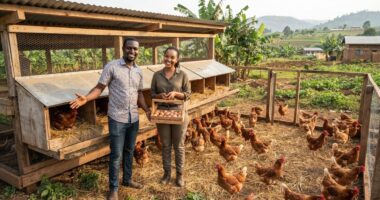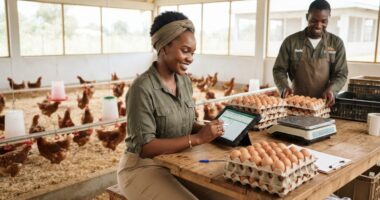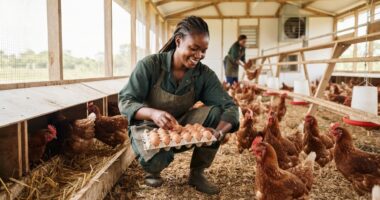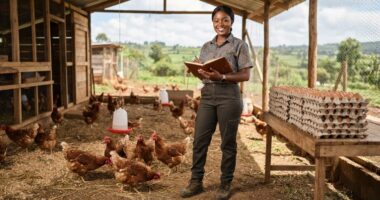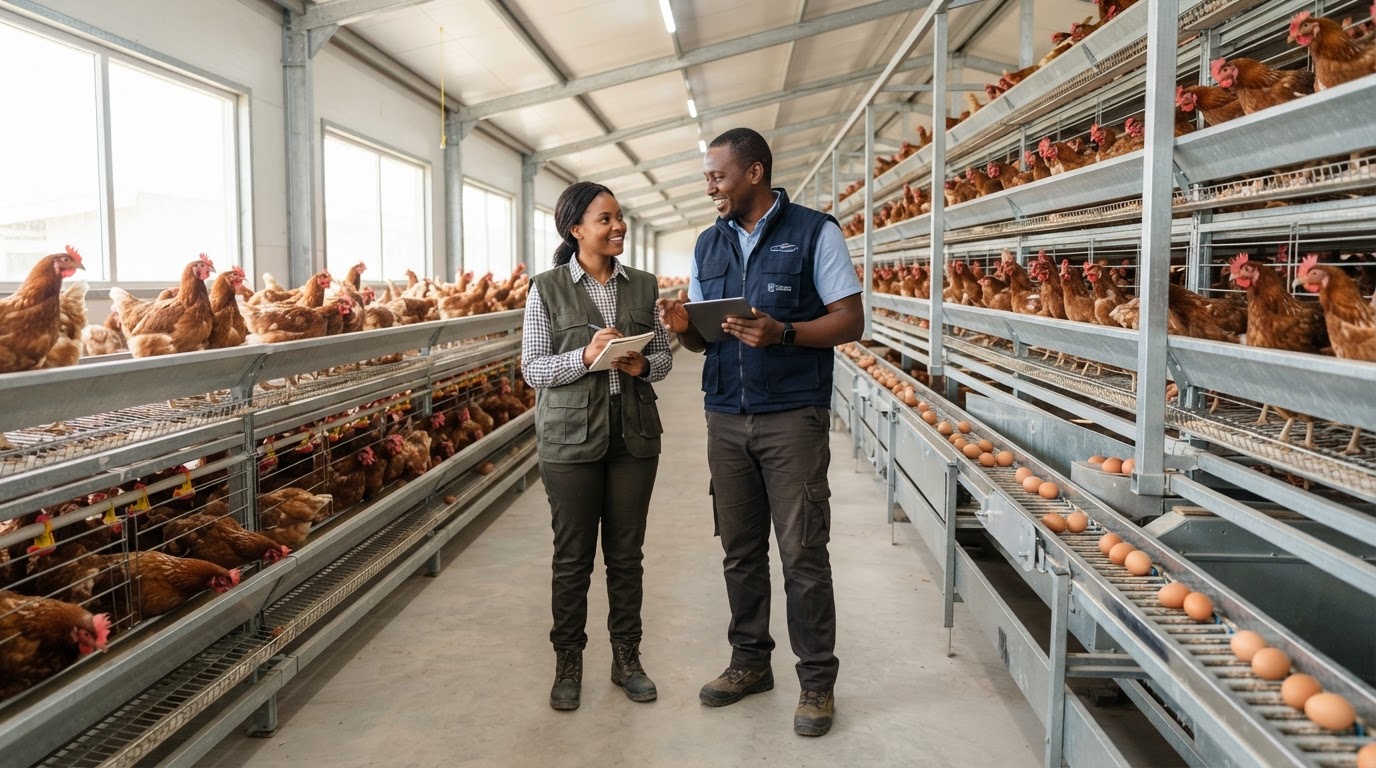
A 1,000-layer egg farm is a commercial enterprise that requires coordinated feeding, labour, biosecurity, egg handling, sales and financial management.
At this scale, modest changes in feed cost or egg prices can substantially change monthly returns.
Who Should Start a 1,000-Layer Farm?
This size is best suited to farmers with practical poultry-management experience or access to professional support, reliable funding and a confirmed market for regular egg deliveries.
Before investing, assess available land, water, electricity, local veterinary support, transport and the number of buyers needed to move the expected output.
Startup Investment for 1,000 Layers
| Expense | Illustrative USD |
|---|---|
| 1,000 point-of-lay pullets | $8,500 |
| Poultry-house construction | $5,100 |
| Nesting, feeding and watering equipment | $1,700 |
| First month’s operations | $2,865 |
| Total initial cash requirement | $18,165 |
A contingency of 10% of monthly operating expenses adds approximately $287.
The budget does not include land purchase, major water infrastructure, vehicles, automated egg grading or cold-storage facilities.
Housing and Equipment
A preliminary deep-litter plan using five birds per square metre suggests around 200 m² of usable bird space. Actual dimensions depend on the housing system and welfare requirements.
Provide suitable nests, accessible feeders and drinkers, ventilation, predator protection, feed storage and safe egg collection facilities.
Consider separating the egg handling and feed storage areas from bird accommodation to improve workflow and hygiene.
Feeding 1,000 Layers
At 110 g per bird daily:
1,000×0.110×30 = 3,300 kg
The farm needs approximately 66 bags of 50 kg feed per 30 days.
At an illustrative $0.45/kg, this costs $1,485 per month.
Feed supply should be planned before the flock arrives. Spoiled feed, shortages or unexpected price increases can threaten both production and cash flow.
Monthly Operating Expenses
| Expense | USD/month |
|---|---|
| Feed | $1,485 |
| Water and energy | $110 |
| Veterinary and health | $110 |
| Litter and cleaning | $110 |
| Egg packaging | $210 |
| Transport and marketing | $240 |
| Labour | $440 |
| Miscellaneous | $160 |
| Total | $2,865 |
Monthly Egg Production and Revenue
At 82% hen-day production, 1,000 layers produce approximately 24,600 eggs in 30 days.
After a 3% unsaleable allowance:
24,600×0.97÷30 = 795.4 trays
At $5.50 per tray:
795.4×$5.50 = $4,374.70
Operating surplus:
$4,374.70 − $2,865 = $1,509.70
Allocating the $8,500 initial pullet cost across 15 production months gives a $566.67 monthly replacement provision. The surplus after this provision is approximately $943.03, still before depreciation and other excluded costs.
Commercial Sales Strategy
At the typical modeled output, the farm needs to market almost 800 trays each month.
A practical sales structure might involve supplying several supermarkets and grocery retailers, additional restaurants or bakeries, and backup wholesale traders.
Agree in advance on delivery schedules, acceptable egg sizes, packaging, breakage allowances, returns and payment terms.
Operational Risks
Disease outbreaks, heat stress, unreliable water, feed contamination, broken eggs and delayed customer payments can seriously affect profitability.
Keep production records and establish an emergency response plan before scaling.
FAQs
How much capital is required for 1,000 layers?
The illustrative first-month requirement is $18,165, excluding contingency and several major possible infrastructure expenses.
How many trays of eggs can 1,000 layers produce?
At 82% production with 3% unsaleable eggs, approximately 795 saleable trays in 30 days.
How much feed do 1,000 layers consume monthly?
Approximately 3,300 kg under the planning assumptions.
Should beginners start with 1,000 layers?
Usually, a smaller trial or a period of practical training is preferable.
Resources: FAO Poultry Production Systems · Hy-Line Brown Commercial Layer Guide