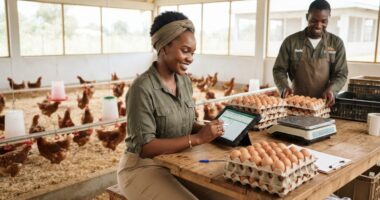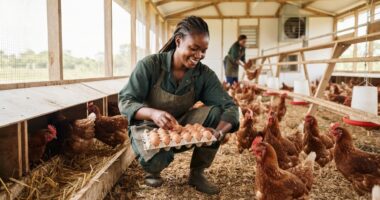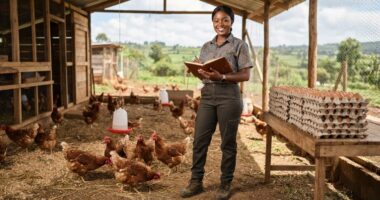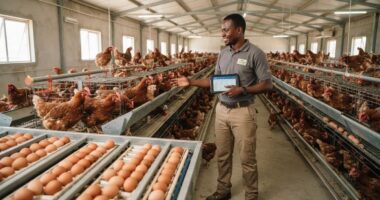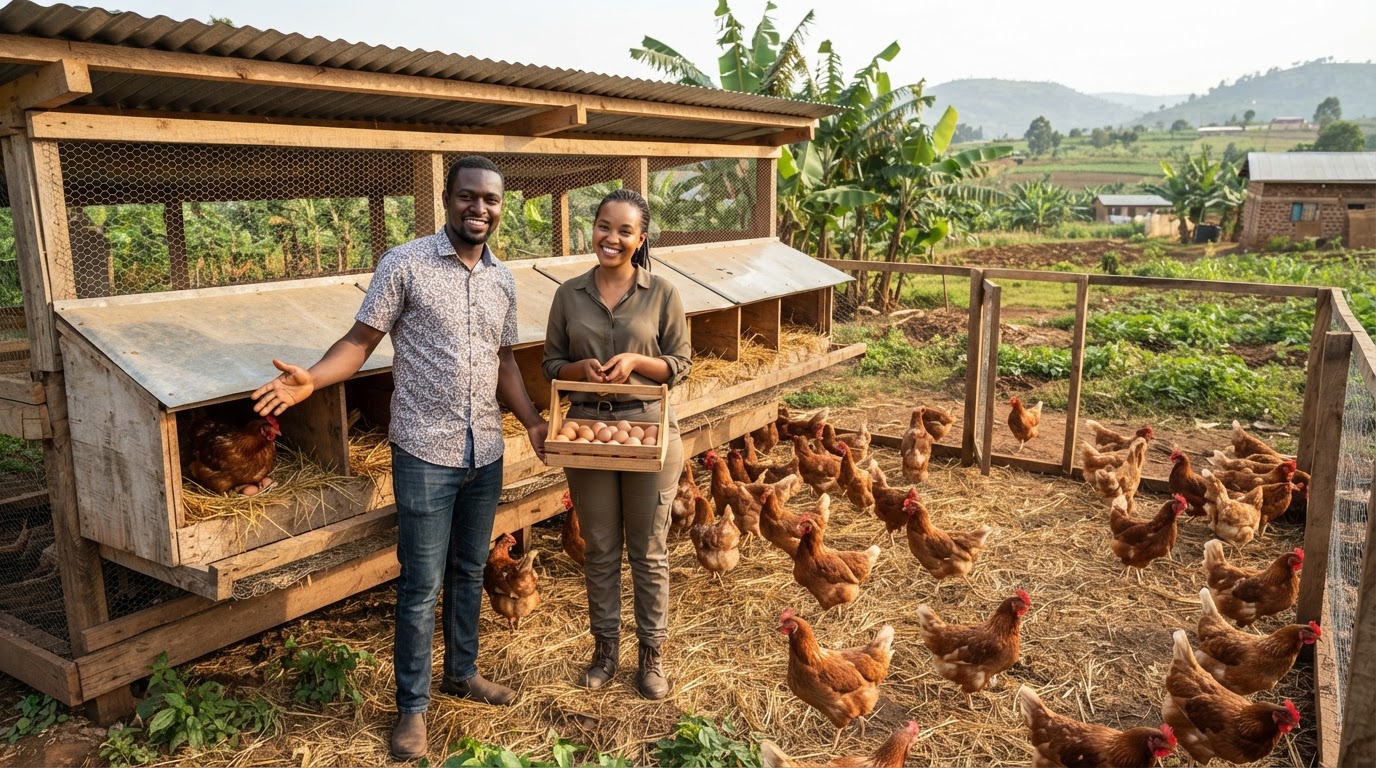
A well-designed poultry house protects laying hens against extreme weather, predators, disease and unnecessary stress.
For egg farmers, housing must also support clean egg collection, easy feeding, good ventilation and efficient daily management.
Choose a Suitable Location
Select ground that drains well and is accessible throughout the year.
Avoid flood-prone areas and locations where stagnant water collects. Consider delivery routes, access to electricity, neighbours and the availability of reliable drinking water.
Check local planning and livestock regulations before construction.
Choose a Layer Housing System
Deep-Litter Housing
Deep-litter systems keep hens on a floor covered with suitable absorbent material. They generally include nesting facilities, feeders, drinkers and other equipment appropriate to the flock.
This system can suit small-scale commercial farms when stocking density and litter management are appropriate.
Cage-Free Floor or Aviary Systems
These systems provide birds with access to floor, nest and sometimes elevated areas, depending on the design.
Equipment, labour and management demands vary.
Cage Housing
Cage-based systems are used in some commercial egg enterprises, but welfare rules and market acceptance differ by country.
Farmers must check applicable standards and buyer requirements before investing.
FAO describes several poultry production systems, each with different infrastructure and management demands.
fao.org+1
How Much Space Do Layers Need?
For preliminary budgeting, consider a deep-litter layout at five hens per square metre of usable bird space.
| Flock | Illustrative usable floor area |
|---|---|
| 100 hens | 20 m² |
| 500 hens | 100 m² |
| 1,000 hens | 200 m² |
These are not universal welfare limits. Required space depends on the system, breed, climate, equipment and applicable regulations.
Allow additional space for feed storage, egg handling and service operations.
Essential Housing Features
Ventilation and temperature management
Openings should allow fresh air circulation without exposing birds to dangerous weather.
In warm regions, roofing, shade and airflow are especially important. In cooler highland areas, manage nighttime temperatures without preventing necessary ventilation.
Floors and litter
Keep litter dry and manageable. Repair leaking drinkers and prevent rainwater from entering the house.
Feeders and drinkers
Provide sufficient access for the number and size of birds. Use equipment that can be cleaned and repaired.
Nesting systems
Clean, accessible nests encourage hens to lay in suitable locations and reduce the number of floor eggs.
Nest quantity and dimensions should follow the equipment supplier’s specifications and the selected flock’s management recommendations.
Egg collection and storage
Provide clean trays, an inspection surface and a secure place to store eggs before delivery.
Separate dirty farm equipment from egg-handling areas where feasible.
Illustrative Housing and Equipment Budgets
| Flock capacity | House | Equipment | Total |
|---|---|---|---|
| 100 layers | $650 | $250 | $900 |
| 500 layers | $2,700 | $800 | $3,500 |
| 1,000 layers | $5,100 | $1,700 | $6,800 |
These placeholder budgets assume affordable construction and basic equipment. They exclude land, major service connections and sophisticated automation.
Actual quotes may differ substantially.
Common Layer Housing Mistakes
Frequent mistakes include inadequate drainage, overcrowding, poorly located nests, insufficient feeder space, excessive heat and the absence of cleaning facilities.
Housing should be designed to support daily management throughout the laying period, not merely accommodate the flock on arrival.
FAQs
Can I convert an existing building into a layer house?
Possibly, if it can provide suitable ventilation, drainage, security, cleaning and bird space.
Are nesting boxes necessary?
Appropriate nesting facilities are important in systems where hens lay eggs outside cages, helping with collection and egg cleanliness.
Is deep-litter housing suitable for 500 layers?
It can be, provided the space, ventilation, nesting, hygiene and welfare requirements are met.
Should the poultry house be completely enclosed?
The design must balance weather protection, security, disease prevention and adequate ventilation.