Consistent egg production is essential for a successful layer farming business. A flock producing fewer eggs than expected may struggle to cover feed, labour and other expenses.
Improving performance starts with understanding what affects the number and quality of eggs produced.
Understand Your Flock’s Production Rate
Egg production can be measured using hen-day production:
Hen-day rate = (Eggs collected ÷ Live hens) × 100
For example, 80 eggs collected from 100 live hens equals an 80% hen-day rate.
A related measure, hen-housed production, considers the original number of hens placed and is useful for evaluating performance across the flock’s life, including mortality.
Do not compare the two measures without understanding their different denominators.
Eight Factors That Influence Egg Production
1. Breed and age
Commercial strains have different production curves, egg sizes and expected laying persistence.
Check the breeder’s performance guide for age-specific targets rather than expecting a flat production rate every month.
2. Balanced nutrition
Insufficient energy, amino acids or minerals can affect production and eggshell quality.
Use an appropriate commercial layer ration and adjust feeding decisions according to strain guidance.
3. Reliable water
Water is essential for egg production. Even short disruptions can affect intake, welfare and performance.
Check water supplies and drinker function regularly.
4. Suitable lighting
Lighting influences reproductive development and production in commercial layers.
Use a consistent light programme appropriate to the birds’ age and housing system. Avoid abrupt or poorly planned changes.
5. Temperature and ventilation
Heat stress can reduce feed intake and egg production.
In hot areas of Zimbabwe, South Africa, Nigeria or Ghana, housing ventilation and water supply deserve particular attention. Cold conditions may also create challenges where housing is poorly insulated.
Health problems can reduce production before they cause obvious mortality.
Monitor egg output alongside feed consumption, behaviour and physical condition.
7. Low stress
Unnecessary handling, predators, crowding, loud disturbances and abrupt management changes can affect flock behaviour.
Maintain consistent routines and safe housing.
8. Egg collection and handling
An egg that is laid but broken or contaminated cannot necessarily be sold.
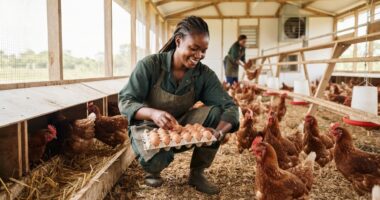
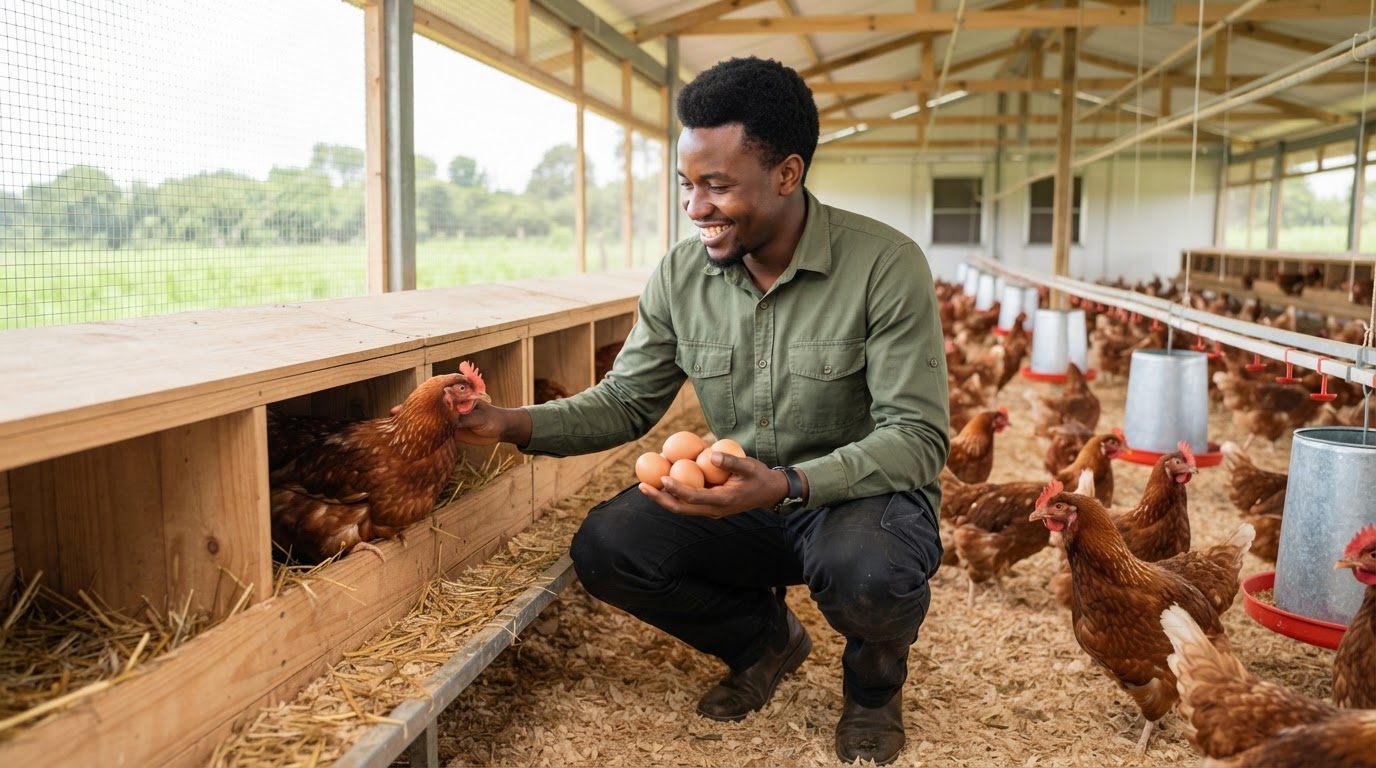
Provide suitable nests and collect eggs frequently. FAO identifies regular egg collection as an important way to reduce dirty eggs, particularly in hot, humid regions.
fao.org
Improve Egg Quality
Common problems include thin shells, cracks, excessive dirt and irregular egg size.
Possible contributing factors include age, nutrition, temperature, disease, nest conditions and handling.
For recurring problems, investigate with a poultry nutritionist or veterinarian rather than assuming additional calcium will always solve the issue.
The Financial Impact of Better Production
For 500 hens, increasing the modeled average production rate from 75% to 82%, with the same 3% unsaleable allowance and $5.50 tray price, changes monthly egg revenue as follows:
| Production rate | Saleable trays/month | Revenue |
|---|---|---|
| 75% | 363.75 | $2,000.63 |
| 82% | 397.70 | $2,187.35 |
| Difference | 33.95 | $186.72 |
This is the revenue difference before any additional cost of achieving the higher production rate.
Daily Egg Production Records
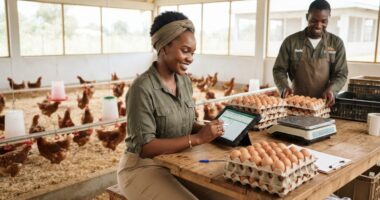
Record eggs collected, broken eggs, hens alive, feed consumption, water problems and unusual flock behaviour.
Review weekly averages against the breeder’s age-specific targets.
FAQs
Why have my layers suddenly stopped laying?
Possible causes include stress, heat, feed or water interruption, disease, lighting changes and age. Sudden unexplained declines require investigation.
How can I make eggshells stronger?
Start by reviewing feed formulation, calcium availability, flock age, disease risk and environmental conditions.
Do layers produce one egg every day?
Not necessarily. Production is variable and usually falls below one egg per hen per day when averaged over a flock.
Does adding more light always increase egg production?
No. Lighting needs to follow a suitable management programme. Poorly timed changes can be harmful.