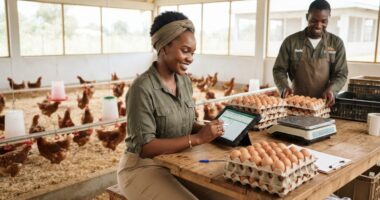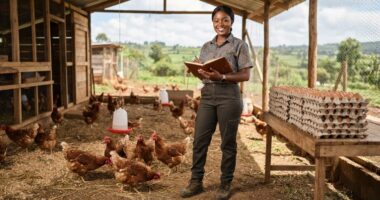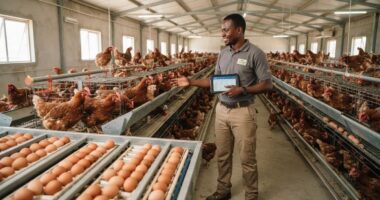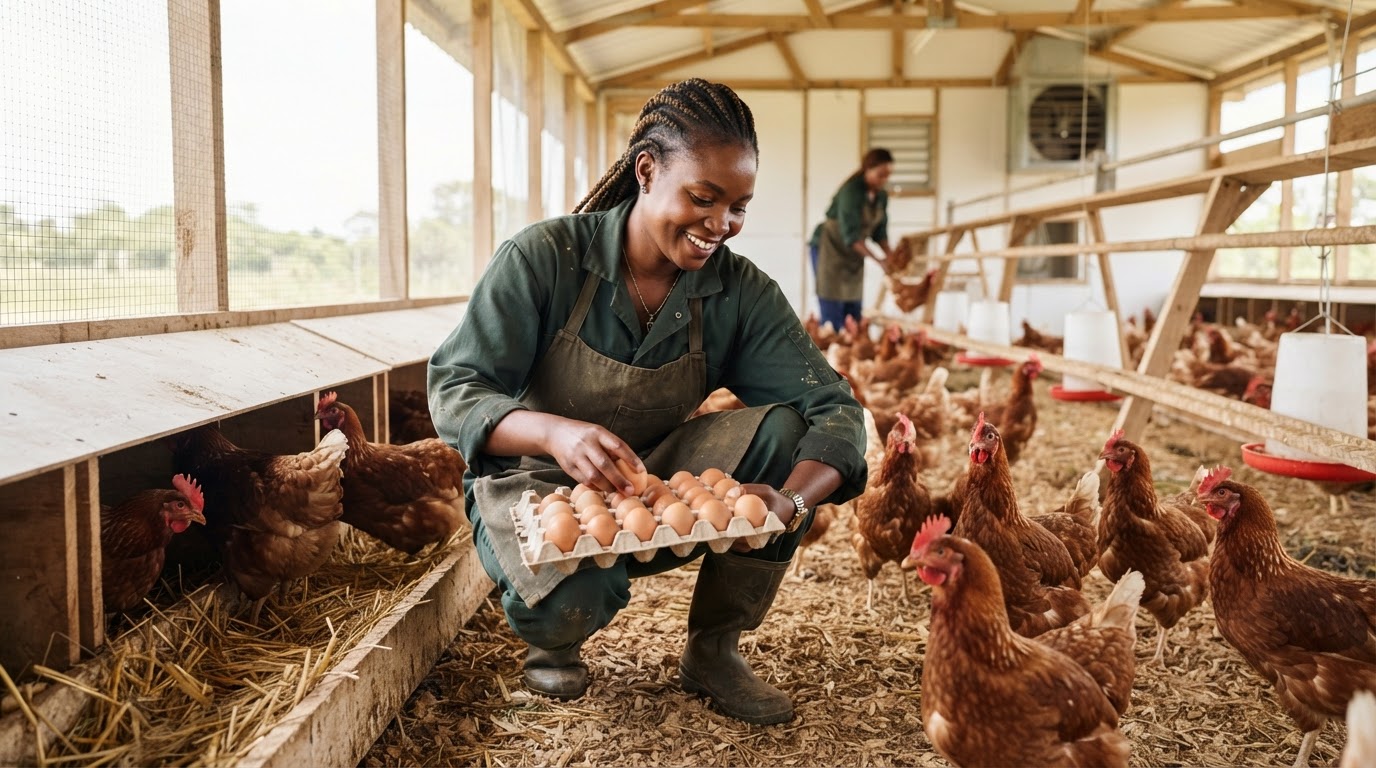
Layer chicken farming is the business of raising hens primarily to produce eggs for household, retail and commercial markets. A well-managed laying flock can provide frequent sales, but farmers must balance egg revenue against recurring feed costs and the initial cost of establishing the flock.
Why consider commercial egg farming?
Eggs are consumed by households, bakeries, restaurants, hotels and institutions. Farmers may sell them in trays, boxes or smaller quantities.
Three features make egg production different from broiler farming:
• Layers typically begin producing eggs around 18–22 weeks of age, depending on strain and management.
• Egg output changes as the flock matures, peaks and ages.
• Production requires continuous feeding and management, even during periods of lower egg sales.
A layer farm is therefore a longer-term business than a short broiler production cycle.
Step 1: Research local egg demand
Before spending money on housing or chickens, investigate the egg market.
Contact grocery shops, vegetable markets, restaurants, bakeries, boarding schools and egg traders. Ask about preferred egg sizes, shell colours, packaging, average order quantities and payment arrangements.
Compare farmgate prices with wholesale and retail prices. The highest advertised selling price may not be achievable for a new farmer.
Step 2: Choose a suitable layer breed
Common commercial layer strains include Hy-Line Brown, Lohmann Brown and other locally available commercial hybrids.
Select birds based on hatchery availability, expected egg size, local climate, disease-health documentation and buyer preferences.
For beginners, purchasing healthy point-of-lay pullets can reduce the technical demands of rearing chicks, although it requires more initial capital per bird.
Step 3: Choose your farming scale
| Flock size | Suitable starting position |
|---|---|
| 50–100 hens | Small pilot or home-based egg business |
| 500 hens | Developing commercial operation |
| 1,000 hens | Established business with reliable distribution |
Start at a level your housing, water supply, working capital and customers can support.
Step 4: Prepare housing
A layer poultry house should provide ventilation, adequate floor space, dry litter, feeders, drinkers, nesting facilities, predator protection and an area for collecting and sorting eggs.
In Zimbabwe and Zambia, houses must protect hens against cold winter nights and summer heat. In Kenya and Uganda, local altitude and seasonal rainfall are important. In humid areas of West and Central Africa, drainage and moisture control deserve particular attention.
FAO guidance emphasizes providing commercial poultry with an appropriate environment, nutrition and protection from disease.
FAO+1
Step 5: Purchase pullets and equipment
Ask the supplier for the birds’ age, strain, vaccination records, rearing history and current feeding programme.
Prepare clean water, correctly positioned feeders, suitable nests, feed storage and recordkeeping materials before delivery.
Avoid adding new birds of unknown health status to an established flock.
Step 6: Establish a feeding and lighting programme
Commercial layers need a balanced ration, particularly sufficient energy, amino acids, minerals and calcium for egg formation.
Use a lighting programme appropriate to the strain and housing system. Abrupt changes in light duration, feeding or water supply can disrupt production. Follow the breeder’s guidance rather than imposing a universal lighting schedule.
Step 7: Start collecting and selling eggs
Collect eggs several times a day where feasible, especially in hot weather. Remove visibly damaged eggs, sort saleable eggs, record quantities and store them under suitable hygienic conditions.
Develop repeat customers before peak production, and avoid promising a fixed daily quantity when the flock is still starting to lay.
Step 8: Calculate monthly returns
For 100 established layers:
100×0.82×30 = 2,460 eggs
Allowing 3% unsaleable eggs:
2,460×0.97÷30 = 79.54 trays
At an illustrative selling price of $5.50 per tray, monthly revenue is approximately $437.47.
This is revenue, not profit. Feed, labour, veterinary care, packaging, transport and replacement costs must still be considered.
Common beginner mistakes
The most serious mistakes include buying pullets without first researching customers, underbudgeting for feed, inadequate ventilation, poor disease prevention and failing to save toward replacing the laying flock.
Keep daily records of egg numbers, feed use, mortality and sales.
FAQs
Can I start egg farming with 100 chickens?
Yes. One hundred hens can serve as a manageable pilot if there is enough working capital, space, water and daily supervision.
Do I need a rooster for egg production?
No. Commercial hens produce eggs without roosters. Roosters are required for producing fertile eggs intended for hatching.
How long before chickens start laying eggs?
Many commercial strains begin laying around 18–22 weeks, although age and production rate vary.
Is layer chicken farming profitable?
It can be, but feed prices, productivity, egg losses, replacement costs and selling prices determine the outcome.
Resources: FAO Poultry Management and Housing · Lohmann Brown Layer Information