Vaccination and biosecurity are two important components of poultry disease prevention. Vaccination helps protect chickens against selected infectious diseases, while biosecurity reduces the likelihood of disease-causing organisms entering or spreading through a flock.
Neither approach provides complete protection on its own.
What Is Poultry Biosecurity?
Biosecurity means putting practical measures in place to reduce disease transmission between poultry farms, people, equipment, animals and birds.
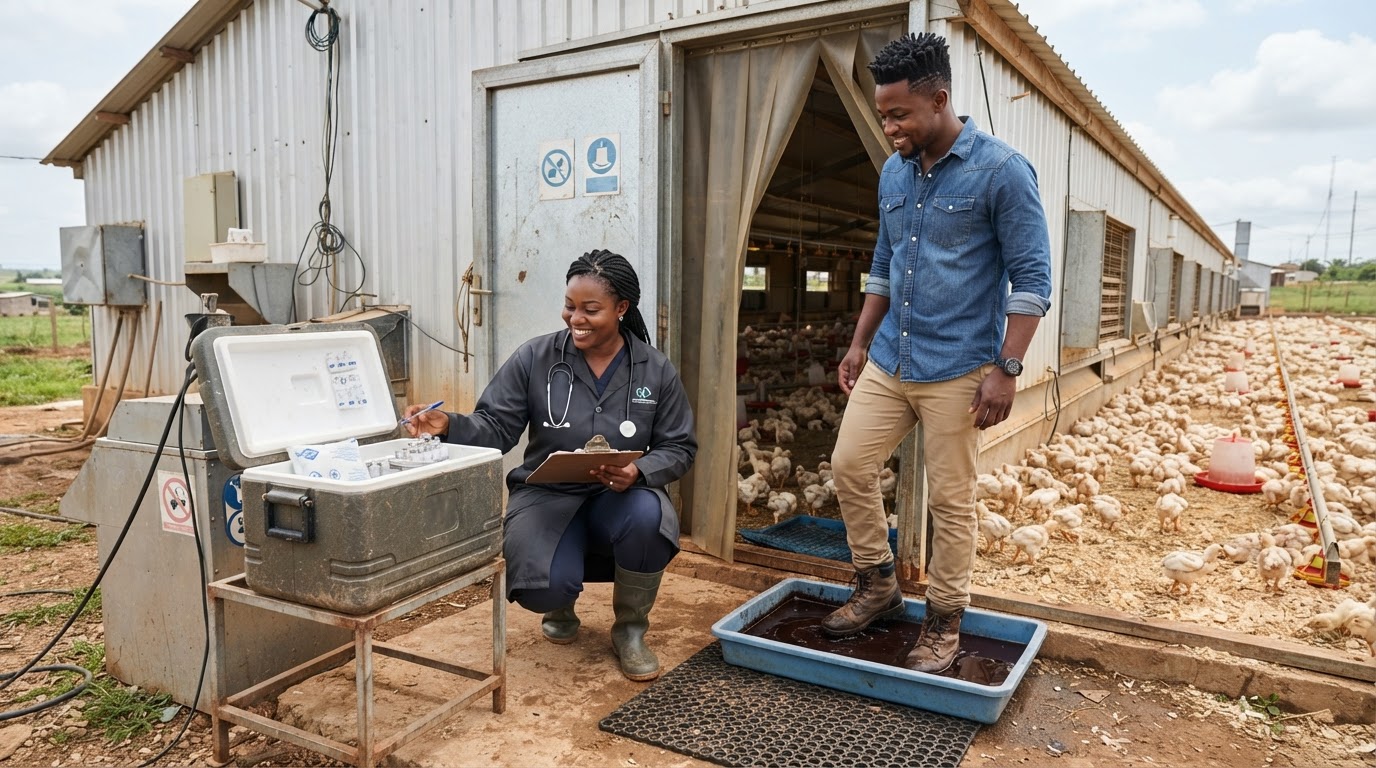
This includes controlling access to chicken houses, disinfecting equipment appropriately, maintaining clean water supplies and preventing contact with wild birds.
FAO and WOAH identify good hygiene and biosecurity as important ways to reduce poultry disease risks.
FAOHome+1
Why Broiler Vaccination Matters
Commercial broilers may face diseases such as Newcastle disease and infectious bursal disease.
A suitable vaccination programme can reduce susceptibility to particular infections, depending on the vaccine, its administration and the immunity of the flock.
Farmers must obtain a programme appropriate to their country, local disease patterns and the vaccinations already administered by the hatchery.
Example Vaccination Planning Table
This is a planning checklist, not a vaccination prescription or universal schedule.
Production stage What to confirm with your veterinarian
Before chick
                   Hatchery vaccination history and disease risks
delivery
Placement          Chick health and relevant early protection
Whether Newcastle disease vaccination is
Early brooding
                   indicated
Whether Gumboro or other vaccination is
Growing stage
                   appropriate
Before sale Vaccine records and any applicable restrictions
Actual vaccine timing, administration route, type and booster requirements must be determined by a veterinarian or authorised local animal-health programme.
Vaccine Handling and Storage
Some poultry vaccines require strict refrigerated storage and careful handling.
Follow the manufacturer’s instructions for storage, transport, reconstitution, administration and disposal. An improperly stored or administered vaccine may not provide the intended protection.
Keep records of the product, batch number, administration date and responsible person.
Eight Practical Biosecurity Priorities
1. Purchase chicks from reputable hatcheries.
2. Limit visitors and unnecessary vehicle movement.
3. Use dedicated footwear and equipment for the chicken house.
4. Keep rodents, wild birds and other animals away from the flock.
5. Clean and disinfect housing between batches.
6. Protect feed and water from contamination.
7. Avoid mixing different ages of chickens in the same production area.
8. Report unusual mortality or suspected notifiable disease promptly.
For an all-in/all-out system, remove the previous flock completely, clean and disinfect the house, and allow an appropriate downtime period before restocking. How Much Should You Budget?
The illustrative health provision in this cluster is $30 for 100 broilers, $85 for 500 and $160 for 1,000.
These allowances are not vaccination quotations. Actual costs depend on vaccine packaging, local disease risk, veterinary consultation, biosecurity supplies and treatment needs.
Farmers should obtain veterinary quotations before calculating their working capital.
Responding to a Suspected Outbreak
If several chickens suddenly become sick or die, restrict movement, contact a veterinarian and follow local disease-reporting instructions.
In the case of suspected highly pathogenic avian influenza, prompt notification to veterinary authorities is particularly important.
woah.org
FAQs
Do broilers need Newcastle disease vaccination?
Vaccination may be recommended or required depending on local risks and regulations. Your veterinary adviser should determine the programme.
Do vaccinated chickens still need biosecurity?
Yes. Vaccination does not replace hygiene, disease monitoring or movement controls.
Can I vaccinate chickens myself?
Some programmes permit trained farmers to administer certain vaccines. However, training, lawful supply and veterinary supervision are important.
Should I vaccinate against every poultry disease?
No. Vaccines should be selected based on local risks, product indications, regulations and veterinary guidance. Resources
WOAH Animal Health Information
Cobb Poultry Vaccination Resources