Category: Cattle & Dairy Farming | Startup Costs & Profit Guide
Introduction
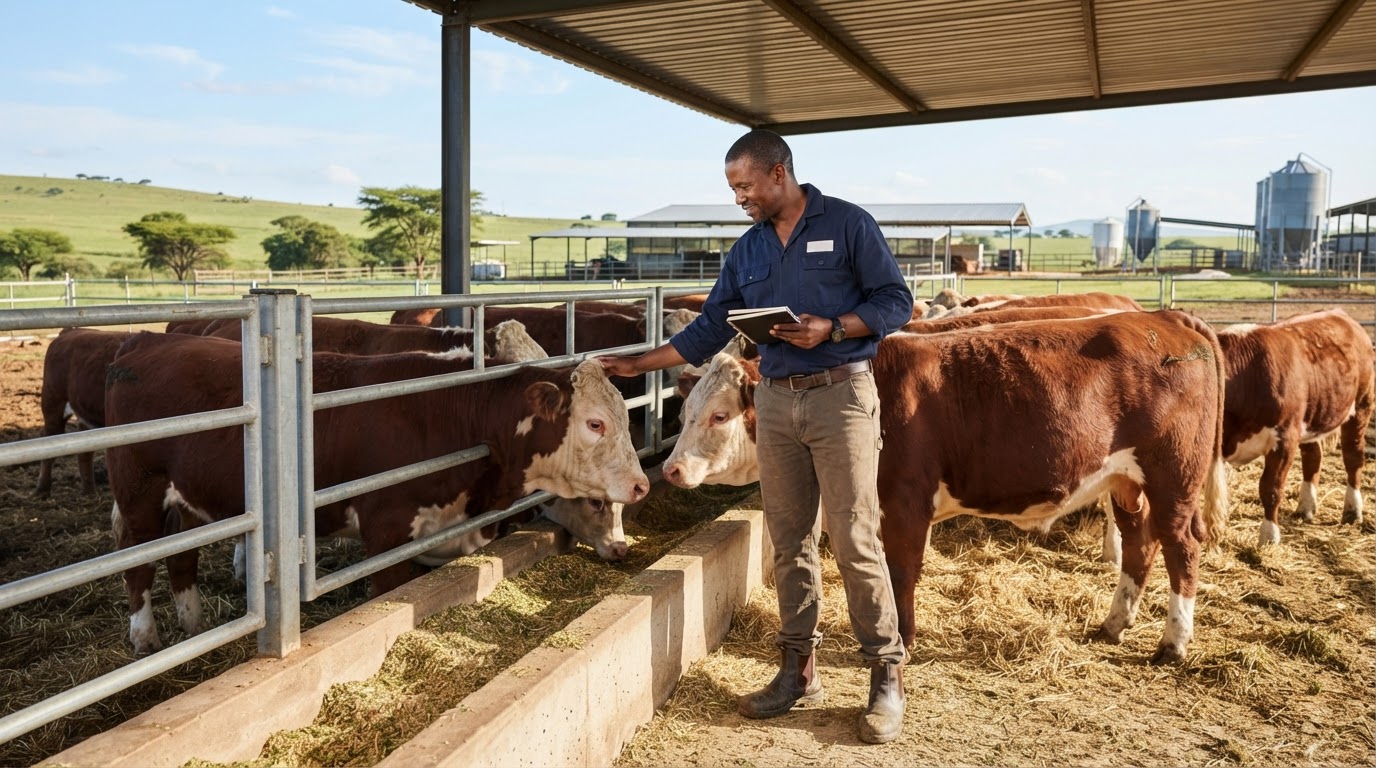
Cattle fattening involves purchasing suitable lean or growing cattle, providing a planned feeding program, and selling them after they gain sufficient weight and body condition.
This business model may generate revenue sooner than a cattle breeding operation because farmers do not need to wait for calves to be born.
However, profitability depends heavily on purchase prices, feed costs, growth performance and selling prices.
1. How Cattle Fattening Works
A typical fattening cycle involves:
1. Identifying buyers and target animal specifications.
2. Purchasing healthy cattle at appropriate prices.
3. Introducing cattle to a suitable feeding program.
4. Monitoring feed intake, health and live-weight gain.
5. Selling animals once they meet the intended market specifications.
6. Calculating actual profit after all expenses.
A feeding period might run for approximately 90–150 days, although the optimal duration depends on starting weight, available feeds, target finish and market conditions.
2. Choosing Cattle for Fattening
Look for healthy animals with suitable frame size, sound legs, appropriate age, and good growth potential.
Avoid purchasing animals with unexplained weight loss, abnormal breathing, persistent diarrhoea, lameness or suspected infectious disease.
Obtain veterinary advice and follow applicable livestock movement requirements.
3. Sample Budget for Fattening Five Cattle
Illustrative 120-day production cycle in USD.
Five
Expense
                             animals

Purchase of five cattle at
                             $2,250
$450

Feed at $150 per animal      $750

Veterinary expenses          $100

Water and handling costs     $80

Transport and selling
                             $170
charges

Contingency                  $150

Total direct cycle cost      $3,500
This assumes existing feeding infrastructure and does not include long-term depreciation, loan interest or the full cost of labour.
4. Revenue and Profit Example
Suppose all five cattle are sold for $800 each.
Gross revenue
$4,000
Direct cycle surplus $500
Revenue $4,000 − direct cycle costs $3,500 = $500 before overheads, financing, depreciation and taxes.
That represents a direct contribution of $100 per animal in this example.
If selling prices decrease or feed expenses increase, the margin can disappear.
6. Reduce Feed Costs Without Sacrificing Growth
Farmers should focus on feed conversion and animal performance, not merely the cheapest feed. Use nutritionally appropriate roughage, carefully balanced supplements and clean water.
Consult a livestock nutrition professional before making large changes to concentrate rations. Sudden introduction of high-grain diets can cause serious digestive problems.
7. Best Time to Sell
The most profitable sale date is not always the date when the animal is heaviest.
Selling should be based on expected additional weight gain, the cost of further feeding, market prices and buyer requirements.
Frequently Asked Questions
How long does a cattle fattening cycle take?
Many projects plan around three to five months, but this is not a guaranteed timetable.
Is cattle fattening more profitable than breeding?
It can generate faster turnover, but profit margins are sensitive to cattle buying and selling prices.
Can I start fattening with two cattle?
Yes, provided you have adequate facilities, capital and a reliable buyer.