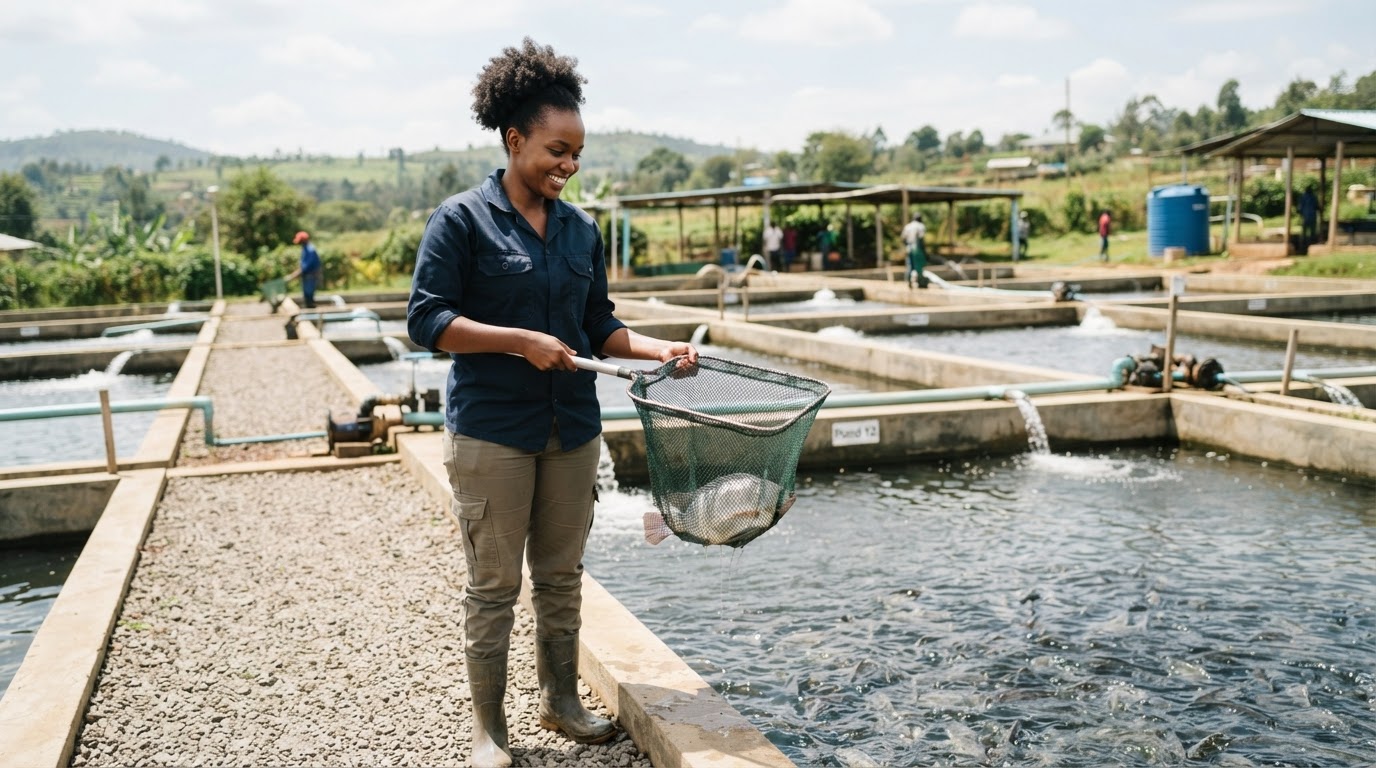
Category: Alternative Livestock & Aquaculture | Beginner Business Guide
Introduction
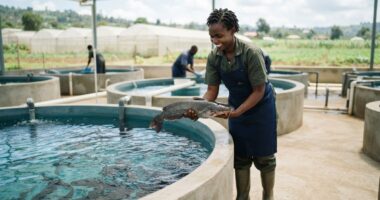
Tilapia fish farming is an aquaculture opportunity for African farmers who have access to dependable water, suitable land and markets for fresh fish. Tilapia is cultivated in ponds, tanks and other controlled aquatic systems. It is particularly relevant to warm-water aquaculture, although production performance depends on the species, strain and environmental conditions. Farmers can sell whole fresh fish, processed fish or live fish where suitable facilities and markets exist. Tilapia production in sub-Saharan Africa includes extensive and semi-intensive farming systems. Feeding practices, pond fertility and stocking density influence production results.
1. Research the Fish Market Before Starting
Identify potential buyers such as fish traders, restaurants, supermarkets, institutional kitchens and local households. Ask each buyer about preferred fish size, species, freshness requirements, price per kilogram, purchasing volumes and delivery arrangements. A farmer selling fish at the farm gate may receive a different price from someone supplying a restaurant or selling directly to consumers.
2. Select a Tilapia Production System
| Production system | Advantages | Challenges |
|---|---|---|
| Earthen ponds | Natural food production; suitable where land and soils allow | Construction, drainage and predator control |
| Lined ponds | Useful where soils retain water poorly | Liner cost and maintenance |
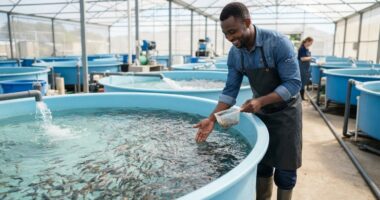
| Tanks | Easier observation and harvesting | Pumping, aeration and water-management costs |
| Cage culture | Uses suitable existing water bodies | Permits, environmental controls and security |
For beginners, properly designed low-intensity ponds may be more manageable than highly intensive tank systems.
3. Choose Suitable Tilapia Species
Nile tilapia (Oreochromis niloticus) is widely cultivated, but it is not appropriate or permitted in every location. Other species, including Mozambique tilapia (Oreochromis mossambicus), may be relevant in some regions. Important: Always confirm which tilapia species and strains may legally be farmed in your country or catchment. Moving non-native fish can create serious environmental risks.
4. Choose a Suitable Site
A fish farming site needs reliable water of acceptable quality throughout the production cycle. Assess:
- Dry-season water availability.
- Soil suitability for ponds.
- Flood and runoff exposure.
- Water extraction and discharge permissions.
- Electricity and pumping requirements.
- Access for feed deliveries.
- Security against theft and predators.
- Distance from fish buyers.
In Southern Africa, cooler winter temperatures can slow growth in some locations. In areas with seasonal drought, water supply can be the main limiting factor.
5. Construct and Prepare Your Pond
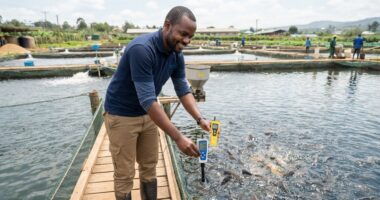
Pond design must account for water depth, embankment stability, drainage, inlet protection and escape prevention. Before stocking, check the pond for leaks and ensure water-quality conditions are appropriate. FAO guidance identifies pond design and water quality as essential elements of aquaculture production.
6. Purchase Healthy Fingerlings
Buy suitable fingerlings from a reputable hatchery. Request information about species, age, approximate size, health, stocking recommendations and transport procedures. Acclimate fish carefully to the receiving water, using hatchery guidance, to reduce handling and temperature shock.
7. Example Tilapia Startup Budget
Illustrative 500-fingerling pond project, USD.
| Expense | Estimated cost |
|---|---|
| Pond preparation and repairs | $350 |
| 500 fingerlings at $0.20 | $100 |
| Feed for one cycle | $450 |
| Water and testing equipment | $130 |
| Nets, buckets and tools | $100 |
| Water and electricity provision | $120 |
| Transport and biosecurity | $100 |
| Contingency | $150 |
| Total startup/cycle budget | $1,500 |
A new pond requiring substantial excavation or lining may cost significantly more.
8. Estimate Fish Production and Revenue
Suppose 500 fingerlings are stocked and 85% survive to harvest. 500 × 0.85 = 425 fish. If their average sale weight is 0.5 kg, 425 × 0.5 = 212.5 kg. At an assumed selling price of $3.50 per kg, 212.5 × $3.50 = $743.75. This scenario produces $743.75 in gross revenue, less than the illustrated $1,500 first-cycle startup and operating budget. The first cycle would not recover the full investment. Later cycles may be less expensive where infrastructure can be reused, but profitability must still be calculated using actual results.
9. Feed Fish Efficiently
Use a suitable feed formulated for the species and growth stage. Track feeding quantities and fish weight. Avoid overfeeding, which wastes money and can deteriorate water quality. FAO guidance emphasizes observing fish behaviour and adjusting feeding to conditions rather than rigidly following a feed schedule regardless of appetite or water quality.
10. Harvest and Market Your Fish
Arrange customers before harvesting, especially if cold storage is limited. Use clean harvesting equipment and comply with local fish-handling and food-safety requirements. Keep production and sales records to assess performance before restocking.
Frequently Asked Questions
How long does tilapia take to reach market size?
The duration varies with temperature, species, size at stocking, feeding and target harvest weight. Farmers should not assume a fixed harvest date.
Can I start tilapia farming in Zimbabwe?
Tilapia farming is possible in suitable locations, subject to species approval, water availability and applicable permits.
Is tilapia farming profitable?
It can be, but feed costs, survival, growth rates and selling prices determine the result.