Category: Alternative Livestock & Aquaculture | Aquaculture Management
Introduction
Feeding and water quality are closely connected in fish farming. Poor-quality feed, excessive stocking and uncontrolled waste can reduce growth, increase disease risk and cause fish deaths. A sustainable aquaculture enterprise requires a consistent monitoring routine that addresses nutrition, water conditions, biosecurity and production records. Research on small-scale aquaculture has identified links between water-quality conditions, farming practices and fish health.
1. Understand Fish Nutritional Requirements
Fish require appropriate levels of protein, energy, fats, vitamins and minerals. The ideal diet varies by species, age, water temperature and production system. Tilapia and catfish do not necessarily require identical feed formulations. Choose a feed based on the stocked species and growth stage rather than assuming any available poultry or livestock feed is suitable.
2. How to Develop a Feeding Plan
Estimate the current weight of fish in the pond or tank. For example, 500 fish averaging 200 grams have estimated biomass of 500 × 0.2 = 100 kg. If a qualified feeding plan specifies a daily ration of 3% of standing biomass: 100 × 0.03 = 3 kg/day. This 3% rate is only an arithmetic illustration. Actual recommended feeding rates vary widely and should be obtained from species-specific feed tables and adjusted according to appetite, growth and water conditions.
3. Avoid Overfeeding
Overfeeding wastes feed and increases organic waste in the water. Uneaten feed and fish waste can contribute to oxygen depletion and the accumulation of harmful nitrogen compounds. Record feed quantities and observe fish during feeding.
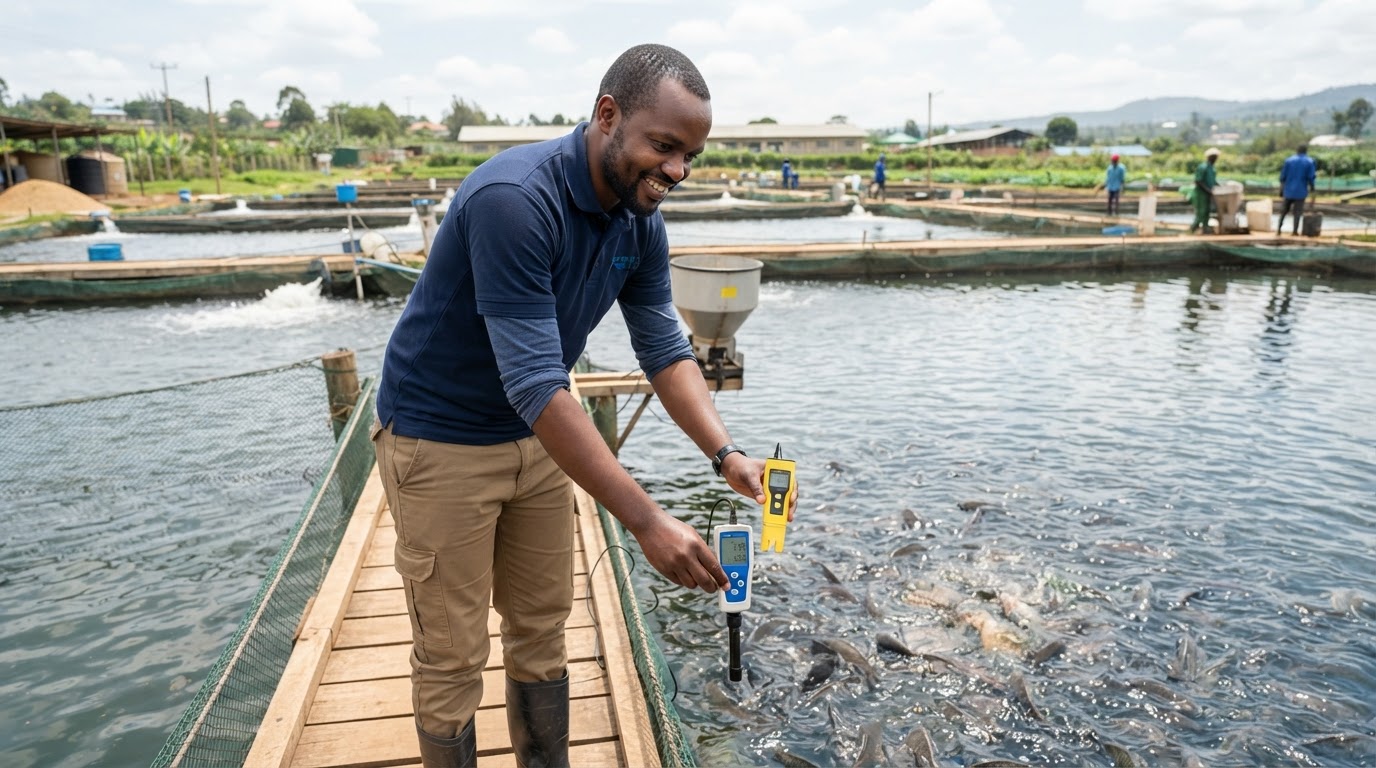
4. Essential Water Quality Parameters
| Parameter | Why it matters | What to monitor |
|---|---|---|
| Dissolved oxygen | Supports fish respiration | Low oxygen and stressed behaviour |
| Water temperature | Influences metabolism and feeding | Seasonal and daily fluctuations |
| pH | Affects physiological processes and toxicity | Unusual changes |
| Ammonia | Can become toxic | Waste accumulation |
| Nitrite | Can impair oxygen transport | Biological filtration performance |
| Water clarity | Helps assess suspended material | Sudden changes |
| Water flow | Supports oxygen and waste management | Pump or inlet failure |
Suitable values depend on species and farming system, so use locally appropriate technical recommendations.
5. Signs of Fish Health Problems
Watch for unusual swimming, surface gasping, reduced feeding, damaged fins, skin lesions, unusual colour changes and unexplained deaths. These signs do not identify a particular disease. If multiple fish become ill or die, seek qualified aquatic animal health assistance. Check water conditions promptly and avoid moving affected stock.
6. Fish Farm Biosecurity
Practical precautions include:
- Purchasing fish from reputable hatcheries.
- Keeping separate nets and equipment for different units where practical.
- Cleaning and disinfecting equipment using fish-safe procedures.
- Preventing wild fish from entering culture systems.
- Managing visitors and stock movement.
- Disposing of dead fish safely.
- Keeping accurate mortality records.
- Using approved treatments only under appropriate professional guidance.
Do not introduce antibiotics or chemicals to ponds without a valid diagnosis and compliance with local regulations.
7. Prepare for Emergencies
Plan for power outages, pump failures, oxygen shortages, floods and water contamination. For intensive tank systems, backup aeration or pumping may be essential. Keep emergency contacts, spare critical parts and an appropriate response procedure.
8. Daily Fish Farm Checklist
The daily checklist covers these tasks:
- Check fish activity and feeding response.
- Inspect water supply, pumps and aeration.
- Measure water quality as required.
- Record feed issued.
- Count and record mortalities.
- Check nets, pond walls and outlets.
- Inspect for predators and security problems.
- Review any unusual behaviour or symptoms.
These are ordinary editable checklist items. The original interactive checklist functionality is not replicated in WordPress.
Frequently Asked Questions
How often should I test fish pond water?
It depends on stocking density and system risk. Intensive systems typically need more frequent monitoring than low-intensity ponds.
Can overfeeding kill fish?
Overfeeding can contribute to dangerous water-quality deterioration and oxygen depletion.
Should I treat fish diseases with antibiotics?
Only when properly diagnosed and when a qualified professional determines that an authorized treatment is appropriate.