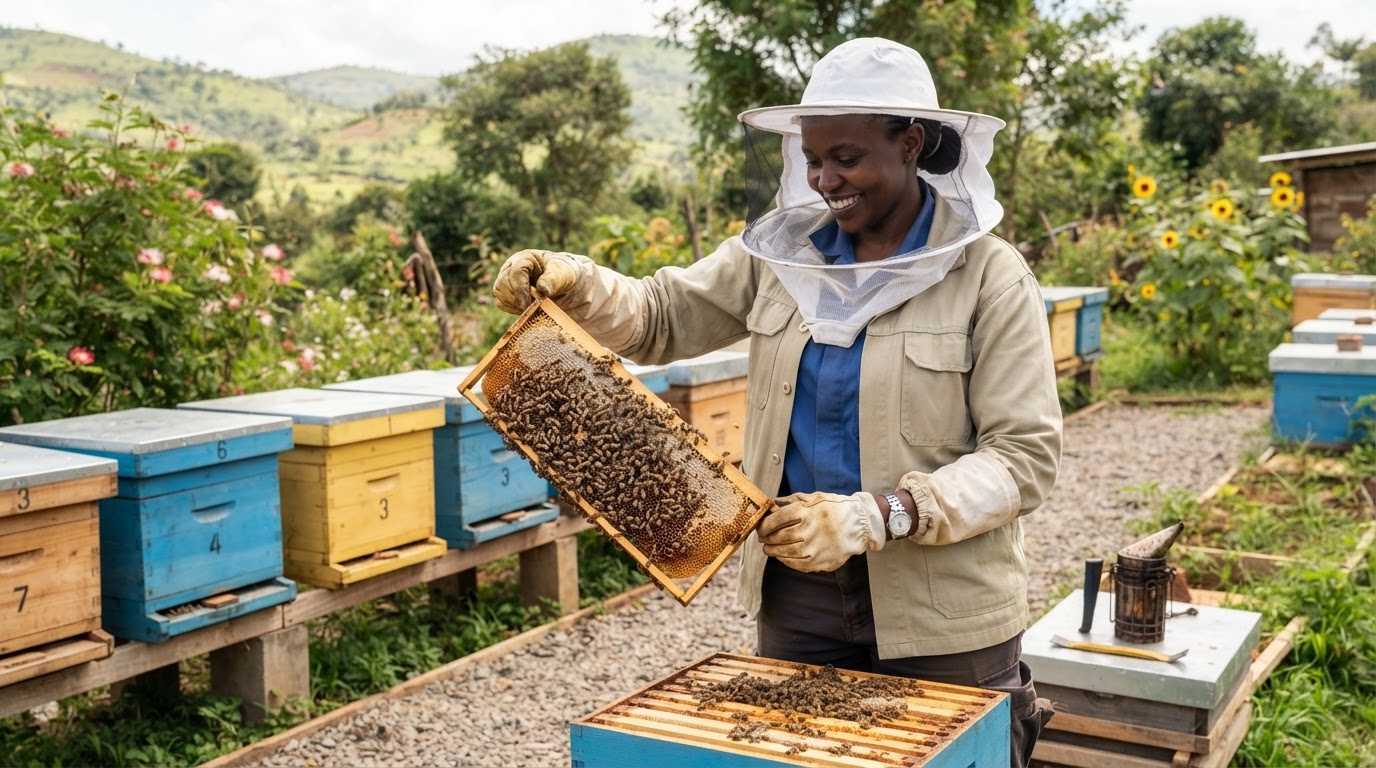
Category: Alternative Livestock & Aquaculture | Beekeeping Business Guide
Introduction
Beekeeping provides an opportunity for African farmers to produce honey, beeswax and other bee products while supporting agricultural pollination. Unlike many livestock enterprises, bees collect much of their own food from flowering plants. However, sustainable beekeeping requires suitable apiary locations, healthy colonies, careful hive management, harvesting skills and access to markets. A beekeeper should not assume that installing a hive guarantees a productive colony or regular honey harvests. FAO provides practical guidance for African beekeepers covering hive management, honey harvesting, bee products and sustainable production.
1. Research Honey Demand
Potential customers include households, grocery retailers, restaurants, food processors and specialty honey buyers. Ask about demand for raw honey, filtered honey, beeswax and other permitted products. Check local regulations concerning food safety, honey labelling, processing, packaging and sales.
2. Choose a Beekeeping System
| Hive type | Main characteristics | Important consideration |
|---|---|---|
| Traditional hive | May use locally available materials | Inspection and harvesting can be difficult |
| Top-bar hive | Movable combs on individual bars | Requires careful comb handling |
| Langstroth hive | Movable frames and modular equipment | Equipment costs and management skills |
There is no universally superior hive for every African farming environment. Consider availability, cost, beekeeper experience, harvesting methods and maintenance.
3. Select a Suitable Apiary Location
A suitable apiary should provide:
- Access to flowering plants.
- Clean water nearby.
- Protection against flooding.
- Appropriate shade and ventilation.
- Reasonable access for inspections.
- Security against theft and vandalism.
- Separation from busy public areas and livestock routes.
- Compliance with local beekeeping requirements.
Apiaries should be located with the safety of neighbours, farm workers and other animals in mind.
4. Understand Seasonal Nectar Flow
Honey production depends on nectar availability. Flowering patterns vary significantly between African regions. In Zimbabwe and Zambia, seasonal rainfall influences the timing of flowering and forage availability in many areas. In Kenya and Tanzania, flowering seasons differ between highland, coastal and semi-arid environments. Maintain a local flowering calendar based on actual vegetation and climate.
5. Example Startup Budget for Five Hives
Illustrative USD scenario for a beginner using locally available equipment.
| Expense | Estimated cost |
|---|---|
| Five hives | $300 |
| Hive stands and site preparation | $100 |
| Protective clothing | $100 |
| Smoker and hive tools | $70 |
| Containers and basic filtering tools | $100 |
| Bee colony establishment allowance | $150 |
| Transport and training | $100 |
| Contingency | $80 |
| Total | $1,000 |
Actual colony acquisition costs vary. Some hives may remain unoccupied for extended periods.
6. Establish Healthy Colonies
Depending on local practice and regulations, colonies may be obtained from legitimate bee suppliers or established through appropriately managed bait-hive methods. Avoid collecting colonies in ways that endanger people, damage ecosystems or violate wildlife rules. Seek training from an experienced beekeeper or local extension service.
7. Basic Hive Management
Inspect hives at suitable intervals and under safe weather conditions. Look for colony activity, available food resources, brood development, pest problems and signs of abnormal colony behaviour. Avoid unnecessary disturbance or excessive opening of hives. Keep inspection and harvesting records.
8. Honey Harvesting and Food Safety
Only harvest suitable mature honey, leaving colonies with adequate resources. Use clean, food-grade harvesting and storage equipment. Avoid excessive smoke, contamination or unsanitary processing. FAO beekeeping guidance covers honey harvesting and extraction methods intended to support good product quality.
9. Beekeeping Risks
Beekeeping carries risks including stings, severe allergic reactions, colony absconding, pests, theft, fire and pesticide exposure. Protective clothing reduces some exposure but cannot eliminate the risk of stings. Anyone with a history of serious sting reactions should seek medical advice before considering direct bee-handling work.
10. Build a Honey Brand
A small beekeeper may differentiate products through consistent quality, honest labelling, traceable sourcing and appropriate packaging. Avoid unsupported claims that honey cures diseases or provides guaranteed health benefits.
Frequently Asked Questions
Can I start beekeeping with five hives?
Yes. Five hives can be a reasonable learning-scale enterprise, provided the site and management arrangements are suitable.
Do bees produce honey all year?
Not necessarily. Harvestable production depends on colony strength, flowering conditions and weather.
Is beekeeping suitable for a side business?
It may be, but inspections, harvesting, pest control and safety require ongoing attention.