Category: Alternative Livestock & Aquaculture | Rabbit Farming Guide
Introduction
Rabbit farming offers an alternative small-livestock opportunity for African farmers with limited land. Commercial rabbit enterprises may focus on meat production, breeding-stock sales or supplying animals to specialist buyers. Rabbits reproduce relatively quickly compared with large livestock, but breeding performance alone does not guarantee profitability. Feed costs, mortality, temperature control and buyer demand remain critical. FAO rabbit-production resources emphasize breeding management, nutrition, housing and animal health as central requirements.
1. Research Demand for Rabbit Products
Before purchasing breeding rabbits, identify local buyers. Possible markets include restaurants, butcheries, specialist meat retailers, individual consumers and other rabbit breeders. Demand for rabbit meat differs considerably between countries, towns and communities. Do not assume that every household will purchase rabbit meat or that buyers will accept premium prices.
2. Choose Your Rabbit Farming Model
| Business model | Main product | Key requirement |
|---|---|---|
| Meat production | Rabbits for food markets | Reliable meat buyers |
| Breeding stock | Selected breeding rabbits | Strong breeding and health records |
| Mixed enterprise | Meat and breeding animals | Separate sales and selection standards |
A beginner may start with a small breeding herd and expand only after confirming demand.
3. Select Suitable Breeds
New Zealand White and Californian rabbits are commonly associated with meat production. Locally adapted rabbits and appropriate crosses may also suit some farming conditions. Choose healthy breeding animals from reliable sources and avoid breeding closely related animals without a deliberate, properly managed breeding plan.
4. Build Appropriate Rabbit Housing
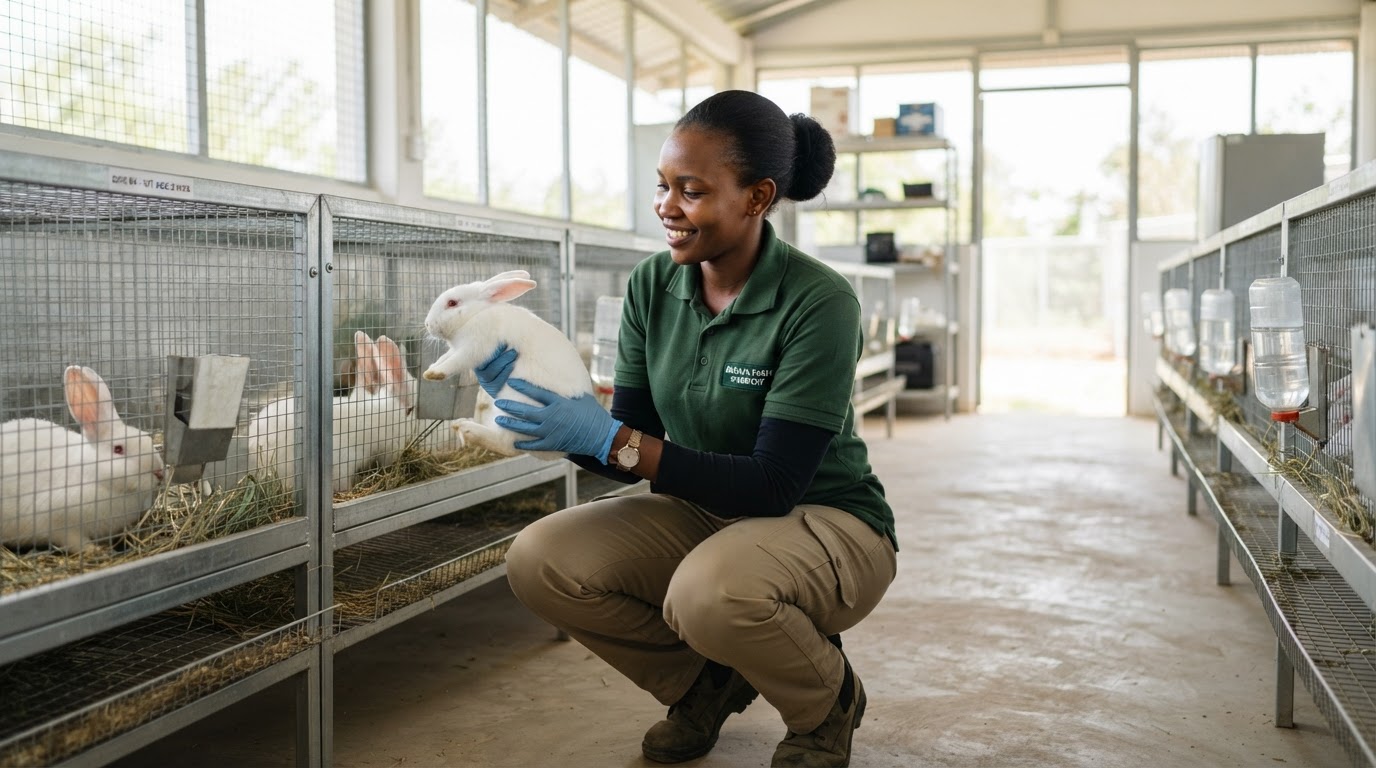
Rabbit housing should provide ventilation, shade, protection from rain, secure fencing or cages, clean water and hygienic feeding arrangements. Rabbits can be vulnerable to heat stress. In hot environments, building orientation, airflow, shade and appropriate stocking levels are important. FAO guidance on tropical rabbit production highlights the influence of environmental stress and disease control on performance.
5. Start With a Small Breeding Herd
An illustrative startup enterprise might use five breeding does and one unrelated buck. Provide a separate nesting arrangement for each pregnant doe and enough housing for growing young rabbits. Rabbit pregnancy lasts approximately 31 days, but successful production also depends on fertility, nursing, weaning and survival.
6. Example Startup Budget
| Expense | Estimated cost |
|---|---|
| Five breeding does | $125 |
| One breeding buck | $30 |
| Hutches and nest boxes | $400 |
| Feeders and drinkers | $90 |
| Initial feed reserve | $170 |
| Veterinary and sanitation provision | $75 |
| Transport and contingency | $110 |
| Total startup budget | $1,000 |
This assumes an existing sheltered area and excludes land or major building construction.
7. Feeding and Nutrition
Rabbits need suitable fibre-rich diets and clean water. Depending on locally available resources, a rabbit production system may use commercial rabbit pellets, appropriate hay and carefully selected forage. Avoid sudden major feed changes and do not assume that all garden plants, grass clippings or crop residues are safe for rabbits. Obtain appropriate local nutritional guidance.
8. Breeding and Reproduction
Keep records of mating dates, expected kindling dates, litter size, weaning success and young rabbit growth. Breeding schedules should allow females to maintain body condition and avoid unnecessary reproductive stress. The FAO has discussed four to five litters per doe per year as a potential approach in certain tropical and subtropical smallholder systems, rather than assuming the maximum biological frequency is best.
9. Prevent Common Health Problems
Potential health concerns include digestive disorders, coccidiosis, respiratory problems, external parasites and heat stress. Isolate newly purchased animals and seek veterinary assistance for unusual illness or mortality. Clean housing regularly without exposing rabbits to harmful disinfectant residues.
10. Market Your Rabbits
Arrange buyers before producing large numbers of animals. Track the cost of raising each marketable rabbit and distinguish between sales of meat rabbits and breeding stock. Breeding-stock income can be irregular and should not be treated as guaranteed.
Frequently Asked Questions
How many rabbits should a beginner start with?
A small herd of three to five breeding females may be manageable, depending on experience, housing and available buyers.
Is rabbit farming profitable in Africa?
It can be, but profitability depends on feed, reproduction, survival and market demand.
Do rabbits need expensive housing?
Safe, hygienic housing is essential, but facilities can be designed to match the size and needs of the enterprise.